|
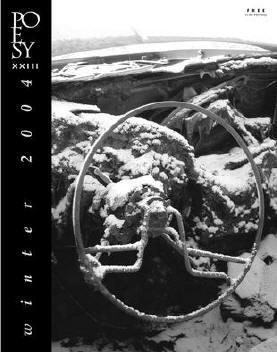
POESY
Category:
Poetry
Publisher: POESY Press
Pages: 16
Copyright: December 2003
Dear Poets, Writers and Readers,
Welcome to the new release of POESY #23 http://www.poesy.org
We kick off the issue with a poet’s perspective look at the release of the film “Sylvia.”
This issue features an interview with poet, Gerald Nicosia. I interviewed Gerald Nicosia at his home in Corte Madera, California (just a few minutes
north of San Francisco) last month. Gerald Nicosia is a poet, novelist, playwright, critic, and historian and has lived and taken part in the literary communities of Chicago, Los Angeles, and the Bay Area of San Francisco. He is best known for his biography of Jack Kerouac, MEMORY BABE and he has lectured extensively on the subject of Kerouac and the Beat Generation both in the United States and abroad. He scripted and narrated the public television documentary WEST COAST: BEAT AND BEYOND, and his play about Kerouac, JACK IN GHOST-TOWN, was performed in workshop by the Los Angeles Theatre Center, the American Blues Theatre in Chicago, and most recently by the Florida Project in New York. Nicosia's poems have been widely published in the small presses, both in this country and abroad. He has published Lunatics, Lovers, Poets, Vets & Bargirls, illustrated by Czech artist Jakub Kalousek and released by Host Publications in 1991. Love, California Style (2002), from 12 Gauge Press. He has a new collection of poetry coming out on Mystery Island Publications, Embrace of the Lepers.
Doug Holder interviews Jim Behrle. Jim plans events for Wordsworth Books in Harvard Square, and has an online poetry magazine Can We Have Our Ball Back. Behrle is also a roving poet for WBUR FM (on Christopher Lydon's program), not to mention an editor for Pressed Wafer, a well-known small press in Boston. Jim has two collections of poetry out, City Point, and most recently Sonic News. He talked with Jim on his program Poet To Poet/ Writer To Writer, that airs on Somerville Community Access TV.
Poetry this issue by: gerald nicosia, lyn lifshin, brian morrisey, margo note, mark jackley, stephen kopel, alan catlin, robbie gamble, doug holder, charles portolano, christine louise hohlbaum, b.z. niditch, paul benton, ronald mackinnon thompson, raymond r. cavanaugh, jr., nicole hearnes, patricia wellingham Jones, simon perchik,jean esteve, ed galing, ellaraine lockie (we will be posting some of the sample poems throughout the next two days).
We are blessed with the stunning photography of t. kilgore splake, marilynn dammann, a.d.winans, susan landon, cheryl townsend….
Karla Huston reviews “Something Near the Dance Floor,” by bruce dethlefsen.
Sincerely,
Brian Morrisey
editor/publisher
FROM THE INTERVIEW WITH GERALD NICOSIA:
How do you think the public views poetry today? Where do we stand?
ONE OF THE BIG BREAKTHROUGHS FOR POETRY, back in the '60's, was when poetry and music got connected through Bob Dylan. You had people like Jim Morrison who were poets writing lyrics and then they became hit songs. A lot more young people got excited because the music was bringing poetry out of the classroom. "Highway 61" by Bob Dylan is a profound poem! I think to some extent that legacy is still with us. It helps us as well, for the visibility of poetry having someone like Clinton in the White House who had a poet read at his inauguration. Bush said he didn't want a poet and it was an insult to poetry. I still do not know if poetry has a central place in our society like it does in other countries. For example: in Central and South America, where poetry became a mainstay of the revolution in fighting for human rights. The poems were vital to the people to give them the strength to resist. The Beats were probably the closest to that in America.
Do you think poets are more reclusive, internalized and not as concerned with social values as they have historically been?
SOMETIMES I AM CONCERNED ABOUT THE SHALLOWNESS OF POETRY. I'm amazed when I hear a poet like Wang Ping from China write about enduring the rigors of the Cultural Revolution. She had to work as a peasant for three years in order to get the privilege to go to college. Peasants work 365 days a year without any breaks except for one festival for three days out of the year. She had to walk a mile to get water out of a well. She went through enormous hardships and she is a professor now in Minnesota, but no one would know the struggles she went though unless they read her work. It gives her work an enormous profundity. You have to get beyond "this is what happened to me this morning… this is what happened to me this afternoon," etc.
|