|
Amazon
Self help
Category:
Self-Help
Publisher: Publish America
ISBN-10: 1413890488
Pages: 50
Copyright: November/05
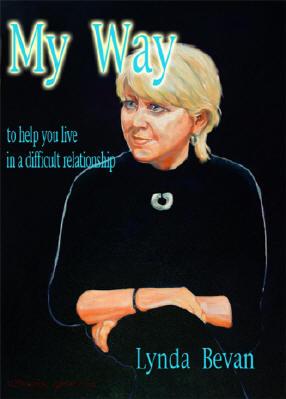
This Book is a 10 step-guide on how to live in a difficult relationship.
I developed the strategy through personal emotional experience. I had read numerous self-help books but found them too long and the case studies infuriated me! I was not interested in other people’s situations I wanted immediate help and also answers to questions that were burning in my heart.
This strategy works!
The strategy takes the reader through the process, i.e. Introduction, 1st chapter – Don’t Re-act, Be Realistic, Stay focused, Devise a long-term strategy, Devise a short-term strategy, Make one small change, Observe, Consolidate, Review.
It is simple and easy to read and that is exactly how I intend it to be.
I have 22 years experience working in the mental health sector, rising to Senior Management level within Social Services. Later I counselled for 10 years in the Primary Healthcare Setting.
I used this strategy with patients I have counselled with considerable success.
What if this is as good as it gets
You may recognise the words ‘As good as it gets.’ It is the name of a film starring Jack Nicholson and Helen Hunt - an Academy Award Winner.
When I saw the film and heard that particular line it struck a cord in me. I applied the line to my own life. What if this is as good as it gets? A sobering thought if life hasn’t turned out the way you had hoped it would.
We all have preconceived ideas of what we expect from life. Our expectations are usually full of perfect scenarios, a variety of exciting experiences that all have satisfactory outcomes. In our minds our futures’ should end up ‘happy ever after!’
Look around, how many people do you know that live ‘happily ever after’ lives? I can’t think of any!
We all compromise, adapt, blend in, and put up with stuff. We all face problems and difficulties, at some stage, on all levels of life, be it personally or professionally. Some are better at hiding it than others. Some are better at coping with their particular circumstances. But everyone has their share of personal problems.
Have you ever thought that somebody else is leading the life you’d love?
Have you ever said to yourself, I’ll have whatever they are ordering?
A saying I once read is: ‘We must believe in luck, for how else can we explain the success of those we don’t like’ – Jean Cocteau!
The first three lines in M.Scott Peck’s book ‘The Road Less Travelled’ are LIFE IS DIFFICULT. Never were truer words written! Life, for us all is difficult.
Take a look at your own life – what if this is as good as your life is going to get? Are you happy with it? Are you satisfied with your lot? If the answer is yes. Great. You don’t need to read this book – well done! If not, then, perhaps, this book will help turn your life around by looking at yourself and changing patterns of behaviour you have been repeating all your life. In order to live the life you want, you have to reinvent it. You can do this. You can transform your life.
• By changing yourself it will allow you to be who you want to be
• By changing yourself it will alter your outlook on yourself and others
• By changing yourself it will make all things possible
The mind has two major parts: the conscious and the unconscious. The conscious mind is the bit we use to think through a problem. The unconscious is where our feelings, beliefs and memories live, and this part of our brain does not use logic – it ‘thinks’ symbolically. And the unconscious is much the bigger part i.e.
We eat too much because we enjoy it, even though we know it’s bad for us.
We don’t do the work we should be doing because there’s something else we
enjoy and prefer to do.
We want the new job and the extra money, but we don’t believe we are ready
for the responsibility, etc
3..
There is a logical reason for doing something – but we don’t believe we can do it and can’t be bothered to try!
What you think, determines how you feel. Understanding this connection will be central to your success at changing yourself. The basic truth is that our feelings, good or bad, are the product of our own thoughts! We have to think about something before we feel it!
Henry Ford said: ‘If you think you can’t, you are probably right!
In order to make positive changes in patterns you have repeated in your life you cannot see yourself as powerless! This thought will totally disable you. If you see yourself as powerless, you are denying yourself the enjoyment of the power that is rightfully yours. If you think you don’t have power in the situation you are in, try this exercise: what would be three ways in which you could make your situation worse? If you can answer this question, and I am sure that you can, then maybe there are three ways in which you can make it better!
In order to empower yourself, you need to understand that your thinking and beliefs have to be clear and positive. Effort and struggle are all signs that we are fighting with ourselves – that we are at cross purposes with our own deeply held belief system.
Your mind is the control centre of your behaviour, and your behaviour is what determines who you are and what you accomplish.
The first thing to do if you decide you want to change your patterns of behaviour is to:
• Take responsibility for where you are now.
• Don’t blame yourself for everything that’s gone wrong in your life. Indulging in this thought process can only lead to feelings of regrets and if only’s. These thoughts will leave you negative and lacking in energy. You need your batteries charged and filled with energy to change yourself.
Excerpt
Step 1 – DON’T RE-ACT (first small change)
I have spent the majority of my life re-acting to situations and people! I believe the same principles as most people believe and that is:
(a) You believe you have the right to speak up for yourself;
(b) You believe you have the right to an opinion;
(c) You believe you have a right to answer back when confronted with an
issue;
(d) You believe you are a person in your own right;
(e) You value yourself!
Like me, I am sure you have used these principles throughout your life within personal relationships. Speaking personally, using these principles was a formula to failure! All my relationships failed and I suffered!
I still hold these core beliefs but have learned the hard way that ‘you don’t need to wear your heart on your sleeve’ and there is more than one way to skin a cat,’ as the old sayings go. ie.,
We don’t have to always say what we feel;
We don’t always have to stand up and be counted;
We don’t always have to solve other people’s problems and issues for them;
We don’t always have to offer an opinion.
The single most powerful lesson I have learned is to be still in the mind and shut up!!!
As stated earlier, I am essentially, a people pleaser. That means that I am a chameleon changing to suit whoever I am with at the time. I believe that I am in the majority and that most women, who love, do this automatically, without even recognising what is happening. We make excuses for ourselves and our actions. We make excuses for our partners.
We see things too clearly from the other person’s point of view and adapt/over-compromise/blend/give-in to make them happier in order to keep the relationship at any cost! But what a Cost!
The film ‘Runaway Bride,’ with Julia Roberts struck a cord with me – she even altered her taste in food to liken herself to a prospective husband. With the first potential partner she liked scrambled eggs; the second, fried eggs, the third poached eggs. She couldn’t see that she was trying to please someone else by trying to emulate them and totally dismissing herself, her tastes, desires, wants and needs. In fact she didn’t know she had any desires, wants and needs! She was scared that she might cause ‘waves’ or experience ‘disharmony’ with her future partner if she decided she wanted her eggs cooked in a different way or, indeed, wanted to eat something entirely different. She, like so many of us when we fall in love, temporarily lost her sanity and tried to become him in order to be liked and loved!!! Caught up in the thought that, as he loves himself, if I become the same as him he will also like me! “Frightening.” She was too caught up in the fantasy of being ‘in love’ and the desperate need to have a partner in life. She probably didn’t even like eggs!
Repeating Pattern
An example of a repeating pattern that I came across during a counselling session is:
“My patient and her husband were both watching the television. She loves films and is a film buff. An old film was on the telly and her husband asked her the name of the leading actress. She told him and also gave him an account of her career and other films she had starred in. By the time she had finished this monologue she had lost the story line and went to the kitchen to make a coffee for them. On returning to the living room with the coffee she found that her husband had switched channels and was watching something he enjoyed. This scenario was to replay for some 10 years before she twigged that this was one of her husband’s strategies to take her attention from something she was enjoying by engaging her in a game that she couldn’t resist, imparting all the information she could muster to answer his question. Her husband wasn’t really interested in the actress or the film – but he knew that she couldn’t resist spouting forth her knowledge on the subject in detail and glorious technicolour. This situation would occur regularly so that he could have the programme on the telly that interested him. He knew that if he asked her a question, her answer would be so thorough that her concentration on the film would temporarily evaporate and he would have his own way watching what he wanted to see. A subtle and unobtrusive method of getting his own way. When she, eventually realised this, during our sessions, she changed her game to counteract his strategy:
Same scenario, they are both watching a film on the telly. He says, who is that actor? Her response now is, I don’t know, who do you think it is? He says he doesn’t know – so she leaves the question in the air and carries on watching the film. She knows the answer to the question, of course. More importantly he knows she knows the answer to the question. Now, however, she doesn’t care if he thinks its Quasimodo. She has relinquished control of giving information and doesn’t see it as necessary anymore to impart her knowledge to uninterested parties. She can’t be bothered. If her husband, or anyone else, is interested enough they can look in the daily paper to find the answer. She is not a walking encyclopaedia. She believed it was part of her mission in life to make things better for everyone else – wrong – your path is only as difficult as you make it.”
The example I have given you was the first step in my patient looking at herself, her behaviour, her inter-action with others, her expectations of self, her expectations of others. She decided to start changing a few things in her life and in her relationship with her husband.
The first step, not to re-act so eagerly to every situation, sentence, nuance, facial expressions. Why do we feel we always have to respond? You don’t always have to respond!
This is a challenging task if you are a re-active person and have a mobile face!
You must be determined, however, to try your best and see what happens.
Keep yourself focused on your decision and deliberately stop yourself answering questions by.
• Diverting the conversation,
• Leave the room on some pretence – just to engineer time to think of an appropriate response or, indeed, no response at all.
• Respond by saying that you haven’t given the matter much thought and need time to do so before giving an informed answer.
You will be amazed at the difference in the dynamics of the household. Peace reigns for quite some considerable time. When asked a question, sometimes you can pretended you don’t know the answer and wait until the person involved comes to their own conclusions. It is frustrating at first, the waiting, but eventually you will enjoy the fact that the pressure is off you to always have the answers, or find solutions. There are little tricks you can adopt along the way, i.e. if asked a question you don’t want to answer you look directly at someone else; the focus then goes off you and the focus transfers to them to do the answering. Believe me, this works. I have used this in professional situations also. If you don’t know the answer/or the answer you want to give is too contentious – look at someone else and they automatically take the lead in answering the question. Try it!
Try to keep this non-reaction up - that’s all you do. Nothing else. I believe the mistake we make in trying to change patterns within ourselves is to do too much too soon. Just do that one simple task and continue doing it for a few months. You will be tempted to jump in and rescue people and situations during this time – old habits die hard – resist the temptation to do this. It will be uncomfortable watching scenarios unfold that, previously, you have helped solve. You will see your partner’s anger and frustration rise and fall as he/she tries to unravel the latest catastrophe they face and probably created! They will turn to you for help, as they always have done and will be angry with you when you don’t respond as you usually do. Do not become involved in the situation. Stay on the side-lines. With a show of concern on your face say that you don’t know what to do or how to bring about a solution to the problem he/she is facing.
At this time I must stress, don’t be tempted to bring another small change in your behaviour into the equation. You must remain firm on the one small change – not re-acting – you have committed to. If you add another small change in your behaviour now you will fail. The success of the 10 step-guide is that it is done slowly and unobtrusively over a long period of time. Lie fallow. Rest your mind during this time and watch others around you changing the way they handle situations without you being involved in the decision process. This simple adjustment has many benefits.
(a) You can’t be blamed if things go wrong. 8.
(b) You maintain your energy
(c) You become an observer rather than a participator
(d) You are not responsible for the outcome
(e) You are not seen at a ‘know-it-all’
(f) You become surprised at the way others think and solve their differences without your intervention
(g) You allow others to grow up
(h) You allow others to take responsibility for their behaviour, speech, actions
(i) You observe the development of ideas and thoughts around you
(j) You see you are not needed to solve everything
(k) You are not the ‘baddy’ anymore
These are just a few of the points I have observed whilst employing this first step. It is empowering, so enjoy and relax into the strategy.
|