Amazon
Thompson Writing and Editing
Category:
Reference
Publisher: Lynn Maria Thompson
ISBN-10: 8888958230
Type: Non-Fiction
Pages: 578
Copyright: Feb 1, 2023
ISBN-13: 9798888958230
Price: $29.99 (eBook)
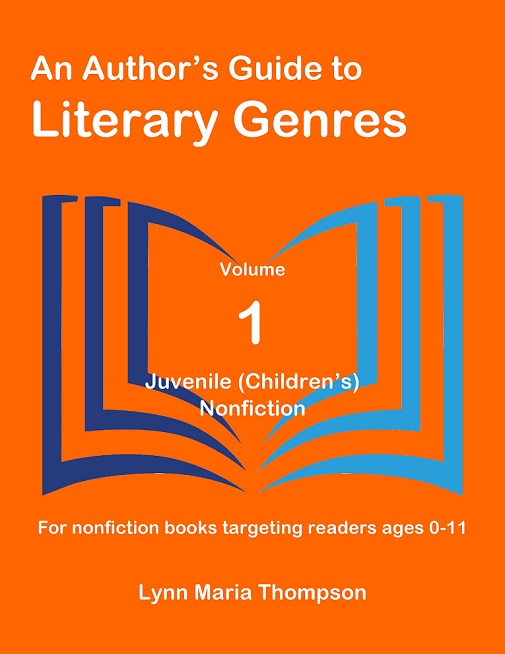
A guide to help authors identify their book's optimal literary genre.
Are you baffled by the sheer number of literary genres available for your book? Or did you even know that there are "official" literary genres within the book publishing world?
Either way, An Author's Guide to Literary Genres will help you! After a brief examination of various book classification systems of the past and present, the tables in this book are built based on the Book Industry Study Group's official BISACs. Each is given a definition, with numbers and sample titles from Baker & Taylor's own database provided to help you determine which genre best fits your book.
This book should be on the desk of every author, literary agent, publisher, or book publicist!
Volumn 1 tackes the Juvenile Nonfiction subgenres and sub-subs. Volume 2 will take on the Young Adult Nonfiction classifications. From there, future volumes will tackle the regular (adult) nonfiction genres, then a full set of volumes will address the fiction genres.
Excerpt
How to Use This Book
First, make sure your book is nonfiction (factual) in nature. Make sure it is written to target readers who are children from the age of birth to 11 years old. That puts you solidly into this volume of the guide. Books written about children that target adults as readers do not belong in the genres defined in this volume of the guide.
Next, write a statement that defines what your book is about; you may have already done this, but if you haven't, it's a necessary exercise in putting together your book's marketing plan. Using the keywords in that statement, begin in Secion 2: Index of Topics. The information in the Topic Index section is arranged alphabetically by topic. Find the topic that best matches the main subject of your Juvenile Nonfiction book and see what options you have. If there is more than one, find the definition that best matches what your book is about and choose that heading as your book's main literary genre. You can also look at the total number of ISBNs to get an idea where there may be more interest in a certain subgenre (and along with it, more competition), or where there may be opportunities to stand out within a category. Make notes of any others that catch your eye so you can use those as secondary genres.
As a final check, go to Section 1: Subgenres of Juvenile Fiction section to see what other book titles are on the market for your chosen genre. If those are also a good fit, you have likely chosen the most appropriate genre for your book.
|