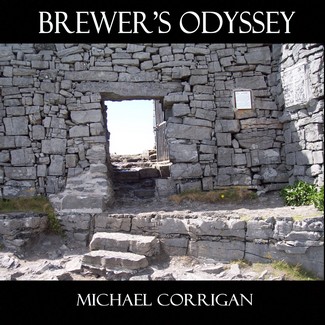
Thomas Brewer, 40, is a popular writer of thrillers who finds himself living in a bizarre world not unlike his fiction. He has prescient dreams that suggest a frightening future. When he has a nightmare about a terrorist attack that occurs and he escapes, a cynical CIA agent named Jeff Peterson enlists Brewer in the war on terror. Harriet Miller, Brewer’s English African agent and brief lover, has lost a child, and when she meets a Middle Eastern student in Paris named Abebe and gets pregnant, a false assumption by Brewer has tragic consequences at a Paris celebration. Brewer’s neurologist and the object of his desire, Dr. Susan Fredericks, studies Brewer’s clairvoyance and discovers he may have REM Sleep Disorder, an early sign of Lewy Body Dementia. Predictions that came true may be coincidental. Brewer’s nemesis is a yellow haired politician, and future hallucinations may destroy Brewer before he answers certain questions: did he really meet the ghost of Daphne du Maurier? Who is the black girl who haunts his dreams? Will an Irish Selkie breathe new life into his brain? Will Thomas Brewer find a strange salvation on the Aran Island of Irishmen with its spirits of a different sort?
Excerpt
Note: This story is a chapter from a novel in progress, Brewer’s Odyssey, about a popular writer named Thomas Brewer who has occasional prescient dreams that draw the interest of the CIA. They are tracking a terrorist who may be connected to Brewer’s former agent and lover, Hillary Miller, now deceased. In this Chapter, Thomas Brewer is meeting Kenya, the mother of Hillary. This meeting may have tragic consequences.
Betrayal in Paris
By
Michael Corrigan
“You see, I could conceive death, but I could not conceive betrayal.”
―Malcolm X
IN Paris, the Rolling Stones played a concert, promoted, in part, by Morgan Docikal. Mick Jagger and Keith Richards still had it in their seventies, Jagger strutting about the stage and singing in his blues tenor while Richards, often crouching, white-haired and leather-faced, strummed and plucked rhythm leads in open D and G tunings. The aging rock group would one day pass into rock history, but the songs had taken on their own amplified essence.
After the concert, Morgan left for a party and Brewer walked toward Notre Dame Cathedral to meet Kenya. It was a warm autumn night, and armed guards patrolled the ancient streets. Brewer strolled along the River Seine passing bookstalls and trees, feeling the sensuous Paris ambiance. He imagined drinking at the Ritz bar with the ghosts of Anaïs Nin, Hemingway, and Scott Fitzgerald still haunting this fabled city of light. Well-lit tour boats plowed through the dark waters of the Seine as Brewer crossed over a bridge where a pianist played boogie-woogie rhythms. He continued walking along Rue d’ Arcole toward the historic cathedral where Napoleon had crowned himself emperor and French revolutionaries beheaded statues. Though an unbeliever, Brewer anticipated the joyous ritual of lighting candles for Hillary and his late wife, Ruth.
When Agent Peterson heard of Kenya’s Paris visit, he gave Brewer a satellite phone to keep him apprised. Brewer could hear panic in Peterson’s voice when he called.
“Why is Kenya suddenly meeting you in Paris in September? She was supposed to meet you and Abebe in Rome—in November.”
“She didn’t say.”
“Brewer, we have more evidence of a planned terrorist attack on the Vatican. Is Kenya’s Paris visit some kind of pleasure side trip?”
“I don’t know, Peterson. But I’ll be in Paris for a concert, and I’ll meet Kenya.”
“Something is not right.”
“With you CIA folks, nothing is ever right,” Brewer told the agent.
Brewer walked into Notre Dame Cathedral. Beneath the cavernous vault, a late night service was in progress. Brewer lit two candles and stood, listening to sacred music from a hidden organ. A priest then spoke in French as parishioners shook hands, and a line formed for communion. Brewer did not see Kenya who was not a Catholic but admired the beauty of gothic cathedrals and stained glass windows; Brewer would admit that he was not immune to the power of Notre Dame and its history. He finally started toward the exit when he felt a soft hand touching his shoulder. Turning, he saw the dark diminutive woman smiling in the flickering candle-lit shadows. They embraced, her body tiny and frail; then he held her small hands.
“It is so good to see you, Kenya.”
“Avec plaisir. Good to see you, Mr. Brewer.”
“Call me Tom, please.” He stepped back. “What brings you to Paris?”
“Does anyone need a reason to visit Paris?”
“Paris is enough reason to visit, but why the mystery?”
“No mystery. I knew you were visiting Paris and saw an opportunity.”
“Opportunity for what?”
“Tom—let’s find a café, shall we?”
Taking her light stick-like arm, they walked outside and down the street to an area lined with sidewalk cafes. Street musicians played on the corner.
“How is Abeba?”
“Good. I believe she’ll be all right.”
“I am anxious to see her. I was planning to visit you in Rome.”
“And that is still on. Are you hungry?”
“Mais oui.”
They stopped at a sidewalk café and sat down beneath a tree. A young waiter with thick dark curly hair brought them a menu. Couples sat at other tables, and tourists and locals passed them in the street. Kenya ordered a red wine.
“I’ll have a glass of Riesling,” Brewer said.
Kenya translated his order into French.
“I think he understood you, but you need to learn French. Hillary was fluent.”
“I bet she was. I miss her so much.”
“So do I, Tom, so do I.”
“Actually,” Brewer said, “since we are here, I have something to tell you.”
“About what?”
“Rome and personal information I need to share.”
“Personal?” Kenya laughed, her teeth suddenly white in the electric light. “I beat you to it, sir.”
“How’s that?”
“I think we have similar intentions.” Kenya answered her cell phone, spoke in French, and then hung up. “I have a surprise for you, Tom.”
“I hate surprises,” he said.
“You’ll be pleased.”
“I hope so.” Brewer sipped his wine and looked at the small black woman across the table who shared with him a tragic loss. “This is off the subject, but I was just thinking, Kenya, I could put some money away for a college scholarship. When Abeba is ready, she could study in the United States…or even Europe.”
“That is a nice thought.”
Brewer could see Kenya was happy, barely able to stop smiling.
“So, Kenya, what’s your big surprise?”
Kenya suddenly stood up, reaching out her hand to a young Middle Eastern man approaching the table. They embraced, laughing and speaking in French.
“Bon soir, mon ami.”
Staring at the young man, Brewer felt himself shutting down inside, as though he were suddenly on a lethal battlefield. They heard a loud backfire. Kenya turned to him.
“Thomas Brewer, meet Abebe, father of Abeba, and now our close friend.”
Abebe reached out his hand to Brewer. He resembled the photo Peterson had shown him, easily passing as a brother to the phantom man Brewer saw in his nightmare, the face handsome, the eyes possibly hiding a toxic hatred. Grinning, Abebe shook Brewer’s hand. “My English is getting better, I hope. You are a friend of Hillary, yes?”
“Yes,” Brewer said. “I…I was.”
“Let’s order some food,” Kenya said.
The waiter came to take their order for food and more drinks.
“Tea for me,” Abebe said. “I avoid alcohol, of course, but I’m afraid I do smoke.” He shrugged and looked at Brewer. “Kenya has talked much about you, Monsieur Brewer. We all love our Hillary. She was your agent for books?”
“Yes.” Brewer hesitated. “Hillary said you hated America. Is that true?”
Brewer knew Kenya was startled as Abebe calmly looked at him.
“I probably hated everything western, at the time. Sometimes I think Americans don’t understand Muslims, but the French are worse, even banning the clothing our women wear.” Two nuns in black habits walked past the café. Abebe pointed. “See them? The police do not harass Catholic nuns for wearing religious clothing in a secular state. They do harass Muslim women.”
“In America, we don’t harass anyone for their religion,” Brewer said.
“And I’m sure you don’t hate America, Abebe.” Kenya stared at Brewer. “Why did you ask such a question, Tom?”
“Sorry, Kenya. I was just remembering something Hillary said.”
“She was a wonderful person,” Abebe said. “I was a little depressed when I met her in this crazy town, even drinking too much, but tomorrow, I register at the Sorbonne to study engineering.”
“That was Osama bin Laden’s field of expertise.”
He could feel Kenya watching him. “Why is that connection important?”
“Engineering was his field,” Abebe said, meeting Brewer’s eyes. “Osama was an evil man. He gave Islam a bad name. I’m sure ISIS would cut my head off if they had the chance.”
“Really? And why is that?”
“Let’s talk of other things,” Kenya said. “We’ve had enough sorrow.”
Brewer stared at Abebe’s young face, slightly bearded, the shadowy figure who had haunted his nightmares and become a fixation for Agent Peterson. Brewer then fingered the jump drive with the alert button resting in his pants pocket. With his other hand, he touched his wine glass and spilled some before taking a swallow.
Abebe nodded to him and smiled, and then he and Kenya began speaking in rapid-fire French.
“Abebe says he will visit Abeba in Amsterdam, next summer, and then take her to meet his parents in Ethiopia. Abebe comes from a wealthy family, so the child won’t lack anything.” Kenya noticed Brewer staring intensely at Abebe. “Is something wrong, Tom? You look like you’ve seen a ghost.”
“I’m okay.”
Abebe laughed. “I looked you up, sir. You write about ghosts, yes?”
“Yes,” Brewer said, “among other things.”
“I read about that attack at Gatwick and how you survived. I am so sorry you had to endure this terrible act.”
“I’m sorry, too. I still have a lot of pain.”
“Isn’t the shrimp wonderful?” Kenya said. “But I’ll pass on the escargot.”
A waiter opened an umbrella over a nearby table as Brewer spoke. “You like the Pope?”
“He is a holy man, I think. Tolerant,” Abebe said.
“Tom, since when are you religious?”
“He’s an interesting liberal Pope.” Brewer leaned forward as Abebe lit a cigarette. “Tell me, is Abebe a common name in your country?”
“Yes,” Abebe said, “like Smith or Jones in America. It is a family name. My father was Abebe. And his father. I have three brothers with variations, like Habebe, Kubebe. Then there’s my cousin—.” Abebe seemed to catch himself. “Certain names are very common in Ethiopia.”
“Like the Irish,” Kenya said. “Paddy, Mary.”
“I am also a French citizen.”
“You are?”
Abebe stared back at Brewer. “You seem surprised, Monsieur Brewer.”
“Hillary said you were from Ethiopia.”
“I am, but my mother was French. I speak French with a Parisian accent.”
“He does,” Kenya said. “Perfectly.”
“But I am not a true Frenchman to the gendarmes.” Abebe shook his head, visibly angry. “To them, I am a filthy Muslim, an outsider—a criminal.”
“Gentlemen,” Kenya said, “our food has arrived.”
The waiter served them and they ate, though Brewer found himself pausing over his plate filled with steak, potatoes and salad. Kenya and Abebe continued making quiet conversation in French. A large family sat at an adjacent table talking, smoking, eating and drinking. Crowds strolled the boulevard, some heading toward Notre Dame. Suddenly, Abebe stood up. “I’ll be right back,” he said. “Toilettes, s’il vous plaît.”
Abebe left for the bathroom and Kenya reached over, touching Brewer’s arm, even as he pressed the hidden alarm button.
“What’s wrong? Aside from being slightly rude, you seem very uncomfortable, Thomas. I hope you’re not jealous that the biological father of Abeba is here with us.”
“Abebe is a terrorist,” Brewer told her.
Kenya pulled back, shocked. “Thomas, what are you saying?”
“Abebe will take his daughter to Ethiopia and use her as a suicide bomber.”
Kenya’s eyes flared at him. “Mr. Brewer—that is an outrageous and stereotypical reaction. Just because Abebe is a Muslim does not mean—”
“The CIA is tracking him.”
“The CIA? And you know that how?”
“I saw Abebe in a nightmare. He was raving about destroying infidels.”
“A nightmare? And you would use that as valid testimony in court?
“No—but I can tell you MI6 is tracking him.”
“Tracking him? What for?”
“Abebe may be part of an attack on the Vatican.”
“Why? Because he has an apartment in Rome? Is this some kind of Islamophobia, and that’s why you’re collaborating with government agents and spies?”
Brewer felt Kenya’s thin fingers tightening on his arm, a betrayal in her eyes, and for a moment, he wondered if he had made a mistake.
“I’m sorry, Kenya,” Brewer said, “but he needs to talk with the authorities.”
Brewer saw Abebe coming out of the restaurant interior, walking toward them; he stopped to put a cigarette butt in a tall ashtray. Abebe looked at them and smiled, but his expression changed as gendarmes suddenly swarmed the sidewalk café, shouting orders in French. Startled customers looked up from their tables. Kenya turned, watching converging police and Abebe who looked resigned, holding out his passport to a French police officer who grabbed it while another gendarme pointed with his baton at a black police van.
“I am not a terrorist!” Abebe shouted. “Incroyable.”
Abebe yelled in Arabic and a gendarme struck Abebe in the face. Other patrons watched as they led Abebe away bleeding from the mouth; a third officer argued with Kenya, her voice bursting from her frail short body. In desperation, she turned to Brewer.
“Thomas, for God’s sake, please do something!”
Feeling dazed, Brewer pulled one of the police officers aside. “Pardon me. Is this roughness necessary, monsieur?”
“Pas d'Anglais,” the officer told him.
He followed other officers toward a police car. Brewer could hear Kenya’s small yet outraged voice as the police van drove off with Abebe. Relieved, cafe patrons laughed and eventually resumed eating and drinking, talking in excited voices. Brewer saw the tiny African woman regarding him with a cold fury; then she spoke in a low husky tone.
“Did you tip off the gendarmes?”
“Yes.”
“How could you? Implicating a man close to my daughter.”
“I loved Hillary, as well. Kenya, listen, Abebe was planning to kill thousands of people watching the Pope. The CIA planned to nab him in Rome but—”
“Nab him?” Kenya looked away at the busy traffic. “For what? Abebe is a student.”
When the waiter began jabbering in an alarmed voice, Kenya gave him her credit card for the unfinished meal. Brewer had trouble forming the proper words.
“I have a number of a man you should talk to,” he finally said. “He’s Sebastian Young from MI6.” Kenya remained silent as the smiling waiter returned and Kenya signed the credit slip. “Kenya, at least let me give you some money for the dinner.”
Kenya glanced toward the busy street. “Keep your money.”
“Please, Kenya—I can explain.”
“Don’t ever talk to me again. We are done. Fini. Tomorrow, I will bail Abebe out of jail, if I can, and then I hope neither one of us or Abeba ever sees you again.”
“Kenya, we have evidence Abebe is part of Al-Shabaab. Remember those girls killed at that Kenyan school? Abebe has been implicated.”
Kenya snapped her purse shut. “Au revoir.”
“Wait, Kenya—please.”
She faced him, her anger now controlled, her voice flat but measured.
“Maybe someday I will understand this, but not tonight. When Abeba comes of age, I doubt she’ll accept a scholarship from a man who betrayed her father to the French police.” Kenya closed her eyes, struggling briefly. “Adieu, Mr. Brewer.”
Kenya walked into the crowds cruising along the boulevard on a fall Paris night. Brewer suddenly felt sick. When he answered his phone, he heard a deep cultured voice.
“Is this Mr. Thomas Brewer?”
“Yes.”
“This is Officer Sebastian Young of MI6. I have worked with your friend, Agent Jeffrey Peterson.”
“He mentioned you.”
“I’m glad he did. I say, good work, Mr. Brewer. Tomorrow morning, I’ll be at the Paris police station to question Mr. Abebe. We didn’t realize he had reached Paris until your signal. You have done us a great service, sir. Good show.”
Sebastian Young’s English accent suggested Masterpiece Theatre presentations.
“Officer Young, is it possible a mistake was made?”
There was a long pause. “A mistake?”
“Something’s off. Why would a terrorist on the run meet us at a public café?”
“Good question. Come to the Paris station at 10 am. Until then, Mr. Brewer.”
Sebastian Young rang off.
Brewer walked in the opposite direction from Kenya. A group of tall Africans in white tunics passed him. A mime in white face was working the crowd and held out his open palm toward Brewer who gave him the finger and walked on. The mime made a theatrical sad face, one arm and fist upraised. On the boulevard, Brewer saw a young American tourist wearing a red Donald Morrison baseball cap with letters stitched in white: Make America Great Again. The burly American staggered down the street leading three other intoxicated men in jeans and sports jackets, whistling at passing women. Brewer confronted them.
“Here’s ten euros,” Brewer said. “I’d like to buy your cap.”
“Ten euros? Damn, buddy, you must be a real fan, huh?”
“Fan?” Brewer paid the grinning man, and held the cap, feeling it burning his hands. He took out a switchblade and stabbed through the crown of the cap. “That’s what I think of that right wing cocksucker.”
The owner of the baseball cap stared at Brewer, blinking.
“He’s not that right wing,” the drunk shouted, and laughed with his companions.
Brewer tossed the cap into the trash, and as he walked toward his budget hotel, a searchlight swept over him, throwing a grotesque shadow on a wall facing the street. He thought of stopping in Notre Dame where he could sit staring at rows of burning candles to quiet his mind, but he continued walking, passing the well-lit Hôtel de Ville, housing the Paris mayor. Brewer saw a wide plaza where a silent flash of blinding light exploded, sending a wave of heat washing over him. Brewer rubbed his eyes and then looked at the massive building, but nothing had changed. A few pedestrians passed him, and Brewer walked on.
What was the meaning behind the sudden flash of light? When Brewer reached his hotel, he drank in the quiet bar until it closed, replaying all that had happened that night. He had seen a resignation in Abebe’s manner that was either the work of a trained terrorist or an innocent man used to oppression.
Feeling hung over the next morning, Brewer walked to the Paris police station. When he appeared at the desk, a clerk led him to a private room. He sat down, and a large black man wearing a gray suit suddenly entered. He had an imposing bulk, and extended his hand, his resonant voice filling the small space.
“Nice to meet you, Mr. Brewer. I am Operations Officer, Sebastian Young. My salty old American counterpart, Agent Peterson, has talked extensively about you.”
“I bet he has.” Brewer looked at the officer’s face. “Have we met?”
“Not formerly, but I had you under surveillance. Had to be done. Sorry. I saw Kenya, this morning, and explained your involvement. She did listen, but then left without a response.”
“Was Abebe bailed out?”
“Not with charges of terrorism filed against him—no.”
“What will happen to him?”
“That’s to be determined. He maintains his innocence and denies being part of the raid on the Kenyan school. If we lack proof, we will have to release him. I will appeal to him as a fellow Muslim and try to encourage his cooperation. A hardened Jihadist rarely turns, however.” Sebastian frowned. “Abebe didn’t enter Paris because he was already here—in plain sight.”
“Risky behavior for a wanted terrorist.”
“Bin Laden did it, and Abebe fits the profile of a disgruntled young Muslim who could convert to extremism.” Brewer watched Sebastian Young’s round dark face as he spread photos on the desk. “You still think we made a mistake?”
“I just can’t connect Abebe to a man who would shoot innocent girls in the face.”
“He’s a charming fellow. It means nothing, really.”
“Hillary was perceptive and she loved him. I saw Abebe’s sad resignation when they arrested him and dragged him to the police van.”
“Perhaps he was sad because he was caught.”
Brewer suddenly felt a headache throbbing intensely with the advancing morning. He got up, poured a cup of water from a machine, and drank deeply.
“Tell me, Officer Young, does Abebe have a cousin?”
Sebastian nodded. “Many cousins—why?”
“He started to mention one and then caught himself.”
“He’s very loyal to his quite large family.” Sebastian pointed at the photos. “Peruse these and tell me if one stands out.”
Brewer began examining the photos one by one, showing many shots of an attractive Muslim family from the very young to the very old. He saw one grainy photo of a bearded man Abebe’s age sitting at a cafe, one leg crossed over the other, smoking and smiling at someone off camera. He wore a Kufi skullcap. Though the photograph was dark despite the daylight, Brewer felt a sudden anxiety looking at the grinning smoking man. Sebastian stood, observing him.
“You recognize that chap?”
“I’m not sure. He could be my nightmare version of Abebe.”
“A nightmare identification isn’t very scientific.”
“It is not. Who is he?”
“Abebe Mohamed Begale.”
“Same first name. A brother?”
“A cousin. His last name means ‘glowing one.’ Abebe Mohamed Begale dropped off our radar about two years ago. Since Europe’s borders are so porous, Abebe Bekila was able to travel back and forth, and went undetected for the past year.”
“Possibly Abebe’s cousin is the terrorist you’re looking for. Could Abebe Bekila be just an innocent student?”
Sebastian Young sat down and opened a small notebook.
“He did contact the Sorbonne using his real name.”
“That doesn’t make sense. Officer Young, let me talk to him.”
“That is not the standard protocol.”
Brewer did not respond. Sebastian looked at the clock and stared at the scattered photos on the desk. Then he regarded Brewer.
“Maybe for a few minutes, but you can’t mention anything you have discussed with Agent Peterson or me. If you do, you’ll be yanked from the room and might face charges, yourself.”
“Deal.”
When Brewer entered the small holding cell, he saw Abebe chained to a tabletop and floor, his cheekbone on one side red and swollen. Abebe glanced at him briefly and then looked away as Brewer moved to the table. They sat across from each other in silence as minutes passed.
“I have nothing to say,” Abebe finally said. “Laissez-moi tranquille.”
“I will leave you, but let me at least say something. Hillary loved you, and I want to help in raising your child. Perhaps I could even say, ‘our child.’ I thought I might put some money into a scholarship and—”
Abebe lifted one chained hand. “My family will take care of Abeba. We don’t need your help—and Hillary would not approve of your betrayal.”
“You may be right.”
“I was supposed to register at the university, tomorrow.”
“And perhaps you will. Just cooperate with the authorities. Maybe it was your cousin, the other Abebe, who—”
“Do not talk to me of my cousin or anyone else in my family. I gave the name and number of a lawyer who handles cases involving French Muslims when inevitably, gendarmes arrest us. I want that lawyer—now.”
“That can be arranged.”
Brewer could feel the man’s surge of anger as Abebe stared at him, no longer a figure in a dream. He suddenly smiled. “Am I a victim of one of your fantasies, Mr. Brewer? Or I’ll become a bomb throwing terrorist in your next book.”
Abebe cursed in French and Arabic.
“Frankly, I feel quite guilty. Perhaps I made a big mistake.” When Abebe looked away, Brewer continued. “I have living dreams and often walk in my sleep, acting them out. It’s not connected, but sometimes the nightmares suggest the future. Sometimes they suggest nothing. At the hospital, I thought Hillary would live but while attending the theatre—”
“The theatre? Your beloved Hillary is in the hospital in premature labor and you’re watching a stupid play?”
“Yes—I was. I had a premonition that something was wrong while watching the actors onstage, but I had no idea Hillary wouldn’t survive. Her child did, and I want to do what I can so that Abeba lives a normal, happy life.”
“Stop!” Abebe pulled back on the chains. “Do not even mention her name—Abeba is not your concern, and you inform that fake Muslim bugger that I want a lawyer.”
“I will ask Officer Young.” Brewer found his mouth suddenly dry. For a moment, he wondered why he was in this tight room reeking of tobacco with a dream figure made flesh sitting across from him in shackles. “Abebe, I’m told my sleep disorder could eventually lead to something more serious—dementia.”
“Did you not hear me?” Abebe tried to stand and then shouted: “Law-yer.”
“Okay.” Brewer stood up. “Sorry if I wasted your time.”
He turned to exit the room and Abebe called out. “Wait.”
“Yes?”
“You got any cigarettes?”
Brewer was about to reply when the door opened and an officer entered with a pack of Gauloises. Brewer handed the pack to Abebe who lifted out a single cigarette.
“You shouldn’t smoke. You’ll get lung cancer.”
“I’ll remember that,” Abebe said.
The guard lit Abebe’s cigarette and left. Abebe took a drag and leaned back, holding the cigarette in his fingers, the thin chain links rattling.
“You’ll be out soon and attending the university.”
Abebe shook his head and smiled for the first time.
“You sentimental westerners out to do good are so naive. Wolves are not vegetarians.”
“True—but who are the wolves?”
There was a knock on the thick door and they heard a voice. “Time’s up, Mr. Brewer. Please exit in two minutes.”
Brewer looked at Abebe, smoking and staring back at him with a strange impenetrable expression. “Have a safe trip home, American. Kiss your wife.”
“My wife died.” When Abebe did not respond, Brewer said, “I know you loved Hillary.”
“It was a chance meeting and what of it? We are decadent French. We drink, we smoke, we have sex. Of course, if we are Islamic French, then we are terrorists in our spare time.”
There was another louder knock. “I guess that’s my cue,” Brewer said.
He turned and Abebe called out again. “How much time before this dementia hits, if you have it?”
Brewer looked down at the cement floor as the door opened behind him.
“Maybe ten years.”
“Good. Allah might spare you. Enjoy your life, unless my Jinn haunts you for this betrayal. My daughter will learn to hate you, and before your memory fades, find a bomb maker to make you a suicide vest so you can personally take out Morrison and his Godless kind.”
“Abebe Bekila.” They saw Sebastian Young standing in the doorway. “I remember there was a great Ethiopian runner named Bekila. We’ll conduct the interrogation, shortly.”
“Where’s my lawyer?”
“He is on his way—and Abebe, I am neither a fake Muslim nor a bugger.”
Abebe laughed, derisively. An officer entered the cell and unlocked the prisoner’s shackles. Abebe silently glared at Brewer as a guard led him away. Brewer knew he would never forget that face.
“Mr. Brewer. Do you need a ride to the airport?”
“I’m meeting someone at the Eurostar station, first.”
“Very well.” Sebastian looked at him with concern. “Sorry to hear about that possible future dementia diagnosis. They could find a cure, by then.”
“I hope so.”
“I believe your meeting with Abebe was substantive…even positive.”
“Not for me,” Brewer said. “Maybe he’s right. I’ve betrayed a brother.”
“Don’t be hard on yourself…Abebe is filled with a lifetime of resentment. You also need to surrender your alarm button. You won’t need it—or us—anymore.”
Brewer did so. They walked out the back and toward a waiting government car with an English chauffeur.
“Is there a chance it was Abebe’s cousin who shot those Kenyan girls?”
“It is possible, and I do understand Abebe’s anger. Being dark-skinned and Muslim in England or France is not easy. I’ve met discrimination, and right-wing anti-immigrant fever is sweeping Europe.” Officer Young pointed. “There’s your car.” They shook hands. “I think you’re right about Donald Morrison being dangerous.”
“I said something about Morrison?”
“During our surveillance, yes. Say hello to Jeff Peterson for me.”
“I will.” Brewer studied the round expressive face, feeling an unexplained sense of unease. “You be careful, Officer Young.”
“I always try to be.” Brewer saw the officer now examining him. “Are you having one of your celebrated premonitions, by any chance?”
Brewer recalled the flash of blinding light. “No,” he said, “but your work is dangerous.”
“It is.” Sebastian Young was silent for a moment. “It only takes one mistake.”
Brewer got into the government car and rode to the Paris Eurostar station to meet Morgan for lunch. He felt happy to see his old English friend.
“I had a delightful time at the concert,” Morgan said. “And I am so sorry that Kenya blames you for the arrest. After all, they were tracking him. Let me talk to her.”
“Thank you. That means so much to me since I may never see Hillary’s child, again.”
The massive station had heavy train traffic, and Brewer found himself staring at anonymous passengers walking back and forth, so absorbed in their journey and so vulnerable.
“This was the last place you saw Hillary before she temporarily vanished, wasn’t it?”
“This very station. We said goodbye and she walked away.”
Brewer could see it, Hillary meeting Abebe in the crowded station. They would begin talking and he would charm her. Morgan gently took his arm.
“I have an idea, Thomas. In one hour, my train leaves for London. You can join me and relax in Cornwall to sort things out, or you can take the airport shuttle and fly home…whatever ‘home’ means. You must be tired of being a human yo-yo—but let’s decide after lunch.”
When they finished lunch, Morgan settled in her chair and lit a fresh cigarette. She glanced at the station clock and then at Brewer. “Well…what is it—London or Los Angeles?”
Brewer held Morgan’s eyes and leaning across the table, kissed her on the cheek. “I better go back to America, Morgan. I have unfinished business. We’ll meet again.”
“Until then.” Morgan kissed his cheek. “Cheerio.”
Morgan walked briskly toward the Eurostar terminal, disappearing into a flow of travelers. Suddenly out of the crowd, Brewer saw Hillary emerge with a little black girl, around seven years old. Hillary wore a simple white dress with a red belt and brown sandals, her arms bare. Her face glowed with a rich blackness beneath thick tight curls. Brewer felt a rush of feeling as Hillary walked toward him holding the child’s hand; he waited for eye contact and the subsequent brilliant smile. Brewer finally voiced a cry and Hillary reacted briefly, as though she had heard a familiar sound. Then Hillary and the child vanished, and the bustle and passenger movement of the train station rushed at him. Brewer sat quietly for a moment.
“Forgive me,” he said, before picking up his bag and walking toward the Paris airport shuttle.
Professional Reviews
Brewer's Odyssey
Review by Brett Alan Sanders
Brewer’s Odyssey, by Michael Corrigan. 2019. 336 pages.
This new a novel is action-packed, at its core a thriller-police drama involving, among other things, a terrorist plot and a conflict with a movie mogul and transparent Trump figure who runs for and briefly becomes governor of California. There is also plenty of sex, love, and what ends up being a very poignant story of selfless and sacrificing friendship.
“‘They say my book-in-progress,’” we read at one point, “‘was neither a popular novel nor great literature but something in between’” (p. 64).
I wondered if this comment by the protagonist, Thomas Brewer, might fit Brewer’s Odyssey, though by the end its literary heft has come through rather powerfully. The main thing about Thomas Brewer is that he is a man who violently dreams and whose dreams sometimes seem to predict an imminent future. It turns out, as neurologist and love interest Susan Fredericks reveals, that this condition may be partially explained by a neurological ailment called REM Sleep Behavior Disorder, which might lead to the debilitating condition – similar to Parkinson’s Disease – called Lewy Body Dementia; this is what Robin Williams had and which led him to commit suicide. The neurological diagnosis does not explain the weird prescience, which seems to have something of old Celtic magic in it.
The novel’s first paragraph presents a perfect microcosm of all that will follow, and is mirrored by the epigraphs (by Shakespeare’s Hamlet who has bad dreams; by Bob Dylan who dreams of mermaids; and by Stephen King who fears losing his mind) on the facing page:
“Thomas Brewer has done this before, moving like a pinball through a surreal nightmare only to awake in a different physical place. In this dream, he is drowning in a natural rectangular pool until a dolphin pushes him toward the light surface and onto a board. Then Brewer lies in a fishing boat at sea, an old man watching as a topless woman with seal-like skin pulled up around her waist and legs breathes into his mouth, bringing an ocean scent. Something warm fills his brain. With a gasp, Brewer wakes up on the floor ten feet from his hotel bed. Feeling groggy, Brewer slowly dresses and packs. On the nightstand, a photo of Brewer’s late wife, Ruth – astride a white horse – looks back at him. In his mind, he hears Ruth’s voice: ‘My God, Tommy, these nightmares will destroy you.’ He will pack her photo last” (p. 3).
Finally, it should be said that this is not a book without a social and political conscience, though this consciousness never overtakes the story itself. Brewer is shaped as much by his near death in a terrorist attack as by his profoundly affectionate love and respect for several women, one of whom – a bisexual, but principally lesbian (perhaps pansexual?) Irish woman – will become his end-of-life caretaker.
His British literary agent is a black woman who dies in childbirth and whose infant daughter might be his. She also might belong to a black African and Parisian student who is thought, initially, to be a terrorist – a disturbing plot element that lends much sociopolitical significance to the novel. The frank depiction of how black Muslims in France are racially and religiously profiled – distant mirror, perhaps, of the afflictions of black and Muslim people in our America – is excellently drawn.
Thomas Brewer, flawed and troubled as he is, emerges as a man of integrity. Whatever the book’s flaws might be, I think that by all reasonable standards, Michael Corrigan’s novel is a book with a moral conscience, one that strives to be more than just another popular thriller. The ending was quite emotionally affecting. At time, it’s also darkly funny.
If a psychological thriller with a heart and a touch of literary sensibility sounds like something you would like to curl up with of an evening, or if it sounds just right for someone you love, I think that Brewer’s Odyssey would make a fine holiday gift – for yourself or that other someone.
Determined to confront the hazy memories of his troubled youth, Oliver Matthews, a retired detective and confirmed bachelor, returns to the picturesque town of Henley-on-Thames for the first time in years.
A teenage boy struggling with the coming-of-age issues of sexuality, religion, and peer approval is overwhelmed, but soldiers on. After several years, he comes to understand the family forces that have left him so deeply troubled, and the process of
London: Lashed, Lacerated, Lampooned and Lambasted satirizes 18 popular Jack London novellas with adult content and language and the work is author Jay Dubya's 37th published hardcover/paperback book.