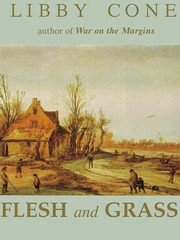
The blind son of the founder of a short-lived utopian settlement in Colonial Delaware describes his coming-of-age in an olfactory memoir.
Seventeenth-century Holland is a major power with a large, wealthy middle class built on spices and slavery. Dutch schemes to colonize the New World attract few interested parties, but Pieter Cornelissoon Boom, an early Mennonite with a dream of communal living, brings a few families to Delaware Bay in 1663. Their "Little Common-wealth" is just getting started when the bloody economic rivalry between Holland and England unleashes violence on the coast of Delaware. The Nieuw Netherland colonies swing between Dutch and English ownership in a series of Anglo-Dutch wars. Cornelis, Boom's blind son, tells the story of the community (based loosely on the ill-fated Delaware settlement of Pieter Plockhoy) in its various forms of existence, relying on his exquisite memory of scent.
Excerpt
"The Soldier who had read the Proclamation began to shout "Disperse! Disperse!" and I heard the report of a weapon. I did hear people screaming and running. My Father came up to us. "Have Faith in Jesus," said he, "Go to my sister and her Husband's house."
"Pieter," my Mother did cry, "you must come with us!"
"No, Saskia," said my Father with great Calm, "I will stay with the Common-wealth."
"Your Common-wealth does flee!" she shouted. "Come hither with us!" We were hastening back to the settlement, as I felt the breezes of those rushing past us. I thought I smelled smoke. We then stood in the court-yard. Everywhere could I hear the sounds of the destruction of our little Common-wealth, as the smaller, and then the larger, buildings were torn asunder by groups of soldiers, then set ablaze. "Oh! They burn the fields!" my Mother cried out, joining her voice to those of others similarly aggrieved. "Pieter! Pieter! Cornelis, they have seized your Father!" We both stood, shouting for my Father. "Cornelis! He stands in the Meeting-House! Oh, my Jesus, they are setting it on fire! Pieter, come out!" My mother's hands did grip me tightly as we smelled the smoke and heard many people screaming, like those in a pit in Hell. Her hands began to shake, and she did say unto me, "May Christ forgive them; he does burn inside." I felt tears on my shoulder, and she was given to a great sobbing. I smelled the acrid odor of burning Thatch. My mother did clutch me to her bosom, but I smelt not her cinnamon, rather Thatch (the roof), then wood (the frame), then hair (perhaps his wool garments?), then the smell of meat upon the Fire, a smell I have never since been able to abide. I think I did smell his Soule departing, a brief whiff of such sweetness that my own tears did depart me for a moment. My poor Mother did not apprehend it; she wailed the fifty-seventh of the Psalms: "Be merciful unto me, O God, be merciful unto me: for my soul trusteth in thee, yea, in the shadow of Thy Wings will I make refuge, until these Calamities be overpast..." I thought of my Father in the Firmament, his Soule at Jesus' right hand, as his body was consumed as if it were a tainted carcass...We did stand in the wind caused by so many roaring fires, each destroying something built with Care and Piety. There must have been a signal from the English, for she said unto me, "Come away, Cornelis, we must leave this place."
Marooned is the 1860's saga of Justin Radcliff, a young American, who is beaten and thrown overboard by his evil twin brother, Edward.
Kolya, a handsome Black man and new leader of the transplanted Zulu tribe there, finds Justin caught in hi
Dublin 1941. A brutal murder. Mistaken identity. And barman Eamon Foley is running for his life.
Nine months later Foley is in a crowded pub, and his brother-in-law is shot dead.