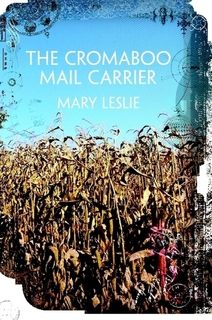
A new edition of Mary Leslie's historical romance, originally published in Guelph in 1878. This new edition by David J. Knight (Vocamus Editions) is fully annotated with a Foreword by Daniel Bratton.
THE CROMABOO MAIL CARRIER is the story of a young working class man and a middle-aged gentlewoman making their separate ways in the world of small town Ontario in the mid-1800s. One of the earliest novels by a Canadian female author, the book explores a unique culture where rough settler habits are rubbing up against the expectations of a growing “proper society.” Leslie writes with humour and wit, creating characters who are engaging and accessible even after a century and more.
Excerpt
THE CROMABOO MAIL CARRIER is the story of a young working class man and a middle-aged gentlewoman making their separate ways in the world of small town Ontario in the mid-1800s. One of the earliest novels by a Canadian female author, the book explores a unique culture where rough settler habits are rubbing up against the expectations of a growing “proper society.” Leslie writes with humour and wit, creating characters who are engaging and accessible even after a century and more.
Professional Reviews
From the Second Storey: Revisiting the story of a lopsided romance between Guelph and Erin. How controversy over a book published in 1878, derailed Guelph author's career and potential legacy. From the Second Storey by Andrew Vowles
Long before Dustin Hoffman and Anne Bancroft in “The Graduate,” there was the teenaged Cromaboo mail carrier and his thirtysomething female lover.
Such a lopsided romance would have been radical enough for 1878, when the historical novel “The Cromaboo Mail Carrier” was published here in Guelph.
“It was shocking for its time,” says David J. Knight.
But it wasn’t the unconventional love story that caused the novel to be pulled from publication.
A lawsuit pressed by the nearby village of Erin spelled the end of the story – for the time being. And although its female author went on to write other works, Guelph’s Mary Leslie never attracted the widespread readership that she might have garnered with this novel.
Now, just in time for International Women’s Day, her work will be reissued by Knight, a local author, archeologist and historian.
In the process, he hopes to draw attention to a largely forgotten author who was among the earliest – if not the earliest – Canadian female novelists.
“She was never in the Canadian canon,” says Knight. “I’m trying to re-ignite interest.”
He also hopes to save a bit of local built heritage.
Head out of Guelph on the Eramosa Road and look to your right, just where the roadway dips into a hollow beyond Victoria Road.
An old stone bridge still stands in a field, under threat of being swallowed by vegetation.
Today, the arched span is a bridge to nowhere. In the mid-1800s, it was directly on the route connecting Guelph and Eramosa.
The bridge would have been crossed by all kinds of horse-drawn traffic in those days, including the title character of Leslie’s novel.
Continue on Eramosa Road to Fourth Line in Rockwood and you come to Stone United Church. Among the markers in the churchyard is one for Mary Leslie, who died March 1, 1920, in Toronto.
Other stones mark the resting places of other family members, including her mother and her stepsister, Ruth Sockett.
One of the larger monuments in the cemetery commemorates Ruth’s husband, George, son of Rev. Thomas Sockett of Petworth, Sussex.
In another roundabout connection to Guelph, the British rector was the driving force behind the so-called Petworth emigration scheme, which saw hundreds of poor and unemployed people sent to Canada in the early 1800s.
That program was sponsored by Lord Wyndham, namesake of Guelph’s Wyndham Street.
In Leslie’s novel, Guelph is called Gibbeline and Erin is Cromaboo.
The author was born Jan. 8, 1842, in Leslie’s Corners in Eramosa Township, between Guelph and Erin.
Leslie’s Corners was established by Mary’s father, John Thomas Leslie, an engraver who emigrated here from England.
Leslie was 36 – roughly the age of Mary Paxton, her novel’s female love interest -- when she wrote “The Cromaboo Mail Carrier” under a pseudonym, James Thomas Jones.
She published the novel through Joseph Hacking, a publisher based in Guelph.
Her uncle, an agent in the United Kingdom, also tried to sell the manuscript there to a London publisher. The publisher opted instead for another novel called “Jane Eyre,” says Knight.
Meantime, Leslie’s novel had run into trouble here at home.
After a print run of about 100 copies, Erin village apparently sued over the novel’s uncomplimentary portrayal of its residents.
The town won, and the novel was pulled from the shelves. Copies remain in the Guelph Public Library and the Guelph Civic Museum.
Knight learned of Leslie while researching his earlier volume called “Guelph Versifiers of the 19th Century.” That volume was published in 2014 by Vocamus Editions in Guelph, also the publishers of this new “Cromaboo” edition.
He figures Leslie might be the earliest Canadian female writer, unlike better-known 19th-century authors Susanna Moodie and Catharine Parr Traill who arrived from England.
Mary Leslie was involved in other arts besides literature. In an 1890 letter now in the museum, she wrote about a plan to set up a women’s art college here.
That school never came about.
Leslie also pushed without success for legal changes to enable widows to inherit their husbands’ land and property.
She never married. She died in 1920, two years before British suffragette activist Emmeline Pankhurst visited Guelph. “It’s not impossible that Emmeline Pankhurst read the novel,” says Knight.
Besides resurrecting a forgotten novel, he’s involved now in discussions to gain heritage protection for that long-abandoned bridge on Eramosa Road.
He says Leslie’s story “enriches our understanding of former social mores and the heritage of our natural and built environment in the Guelph and Eramosa Townships.”
The new edition of “The Cromaboo Mail Carrier” will be launched March 8, 7 p.m., at the eBar downtown.
Based on the memoirs of a Pearl Harbor survivor. Letters from two pen pals take the reader on a journey into the past, a past where nightmares came true, and when hatred reigned.
Encountering danger, romance, heartache and tragedy, Catherine Merit strives to fit into a world filled with prejudice, hatred and violence where she is forced to kill a man in order to save herself. Third book of the Indignities Series.
Compelling historical fiction that traces the life of a young English immigrant woman who travels to America at the turn of the century to start a new life for herself. Encountering danger, romance, heartache and tragedy, she strives to fit into a