
Category:
Technology
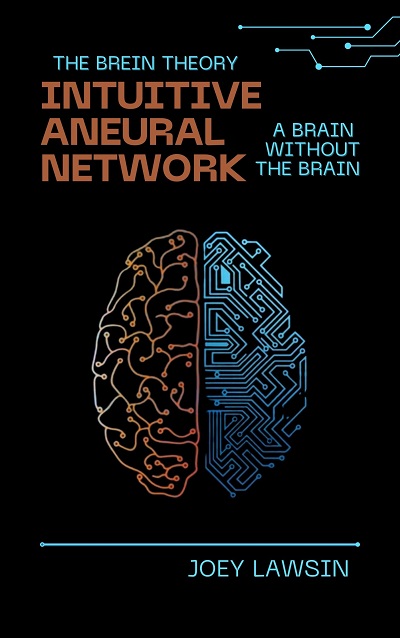
The Intuitive Aneural Network (IAN), the brainchild of Joey Lawsin and a component of his Brein Theory that focuses on binary memory intuitive systems, represents a significant paradigm shift from traditional neural to aneural memory networks.
The concept was uncovered during his innovative research on IAN with a brein that function akin to A Brain but without The Brain. IAN marks a transition from neural-based to aneural-based cognitive processing and is a key element within the expansive field of Autognorics, which is dedicated to the study and creation of engineered life forms.
Neuroscientists have long attempted to understand how memories are stored in the brain. Recent research posits that memories are stored through the reconfiguration of synaptic connections among neurons. However, such assertions have been criticized as mere linguistic gymnastics. These so-called experts are simply engaged in mapping synapses to understand memory formation without truly comprehending the mechanisms of information storage and retrieval.
Thus, this shows that nobody really knows how pieces of information are stored in the brain until IAN was born.
In this theory, Lawsin proposes that intelligence, behaviors, perceptions, awareness, consciousness, and other related mental interims can be processed without the need of neurons or the brain.
He also posits that a network of logics is the genesis of intelligence, while sequential set of instructions — which he termed ‘inscriptions’ — are the precursors to behavioral phenomena. He claims that everything stores at least two types of information (Brein Theory), and thoughts does not need to emanate from the brain. He uncovers too that mother nature is the original repository of information that contains its own physical anueral(non-mental) brain.
Lawsin further theorizes that aneural memory networks can adopt a lateral, open-ended configuration akin to a memory circuit board, or alternatively, evolve into a closed, spherical network reminiscent of the human brain.
In his groundbreaking work, Lawsin introduces a suite of concepts including Intuitive Machines (IM), Binary Memory (Brein), Intuitive Systems, Embedded Inscriptions, and Generated Interims. He synthesizes the concepts of life into a singular term, ‘Bioforms’, encompassing entities that exhibit life, aliveness, and living. Conversely, he defines ‘Abioforms’ as entities that manifest signs of life and living but lack self-realization. Humans and autognorics fall under the category of bioforms, while animals, plants, molds, and biotronics are classified as abioforms.
Moreover, Lawsin coined the term Inscriptionism, a view asserting that all facets of existence, including consciousness, are governed by the principles of inscription and emergence. This philosophy suggests that intuitive materials and embedded instructions dictate the behaviors and actions of all objects.
|