Easy-to-read instructions for office assistants, entrepreneurs and small business owners to develop marketing pieces such as flyers, brochures, logos and presentations that have a balance of “eye appeal” and “buy appeal” to make sales soar without having to hire a designer.
This award winning book provides easy-to-read instructions that will help anyone design eye-catching marketing pieces with great graphics and compelling content.
It provides:
136 pages of easy-to-read instructions that help you produce logos, brochures, flyers, presentations, and book covers that inspire people to buy!
200 full-color illustrations
Details appreciated by people with tight deadlines
Hundreds of techniques to reinforce your strategies
Tips for writing persuasive copy that “hooks” customers
It is organized in 11 sections:
Good Marketing Requires Good Design
Make Visual Elements Memorable
Writing Persuasive Content and Making it Flow
The Best Typography for Design and Readability
Laying Out Your Pages with Style
Design Solutions for Specific Projects
Working with Digital Imagery
The Role of Color in Your Design
Getting Graphics Files Ready to Print
Answers to Your Printing Questions
Resources
Excerpt
Using the proper file format and resolution for the job can mean the difference between a professional-looking document and one that looks blurry or is missing graphics. Graphic file formats for the Internet and offset printing are totally different animals. Do not interchange them!
Graphics for the Internet
Low-resolution raster graphics are used on the Internet. These graphics are made up of thousands of pixels (squares of color). Internet browsers will read JPG and GIF graphics, which are best scanned or sized at 72 PPI (pixels per inch). Because of the limits of screen resolution, anything greater will result in larger file sizes and longer download times than necessary. All Internet graphics are limited to a special palette of 256 colors.
Scan your photos using RGB colors to the JPG file format. JPG file sizes are very small and compatible with nearly every graphical browser. This format is best suited for photographs and any image that contains a complex mixture of colors.
The GIF format is best suited for images with a limited number of distinct colors and graphics that have sharp, distinct edges (most logos, menus and buttons). A special GIF89a file format gives you the option to make the background transparent so you don’t get a white rectangle behind the graphic.
Graphics for Offset Printing
Graphics for offset printing require much higher resolution than for websites. If you use a low-resolution graphic (i.e., a logo copied from a website) on an offset printed job, a fuzzy “bitmapped” image—or no image—will result.
Offset printed graphics can be one of two types: Vector-based or high-resolution raster. Raster images (which are color or grayscale digital photos and scans) must be at least 300 PPI (pixels per inch) and in the TIF (Tagged Image File) or EPS (Encapsulated PostScript) file format. Your scans of black and white line art (images that do not contain any shades of gray) must be at least 1200 PPI. Be careful not to enlarge your raster graphics, because the pixels will also enlarge and become more noticeable. (For more information on scanning resolutions, see How to Scan Photos at the Correct Resolution.)
Vector-based graphics are made of mathematically defined lines and curves. Because they are not made of pixels, these unique files can be scaled to any size without losing their crisp, smooth edges. Use professional drawing programs such as Adobe Illustrator, Macromedia Freehand, or Corel Draw to create these types of graphics for printing, saving them in the EPS format.
Professional Reviews
Dawn Goldberg, CMVA, COO of AssistU.com
As partners of clients who help make their businesses more successful, virtual assistants often have to oversee the creation of marketing material. While one option is to hire a graphics firm to do it all while the business owner remains hands-off, most small business owners can't afford this luxury.
Enter Turn Eye Appeal into Buy Appeal: How to easily transform your marketing pieces into dazzling, persuasive sales tools! by Karen Saunders. Filled with beautiful images, information-packed articles, and helpful tools, Turn Eye Appeal Into Buy Appeal is a must-have for any business owner who even thinks of creating (or getting someone else to create for her) logos, business cards, newsletters, brochures, and websites.
Turn Eye Appeal Into Buy Appeal overcomes all manner of design and print roadblocks with answers to such questions as
"What colors should I use to add 'zing' to my design?"
"Where should I start in designing my logo?"
"What will make people read my marketing piece?"
"What paper should I use for my printed marketing piece?"
"What should I say about my company?"
One of a business owner's goals is to increase his revenue. One of the best ways to increase revenue is to attract consumers through powerful flyers, business cards, brochures, and logos. Turn Eye Appeal Into Buy Appeal will help business owners be able to produce appealing marketing material that really sells.
Barbara Munson, Munson Communications Editorial
In my business as a book editor and consultant, I am always looking for good resources for clients. I have been able to find some good books on book marketing--and others on writing a good sales letter or press release. But until I read Karen's Turn Eye Appeal into Buy Appeal, I knew of no book that gave in-depth help on design and writing. I am very impressed with the quantity and quality of Karen's information. I especially like the easy to use format. Her book is a great example of the quality of work Karen produces in her business as a graphics professional.
Melanie I. Mulhall, award winning author of Living The Dream—A Guidebook For Job Seekers And Career Explorers
The difference between marketing collateral that gets tossed and marketing collateral that snags a new client or customer is often the quality of the graphics. Graphic elements that wow pull readers in and inspire them to actually read the content.
As a freelance writer and editor, I have a deep appreciation for the words that are folded into a marketing piece, whether a brochure, speaker/author one-sheet, ad for the print media, or book. I make my living with the words and my intent is always for them to sing, dance, and get attention. But my words cannot get the attention they deserve if the graphical elements of the piece are amateurish or uninspiring.
Karen Saunders has made eye-popping graphical appeal accessible to ordinary folks, thanks to Turn Eye Appeal into Buy Appeal. In it you will find ways to make the visual elements of a piece memorable, tips on typography and layout, design secrets that professionals use, and many other tools to help you create visually stunning materials. The small business owner will find this book invaluable. The graphics designer will want it next to her desktop. This is a great book for the layperson and professional alike.
If you need help with the words, come to someone like me. But if you want to make the words pop off the page, buy Turn Eye Appeal into Buy Appeal.
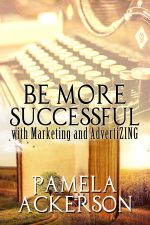
Bring the ZING into your marketing and advertising. Be More Successful is a perfect guide for new, aspiring, and established authors. Start using the tips before you finish reading--writing wisdom from Wall Street Journal Bestselling Author
Bring the ZING into your marketing and advertising. Be More Successful is a perfect guide for new, aspiring, and established authors. Start using the tips before you finish reading--writing wisdom from Wall Street Journal Bestselling Author
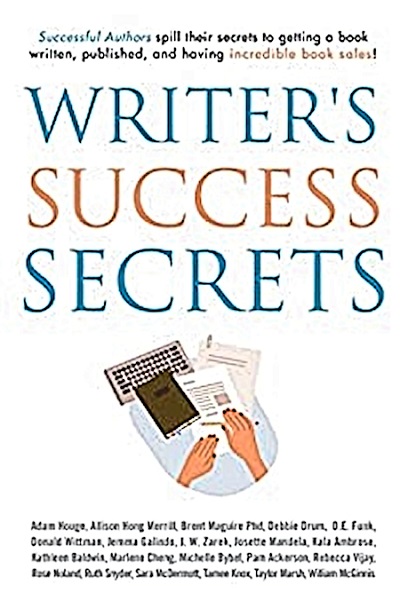
#4 on the Wall Street Journal Best Seller List -- Successful Authors spill their secrets to getting a book written, published, and having incredible book sales!