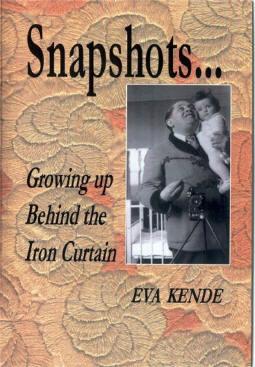
Eva Kende’s memoir of growing up in post-war Hungary. Her recollections are factual, realistic, touching and void of political bias. Suitable reading for Young Adults!
Eva M. Kende dipped into her painful past to write a non-political memoir depicting life as it was in post-war Eastern Europe, allowing the reader to come to his/her conclusions about the era. While the locale is Hungary, the events in the book equally reflect that of much of Eastern Europe. Her recollections are factual, realistic, honest, touching, non-judgemental and void of political bias.
This is not a textbook of history nor of political science, but a small realistic picture of life in the period. Yet it might shed light on the dynamics that seem to plague these emerging democracies.
Available as softcover paperback, as well as, economical ebook.
Excerpt
"On this sunny afternoon, about six of us girls congregated on a park bench, ignoring the boys this time, we got into a serious conversation and weighed our future and the options to avoid the pitfalls. We agreed that getting into a technical school was almost impossible, although some of us would have liked to become chemical technicians, textile technician, architectural draftsmen or medical technicians. Our success in enrolling in those schools was very remote. We all wanted at least to get into high school, because without that we faced having to take a job as a shop assistant for starvation wages or work as a construction labourer for a little bit more. While we had our preferences, it mattered little if we got a spot in a "real" or "human" program. Acceptance in one of the high schools depended on the same criteria as those used for technical school, but usually more of the "other" classification gained acceptance. The final decision always rested with the principal of the particular high school.
We had to fill out pages of applications for each school we wished to try to enrol in and attach signatures from teachers, guarantors -preferably some good party official- as well as a complete profile of our activities in school. We weighed our individual and collective chances of obtaining those signatures and decided that we could improve our standing a notch in the matter of school activities.
We were, from the early grades on, all members of the young pioneers, a politicized version of Scouts, because not joining would have been suicidal for us and our families. We attended long political speeches, standing on one foot from exhaustion while the speaker droned on about the "glorious Soviet Union," or how "our pal Rákosi" was building a prosperous future just for us. We also created bulletin boards with pictures and slogans depicting "father Stalin", the Russian revolution, the splendid cooperative farms, and the heroic factory workers breaking the norm. We stood in silence, wooden-faced when the principal announced Stalin's death, repressing our secret feelings of hope, joy or even elation at the news. We all did well in not letting our thoughts and emotions get us and our families into trouble. It was very difficult, and we all felt a little envious of Teri, a good káder, who broke into huge sobs on hearing the news.
We knew she earned some good points for her sobs with the communist members of the school administration."
Professional Reviews
Snapshots
I found the book an eye opener and a bit of a tear jerker, a fitting tribute to the revolutionaries who rose against the Soviets in 1956. History is often written by objective writers and historians with no real contact with the historical times about which they are writing. Eva lived through these times
and it is this authoritarian stamp that marks this book as a true account of life behind the Iron Curtain.
I can remember the Cold War paranoia, the reds under the beds syndrome, followed by the collapse of the Berlin Wall and the break-up of the old Soviet Empire.
Tyranny is allowed to continue throughout the world because good men do nothing,so the old proverb runs. Eva has painted the system of communism without any recourse to political correctness. Our political leaders would do well to read
this book when doing deals with tyrants or making mandatory immigration laws without looking at the true facts.
An outstanding read and a fitting tribute to freedom.
Alastair Rosie - Freelance Writer and Editor - http://www.asrosie63.force9.co.uk/
Snapshots
Snapshots' is a very personal look into one individual's experience of the Cold War, that by its very intimacy makes this period of world history come alive. Ms. Kende weaves a tapestry from selected memories of her youth, and the colorful threads come together to create a vivid, almost tactile portrait of post-WWII life behind the Iron Curtain that 21st Century that Westerners would do well to contemplate. After sharing Ms. Kende's experiences, expressed so warmly and conversationally, the reader will find new appreciation for the free, affluent life we so easily take for granted. It is a history lesson that teaches the heart as well as the head, and will leave you looking at your own life in a very new way. Entertaining, shocking, heart-warming, and enlightening, 'Snapshots' is truly a life-changing read."
Diane Lau, Publisher, Living Beyond RealityTM Press www.livingbeyondreality.com
Snapshots
Snapshots… Growing up Behind the Iron Curtain was a very interesting book to read, and I mean interesting in more than one way.
Along with the story are beautiful photographs that make you realize that this isn’t fiction, this is a story that really happened. The personal story of Eva. M. Kende. Make sure you read it, you’ll love it.
5 flags by Annick at Euro-Reviews,
http://euroreviews.eu.funpic.de/bookdetails.php?book_id=746
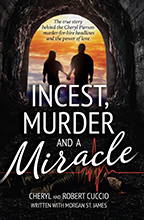
The true story of Cheryl Pierson Cuccio who made headlines in 1986 and her husband Rob Cuccio. Cheryl was abused sexually and physically and Rob died for 43 minutes on Cheryl's 43rd birthday.