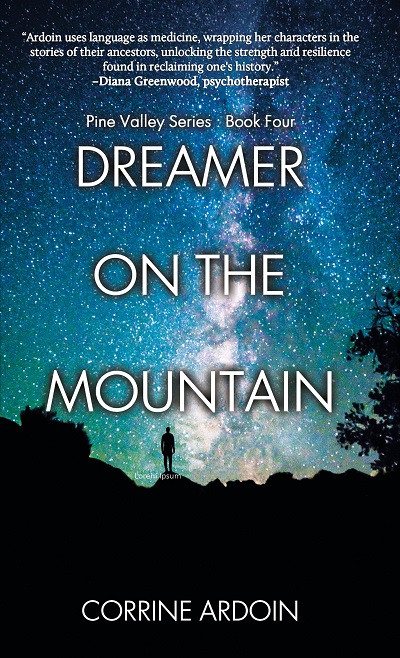
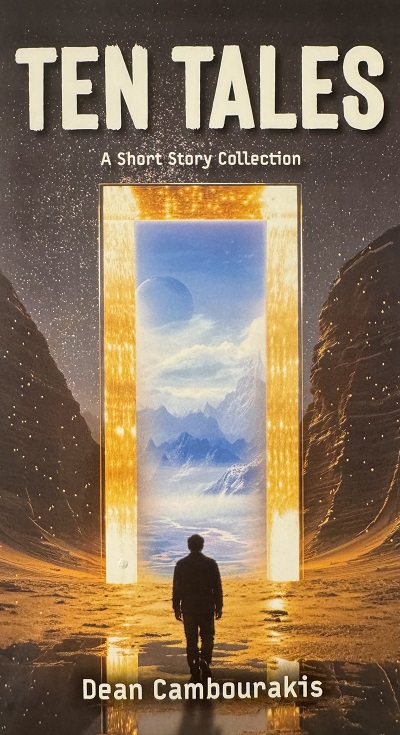
Julia Daniels, a Moloka'i pioneer woman of mixed blood, invites her grandsons Jeff and Ben to spend summers with her at her ranch. She shares the land with ex-husband Chipper, an alcoholic war hero with a life estate bordering the swamp. The boys roam a paradise of fishponds, waterfalls, and mountains with herds of deer. Jeff meets the kahuna woman who freezes pictures of her enemies, the transsexual who seduces the Chief of Police, the man who referees cock fights in Kaunakakai, the foxy divorcee who lives in the saddle room, and the prodigal grandfather who returns to woo Julia. These characters shape Jeff's sensibilities as he learns the secrets of his grandmother's wild past in Honolulu and the intensity of her struggles on the Lonely Isle.
My Irish mother was blessed with optimism. She believed in fate, blind luck, and the idea you could achieve anything if you loved doing it. The cup was half full. She loved to sing and dance and was convinced she would someday star in a Broadway musical. This dream remained despite my father's chidings it would never happen. Her dream would never die because it had become a life preserver that buoyed her spirits whenever she felt she was drowning in the responsibilities of marriage and motherhood. When I was three, she took me out to our driveway in Honolulu and pointed at the rising sun. "That's where I'm going," she said and tap-danced on the blacktop. I did my best to keep up. I was sure we were helping the sun break over the coconut trees on Aukai Avenue. Passing cars honked. My hapa haole father ran out and told us to get the hell back inside before he phoned the pupule house in Kaneohe.
My mother was the first postwar Miss Massachusetts, a statuesque blonde who wowed the Faneuil Hall judges with her song-and-tap interpretation of Cole Porter's "Begin the Beguine." I grew up believing she was touched by magic, having witnessed her winning every contest on our first and only cruise to Disneyland, from Best Muumuu to Best Hat & Gown to First Place in the Talent Show for her rendition of Al Jolson's "California, Here I Come." Admirers sent drinks to our table. We had hors d'oeuvres with the heirs to the Clorox fortune and dined at the captain's table. When the first mate suggested my mother accompany him to a matinee of Splendor In the Grass, my father told him to back off before he got a fat lip. A black steward called Ben and me "The Last of the Mohicans" upon discovering Ben had used the bathroom sink for number two. Even though our cabin was not equipped with a latrine, my mother used the comment to gain her freedom.
"That steward had a point, Dear," my mother said upon our return from Disneyland.
"Point about what, Mary?" asked my father.
"The boys are Mohicans. They're wearing me down."
"I'll fix their wagons," he said.
Ben and I were banished to Moloka'i, where we spent the rest of that summer with my father's mother, a no-nonsense woman from Honolulu who'd adapted to the rigors of country life. One of my father's earliest memories was watching his mother rope cows on the beach at Puko'o Harbor. She'd drag the cows out one by one until the horse beneath her was swimming and pulling a tethered cow. A ship anchored in the harbor dropped its winch. Two Hawaiian men treading water secured a girth around the cow's belly while she returned to shore to rope another. Sharks came from the deep water. Most lost interest after the cows were hoisted into the air but a tiger shark went for her horse.
That's when she pulled her rifle.
Professional Reviews
Literature from the Islands
MOLOKA'I NUI AHINA tells the story of brothers Jeff and Ben's childhood summers with their father's mother, Julia Daniels. Younger brother Jeff looks back on their island life with their grandmother, who lives on a remote farm where her ex-husband maintains a small life estate, and outsize island characters come tovisit every month of every summer. The boys are quickly drawn into the hard work of a farm from the first day of the first summer they spend there. They haul manure for the garden, tend horses, fish, swim, defend their property, and meet the remnants of old Hawai'ian culture as well as most of the main players in their grandmother's colorful life. In a decade or more of summers they experience a way of life on the sparsely populated island that is sometimes harsh and always fascinating. The writing is as natural as the most appealing of memoirs, giving the reader finely drawn characters and a sense of place that is immediate, detailed and immensely appealing. We see Jeff's love of the old Moloka'i of his childhood, which is slipping away to condo developments--including one being built by his father. Old dirt tracks are now paved and the colorful characters that his grandmother befriends are disappearing. They are being replaced, not by new versions of themselves, but by tourists and vacationers.
Wright's style is fluid and engaging. His characters are strongly drawn, including the character of the place and the land itself. The action moves quickly, and the language clean and clear, letting the characters and the place reveal themselves naturally. It's a coming-of-age novel that helps the reader remember what coming of age feels both at the time and in reflection. Sometimes those we love recede from us in time, in place, in memory. Accepting that is, after all, what coming of age is all about.
If you're looking for a superbly written coming-of-age novel with engaging characters and a magnificent landscape, then Moloka'i Nui Ahina: Summers on the Lonely Isle is for you.