Category: Self-Help Publisher: Simon Rose
ISBN-10: 1496185488
Type: Non-Fiction
Pages: 134
Copyright: September 22, 2013
ISBN-13: 9781496185488
Price: $2.99 (eBook)
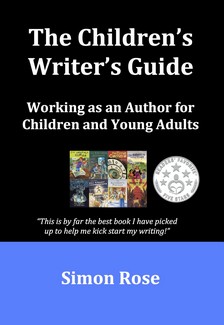
The Children’s Writer’s Guide covers starting out as a writer, where ideas come from, the importance of research, and writing science fiction and fantasy.
The Children’s Writer’s Guide examines how you can get started as a writer, create time and space to pursue your craft and deal with lack of motivation and writers block. Topics covered include where ideas come from and how writers turn them into stories, choosing names for characters that are appropriate to the story, the importance of historical research if your novel is set in a different era, writing science fiction and fantasy, and the use of magic in stories for children.
The author examines the role of editing and revision and how to deal with what is often the inevitable process of rejection, at least until good fortune comes your way. The author also recounts some of his experiences with marketing and promotion, such as book launches and in-store signings, websites, blogs, and social media, and discusses presentations, workshops and author-in-residence programs at schools and libraries.
Excerpt
Introduction
This book talks about getting started as a writer, creating time and space to pursue your craft and dealing with lack of motivation and writer’s block. It also looks at where ideas come from and how writers turn them into stories, choosing names for characters that are appropriate to the story, the importance of historical research if your novel is set in a different era, writing science fiction and fantasy and at the use of magic in stories for children.
It examines the role of editing and revision and how to deal with what is often the inevitable process of rejection, at least until good fortune comes your way. I also recount some of my experiences with marketing and promotion, such as book launches and in-store signings, websites, blogs, and social media, and presentations, workshops and author-in residence programs at schools and libraries.
Professional Reviews
Readers' Favorite
“Writing books for children is a marathon, not a sprint.” So claims children’s author, Simon Rose. With quite a few children’s books published and in circulation, the author knows the amount of time and effort that goes into writing a book. And the work never slows down. It’s more than just writing. As he points out in his book, The Children’s Writer’s Guide, there is a great deal of discipline and dedication that goes into pursuing an idea from its roots to the final product of a published book. And the work doesn’t stop there, as all writers today will agree. There’s the promotional package, the book signings, the in-school visits and presentations, and much more. Writing a book, any book, is a job that never really comes to an end.
Simon’s guide is a valuable resource for both beginner and established children’s book writers. In the first chapter, he provides some basic groundwork for all writers, with subsections with headings like: “In the Beginning” and “No Happily Ever After.” He continually stresses that writing is more than just generating a great idea. It’s hard work and lots of it. So writers need to be organized and committed to what they propose to write. He leads you through the initial concept of finding the great idea to inspire the book, how to hook the reader, and some less traditional writing guide topics like choosing the right names for your characters and dealing with rejection. Using examples from his own experience and his own published works, Simon provides a clear and concise guide to writing a good children’s book. Very useful."
Goodreads
This guide would be a terrific read for anyone who - like myself - had the notion to become a children's writer, without any idea how to go about doing that!I was fortunate enough early on in my journey to meet Simon, as well as other writers that were willing to fill me in on the ins and outs of writing for Young Adults, but if you don't have those mentors in your circle, this guide can give you a flavor of what you're in for. It addresses how to get started on your book, advice on ways to stick with it, as well as shares many tricks of the trade and writing tips. Simon uses real examples from his own writing as examples in an easy to follow, practical format.
For those who are considering a career in writing, it also gives a candid view of what this might look like - how to promote your book once you've published it and how to manage presentations, workshops, appearances at libraries or book stores and school author visits to round out your income and make a business out of being an author. Whether you've got an idea for a picture book, have an outline for a short story, or have several chapters finished from your first novel, this book is a great resource. I hope it inspires you to write and find success!"
Amazon
"Simon Rose's Children's Writer Guide takes you on a step-by-step journey through the exciting world of writing for children. From the opening, his message is clear - write, write and write some more! For many of us the first step is the hardest, and Simon provides us with simple examples of how to engage. He also runs through some of the most basic excuses that often get in the way of our dreams.
From there, Rose walks us through the critical steps of developing an interesting storyline, bringing our characters to life, and inviting our readers to feel the challenges of our protagonist. While it's up to us to breathe life into the tale, Rose offers advice and a framework that makes it all so much easier. From idea generation, to overcoming writers block, to the editing process, Rose offers creative and easy to follow advice.
And finally, none of this will matter if you don't know how to get your material to market after it is published. You will find advice on how to teach the public about you and your work and how to develop your marketing strategy.
Overall, the guide gives a realistic look into what is required to be a writer. It outlines the important steps required to succeed and includes meaningful examples. This is by far the best book I have picked up to help me kick start my writing!"
Stress is the name of the job for almost all first responders. Learn how to lower your stress, help other first resonders lower their stress, and how to deal with people at a scene who are stressed.