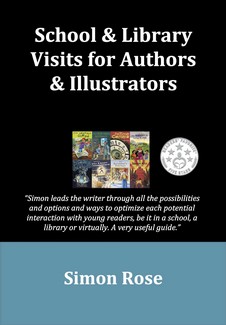
This book examines school and library visits for children’s authors and illustrators, including organizing school tours, maximizing book sales, and creating presentations, workshops, and residency programs.
This book examines school and library visits for children’s authors and illustrators, including organizing school tours, maximizing book sales, and creating presentations, workshops, and residency programs.
These details are also included in The Children’s Writer’s Guide, which examines how you can get started as a writer, create time and space to pursue your craft and deal with lack of motivation and writer’s block. Topics covered include where ideas come from and how writers turn them into stories, choosing appropriate names for characters, the importance of historical research if your novel is set in a different era, writing science fiction and fantasy, the use of magic in stories for children, the role of editing and revision, how to deal with rejection, and marketing and promotion.
Excerpt
Introduction
This book examines school and library visits for children’s authors and illustrators, including organizing school tours, maximizing book sales, and creating presentations, workshops, and residency programs.
These details are also included in The Children’s Writer’s Guide, which examines how you can get started as a writer, create time and space to pursue your craft and deal with lack of motivation and writer’s block.
Topics covered include where ideas come from and how writers turn them into stories, choosing appropriate names for characters, the importance of historical research if your novel is set in a different era, writing science fiction and fantasy, the use of magic in stories for children, the role of editing and revision, how to deal with rejection, and marketing and promotion.
The Children’s Writer’s Guide is available as both an ebook and as a paperback on Amazon.
Professional Reviews
Readers' Favorite
"Once a book is written, edited and published, the work is by no means complete. Authors have to be very resourceful in how they promote their work. This doesn’t have to be a burden. Some parts of self-promotion can be quite enjoyable. For example, a children’s author can visit schools and libraries to connect with their potential audience: the young readers. This can include a presentation on what it means to be an author, what the author enjoys writing about, where the author gets ideas, how the author creates believable characters and how they choose character names, and the importance of doing research, especially for historical and highly scientific or technical stories. It can also include a reading. Some interesting games, like word searches, all based on the author’s books, can also attract the potential young reader’s attention.
There are considerable opportunities in every community which are great venues for sharing one’s writing passion with young readers. As Simon Rose discusses in his book, School and Library Visits for Authors and Illustrators, the need to connect with one’s readers can be a satisfying undertaking. In today’s wonderful high-tech world, there is also the option of connecting virtually with one’s readers. As well as visits and readings, both live and virtual, authors can offer workshops for young readers/writers to inspire them with both their reading and their creative writing ideas. Simon leads the writer through all the possibilities and options and ways to optimize each potential interaction with young readers, be it in a school, a library or virtually. A very useful guide."
This is your journal, for your writing. An interactive journal with historical tidbits designed to nurture creativity and self-motivation, features one side for drawings, sketches, or pasting personal pictures, and the other side lined for notes or j
Fortunate indeed is the Man or Woman with a healthy sex drive, who has also learned the art of sex transmutation. For in the source of this vital power also lie the sources of endless Wealth, Health and Genius! And this book tells you exactly how!
<