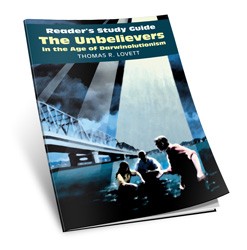
The Study Guide is not Bible study or lessons in theology. It asks questions to help the reader consider important messages in the story and think about where current trends are taking us in the future. Do you want us to go there? Reading references are provided.
Many questions are answered in the story and some answers arise out of the story.
The Study Guide aims to promote thought and discussion and to help you to work out your own beliefs and attitudes about the issues raised in the story. It offers a range of views by other writers and poses questions for individual, family and group discussion about:
- Power & Authority, Government, Law & Justice
- God and the Church
- Darwinism & Evolution
- Relationships
- Ethics
- Work
- School & Education
- Technology, Information & Knowledge Increase
- The Environment
- Australian Military accomplishments
The Quizzes are to help you discover answers to very important questions, including ‘Who Am I?’, ‘Why Am I Here?’, ‘My Objectives’, ‘My Spiritual Quest and My Dream’, ‘Hearing God’ and ‘My Prayer Plan’.
Excerpt
1. Private Study
This is a Guide not a teaching aid.
Our children and grandchildren have been given to us to care for and raise to be able to live constructive and satisfying lives under God. They are our greatest treasure, our most valuable contribution to the world and our greatest responsibility. When we cannot do more for them physically we can still do a lot for them spiritually. This is the author’s purpose for writing the book and this Study Guide and means of describing the vision.
Story provides a larger and deeper understanding of the great truths than do plain facts. Jesus told many stories to communicate truths. This story is a lot more than just a story. The author hopes it will help us find answers that will cause us to see the need to make decisions that will secure our children’s and grandchildren’s freedom in the future world.
The Study Guide is designed to help readers better understand the thoughts underlying the story. Many questions are those which are far too infrequently raised in normal community or church life. The author believes we need to think more deeply and more often on these questions.
It is a good idea to read through the questions in the short Study Guide chapter after reading the same chapter in the book. You can review your notes and answers later.
The Study Guide questions are not for testing comprehension or reading skill. The questions are designed to trigger your thoughts and maybe raise more questions.
On topics that interest you jot down a few words in the spaces provided. You can delve into some of the readings if you want to, or find other readings of your choice.
You may find some questions difficult. You can ask others about them or seek advice. Knowing the answers is important. You may have differing opinions or know stories that you want to examine further. You can make notes in the Study Guide.
Make notes of any scripture verses, other references, thoughts and ideas that seem relevant to a question or to your answer.
And you can simply make your attempt to answer each question in your own words.
2. Group Discussion
“When two or more people are gathered together in My name, I am in their midst…” Or, “When two minds discuss a question a third and invisible mind joins them…”
The purpose of the discussion is not to come up with a consensus or uniform position on a topic but to test and refine participants’ own understandings.
When they bring their chapter answers to a weekly or monthly discussion group or family round table they can talk over the questions and group members’ answers.
Add any useful information to your own answers.
Some rules for Discussion Groups and Family Round Tables
Taking one question at a time every member to tell the group their answers to the question
Acknowledge every contribution
Don’t criticize and never evaluate
Limit answers so that no one person dominates, especially if there is a chair person, or an older or more experienced person present
After every member has had their say open the discussion by asking ‘What have we learned?’ or ‘Who would like to start the discussion …?”
Set an overall time limit. The younger the members of the group, the shorter the time frame recommended.
Make it a regular event
Follow up in subsequent discussions any issues that were not satisfactorily resolved in previous discussions
When a discussion or round table has to be postponed get back on track as soon as possible
Reward attendance and contributions
Professional Reviews
Helen Storer, Canberra
I so appreciate the time and knowledge that has gone into this Readers Study Guide. When it gets into the hands of Christian men and women, mentors and teachers who want to provoke the next generation to think on biblical principles and godly values it will bless the nation. It is so important!! Helen Storer, The Foundary, Canberra
This book consists of a 150 pages of Christian poetry about the end of time and the Second coming of Jesus Christ not as a servant but as a King, the King of kings. To bring righteousness and peace to the earth and restore the government of God! Peac