Leaders fail, not from a lack of knowledge or imagination, but from a lack of courage or will. Never in our history has the need for courageous leaders been greater!
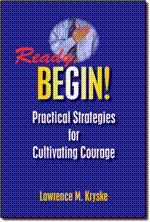
There are thousands of books about leadership and less than a dozen about courage. None, however, tells the reader how to be courageous. Finally, there is a book about how to cultivate courage.
Ready, BEGIN! contains over 250 practical strategies, techniques, and insights how to cultivate courage including overcoming fear, conquering procrastination, getting into action, sustaining momentum, and burning with more focus and purpose. This book is for leaders who want to create bolder visions, generate more sales, encourage daring innovation, implement new changes, and strengthen teams?
A soldier patrols a dangerous sector known for booby-traps and insurgent activity. A fireman races into a burning high-rise. A policeman runs into a dark alley in pursuit of a gun-toting suspect. We all recognize courage when we see it.
There are icons of courage that bring shivers to our souls: images like the flag-raising at Mount Suribachi on Iwo Jima or Ground Zero at the World Trade Center or places evoking reverence like the Alamo. And who exemplifies courage? Individuals like Abraham Lincoln, Margaret Thatcher, Nelson Mandela, Mother Teresa, John Glenn, Oskar Schindler, Lance Armstrong, and countless others.
Most of us, however, are not involved in such life-or-death struggles. Our battles occur at work and home. This book is designed to give ordinary people some practical tools to cultivate more courage in their lives. Strong courageous leadership is needed everywhere. This comprehensive manual will give the reader the tools to become an even more valuable leader.
Excerpt
Introduction
What separates the almost great from the great? What transforms a leader into a legend? What enables a business to adopt new changes successfully or embrace quality? What permits a sales person to leave the pack behind? What allows a person to do what is right despite enduring public ridicule and personal loss? The answer is COURAGE!
Courage is critical to a multitude of facets involving leadership and business success:
Conquering procrastination
Creating bolder visions
Overcoming fear and anxiety
Inspiring commitment
Empowering action
Excelling at sales
Encouraging innovation
Integrating quality
Exceeding customer expectations
Facilitating change
Embracing integrity and accountability
Strengthening team cohesiveness
Sustaining momentum
Leadership is the art of getting things done with other people. The most important words in this definition are “getting things done.” Leadership is not solely about planning, intentions, dreaming, or hopes. Rather it involves achieving specific, measurable, time-dependent outcomes. Visioning and planning are only part of the leadership equation. Translating those visions into reality takes courage and determination.
“Be courageous! I have seen many depressions in business. Always America has come out stronger and more prosperous. Be as brave as your fathers before you. Have faith! Go forward.”
Thomas A. Edison
In every business endeavor courage is necessary to be successful. In sales courage is needed to overcome the fear of making cold calls, of failure and rejection, of making a sales presentation, and of asking for the sale. In change management courage is needed to create a compelling vision, to communicate honestly with all employees, to give ownership to stakeholders, to build momentum, and to cut through bureaucracy and naysayers to achieve short-term wins.
Being innovative means courageously offending sacred cows and conventional wisdom, creating a playful environment that stimulates new ideas, and doing things in a totally different way. Implementing quality improvement takes courage. It also takes courage to reconsider processes before blindly assuming that people problems are to blame.
Executives, managers, and supervisors need to be with their people, leading them, not behind their desks. That takes courage. They confront doubts, cynicism, and ridicule to get the mission done. That takes courage. Where physical danger, adversity, and hardship are present, so are leaders. That takes courage. Balanced risks, bold visions, and dramatic acts become the rule not the exception. That takes courage!
I’ve been amazed by the volume and variety of leadership books currently in print. Many of these books cite historical figures who had courage and explain why courage is a critical leadership trait. Unfortunately, the authors fail to tell the reader exactly how to be courageous. There are, however, a number of things a person can do to prepare his or her body, mind, and spirit to be courageous when the occasion arises.
No one ever graduates from the school of leadership or courage. We are all students. Whenever someone thinks that he or she has arrived, a more complex, challenging opportunity presents itself.
*******
A man stood facing a blank canvas. His vision was to capture in oils the peaceful countryside before him. He was a great leader—he eventually walked the world’s stage for over seventy years, served in five wars, and authored over fifty books—but this leader didn’t feel great in front of the canvas. He was intimidated by the empty white surface that stared back at him. Brush in hand, he hesitated. Then he timidly put a tiny dab of blue paint on the canvas—blue since the sky was blue. And this great leader was anxious about what to do next.
Don’t we all have a blank canvas before us? Aren’t we waiting to paint our masterpiece on it? However, instead of oils, we paint by what we say and do. So what’s keeping us from reaching our dreams?
And what’s holding our organizations back? We’ve set goals. We’ve developed mission statements, vision statements, and value statements. And we’ve identified strategic objectives. Despite having a crystal-clear picture of where we want to go, the outcomes we desire continue to elude us.
Keeping pace in today’s global market means changing the way we do business. Unfortunately, we tend to regard change with the same enthusiasm as volunteering for a root canal. Implementing change takes bold leadership.
Most people remember Winston Churchill for his dynamic presence as the Prime Minister of Great Britain during the Second World War. He perceived the coming of both world wars and the Cold War. He had a bulldog’s courage and a never-give-in attitude. And he used heroic words and deeds to change the way people thought.
Churchill was one of the truly great Renaissance men of all time. He was a statesman and warrior, an administrator and historian, an orator and bricklayer. He was also an accomplished artist. He managed to complete over six hundred oil paintings sandwiched between his other career achievements. Yet he was the great leader intimidated by that blank canvas. His painting career almost ended before it began.
How did Churchill overcome his hesitation at the canvas? He needed the help of a friend to show him the way. In a similar fashion, this book will serve as your guide. I’ll share with you some insights and suggestions on how we can make our visions a reality. To do this, we need to expand our visioning process, because vision alone isn’t enough.
Churchill was once called a young man in a hurry. His productivity and achievements were prodigious. His leadership and life are best described by a three-step strategy for success.
First, he needed a compelling vision of what he wanted to achieve. Then he needed the courage to take those critical first steps. And finally, he needed to follow through with determination until he achieved his vision. Vision, courage, determination—I call these key factors the Churchill Factors. (Appendix A gives a more detailed summary of the Churchill Factors.)
“Courage is rightly esteemed the first of human qualities because it is the quality which guarantees all others.”
Winston S. Churchill
Most people can craft a vision. And, if they can just get started, they can perhaps plod along until they achieve their goals. But taking those first steps often becomes a barrier to them. They need courage to move beyond their vision.
Although we can cultivate the soil, put a seed in the ground, water and fertilize it, we cannot make the fruit develop on an accelerated time schedule. Bearing fruit will only happen if the conditions are right for the plant.
Cultivation merely involves loosening up the soil to foster the future growth of the plant. In a similar fashion, cultivating courage means identifying the nature of courage and discovering ways to develop the thinking, reflexes, and actions that will help a person become courageous.
The Five Cornerstones of CourageTM will provide a means to understand the nature of courage and offer a variety of practical ways to cultivate it. Courage is the objective we pursue. Whether we attain this purpose will ultimately be up to each individual.
Summary of Key Points
Leaders respond to life’s challenges with vision, courage, and determination.
Courage is the most important leadership trait.
A person sources courage from the inside out.
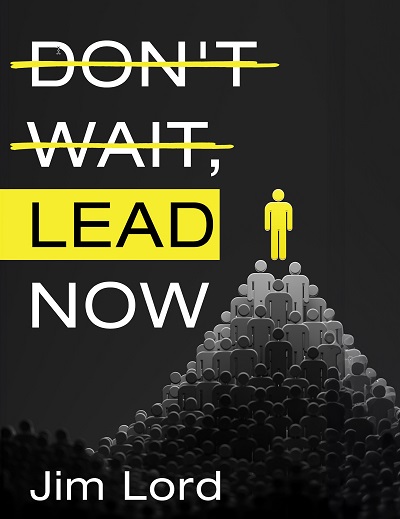
Don’t Wait, Lead Now is a must-read for emerging leaders and anyone in leadership that wants to up their game— full of practical, real-world examples that highlight the traits and behaviors that create high-performing teams.
Once walked, the path of the Inner Compass leaves everyone transformed. Uncover a future with unlimited leadership possibilities. Master your ego
https://www.amazon.co.uk/dp/B09ZRRPFW5/