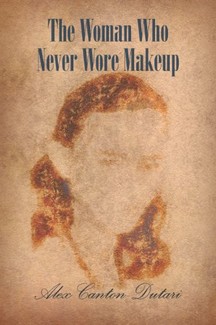
Throughout the story the parallelism between daughter and parent is portrayed to understand the frequent emptiness of children born out of wedlock in Central America.
Though being born our of wedlock is very frequent in Central America, not many children express the sense of loss, suffering, isolation with which they have to live. This was especially true in the beginnings of last century and even nowadays, in spite of the laws that have been enacted to protect them.
This is a true story of a real fighter -- a girl that never gave up her search for her father. The search was more psychological than physical. This project took her from her original Nicaragua to Panama and, finally, to California.
When I was in my teens my father told me, quite seriously: Son, I hope you never have a child out of wedlock. You don't know how much they suffer.
This inspired me to write this true story.
Excerpt
*****
Since I had arrived at Union Station a little early, I entertained myself by studying, if not admiring, the locale. The enormously high, wooden roof was engraved, forming a series of squares separated by wide beams, which lent the place an air of gravity as well as architectural exactitude. Along with the apparent serenity of the passengers, the atmosphere was one of understated elegance. I could not help noticing the absence of the usual hustle and bustle that one is accustomed to hearing in Albrook bus station in Panama City. Even the travelers who were using their cell phones spoke in whispers.
After a short while, I started to notice an increase in the number of people exiting the tunnel. Standing up to get a good look at each one of them, I was not surprised when I caught sight of a woman who was no longer wearing the same little short-sleeved blouse and long skirt. She was sporting pants and a pink shirt. Her wide forehead and salt-and-pepper hair highlighted her face, which was completely devoid of makeup.
Upon recognizing the woman as María, I ran forward, and then practically scared her to death as I engulfed her in a bear hug and covered both of her cheeks with kisses.
“Did you recognize me?” she asked while smiling curiously.
"Of course, silly,” I replied, “you have not changed one whit!” The truth was that she had not.
“It has been almost forty years,” she said, with a hint of sadness and perhaps reproach in her voice.
“The important thing is that we are together again, and we are going to make up for that time. I do not mean to imply that the time has been lost because I have accomplished many things, but now I am not going to let you go for a long while.” My heart was on a gallop, although I did not understand why.
“We shall see.” Her answer placed an open end on a story that seemed about to begin.
Professional Reviews
Bu Llona Cunningham
Not a traditional story, but I liked it. March 31, 2013
By LLona Cunningham
Verified Purchase
Disclosure note: I downloaded this 99-cent novella and read it partly out of curiosity, and partly as a favor to the author. It is a different experience to read a translated piece originally written in another language.
For myself, I very much 'enjoyed the read'. It was an interesting conversation (actually an interview, more than a conversation) between two elderly people who are not native to the US. The description of childhood events was not so foreign to me; it reads like history from some of my Hispanic ancesters. What it lacks in traditional 'beginning-middle-ending' flow, might have been better in the original language, but the portrayal of culture for the times and locations make up for it. It's not your typical sit-down-and-read-a-story experience. But I liked it.
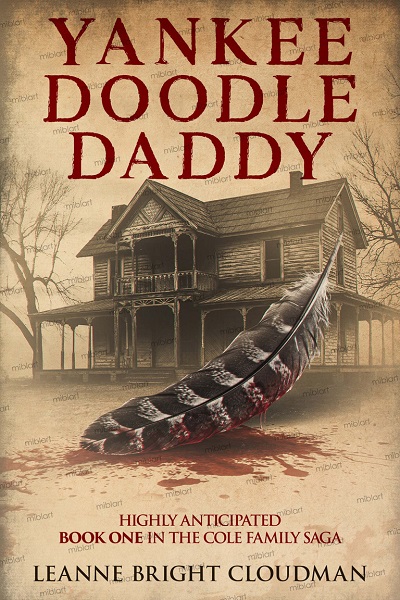
Yankee Doodle Daddy is a historical Appalachian Family Saga. The story follows a mother's reckoning as she struggles to survive and keep her four daughters alive.