Kindle Edition
Amazon
Author Website
Black Rose Writing
Barnes & Noble
Category:
Literary Fiction
Publisher: Black Rose Writing
ISBN-10: 1684331978
Type: Fiction
Pages: 281
Copyright: January 17, 2019
ISBN-13: 9781684331970
Price: $6.95 (eBook)
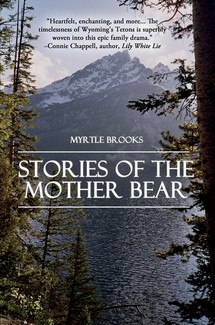
A newspaper reporter discovers others through the centuries shared the same vision he saw as a child in Grand Teton National Park. As he pieces each story, letter and entry together, the common thread eludes him: until a Native-American elder counsels him to seek the rest of the answers within himself.
In Jackson, Wyoming, 1977, a cache is discovered in the attic of a deceased man’s home containing letters and diaries spanning two centuries. The newspaper report of the unusual contents confirms a vision a journalist experienced 23 years earlier as a 9-year-old boy on a camping trip in Grand Teton National Park.
Learning his memories of a mother grizzly bear who transforms the lives of the humans who cross her path were not imaginary after all, Chicago Sun-Times reporter Bill Larkin sets out in search of why he is among the chosen. Wrestling with his dread of the force driving him, Bill hears that same compelling voice caution him against turning back and losing his spiritual calling. As he pieces each story, letter and entry together, the common thread eludes him: until a Native-American elder counsels him to seek the rest of the answers within himself.
Stories of the Mother Bear, a literary fiction/fantasy memoir woven around historical events, begins in Omaha, where, as a student journalist, Bill’s near-idyllic 1950s childhood is shattered by the Vietnam War era. Years later, married with four children, Bill returns to Jackson Hole. He learns the deceased, Rufus Headrick, and his family were black cowboys. Rufus’ grandfather, Elias, a freed slave, kept a journal from his days as a Texas cattle hand through the family’s ever-westward travels to Teton before it became a national park.
Portrayed in Elias’ journal is a large, engraved brass key his son received from a Kiowa youth he met along the Chisholm Trail in exchange for his pocket watch. The key is yet to be found. Who is the estate’s rightful heir? And what connection does the Headrick Family have with the Mother Bear?
Excerpt
Monday, January 14, 1885
Our sojourn in the Sand Hills of Nebraska has allowed us time and opportunity for growth, some in unexpected directions. In another month Eunice’s older brother, Joseph Tremayne Phillips, who is proficient in cattle breeding, will join us from Milwaukee, Wisconsin; with his wife, Mary Hannah White; and their children, Sherman, Geraldine and Josiah, ages 14, 11 and 9. Together this will increase our number to fourteen.
Maintaining the outlook that if we couldn’t afford but six head of cattle our dream would nevertheless unfold, we now own nine head.
After Joseph and Mary Hannah arrive, the family will again speak of packing up and moving west. We heard talk for a while now of a land beyond Cheyenne and Cody in Wyoming Territory: an arduous journey and far more formidable for ranching. Yet, filled with tall mountains, lakes and streams and open spaces, it is a land for to prize where a man can search and find himself, and goodly to rear young children. I see within my son Earle’s eyes the return of that special glow whenever I make mention of the place.
Even so, with profound realization of the greater loss, we plan a direction miles farther from our other daughter, Laura, and her family, who have been adamant in pledging their unending support. For, Laura and Caleb are content to stay in Texas, neither being cut out for the rugged and perilous life to which we subscribe. This intense wound Janetta and I have endured in silence and will continue to for as long as we live. In not pressing them to go with us, we do place their happiness and well-being above our own, knowing we will likely never see them again face-to-face.
Friday, June 18, 1886
Two days ago, we buried our dearly beloved departed son, Earle, in the wilderness, not far from a tall pine tree at the edge of a forest. With great care not to allow his body to be discovered by an animal in passing, we cast our shovels deep into the earth.
I had thought to lay upon his chest the brass key given him by the young Kiowa, which he so loved and cherished and did carry with him everywhere. It was Janetta who prevented me. “Are we to bury his legacy with him?”
Before succumbing to the bronchial influenza which had worsened despite our every effort to attend him with blankets, fluids and various tonics, Earle, too weakened to speak, looked straightway into my eyes. Written within his own, a fire burned brighter at its last before spent: outrage against the strong-armed man who had all too soon met him along the road for to cheat him out of his every dream.
Marcia holds a helpless expression while she consoles Eunice, who laments bitterly in her arms: “I had always thought, these years, it would be I.”
Hiram, Jr. and Elijah, devoted to their uncle, who took to following him about, will little speak, not even to their father who maintains a calm and pleasant air in their presence. He tells them the angels have brought Earle upstairs to live with them in heaven. By the distant look in their eyes, particularly Elijah’s, I discern heaven has become a place that much farther away.
Mother Scott has not failed to see to every possible comfort of Janetta and me; whilst Joseph and Mary Hannah attend Eunice, and the children are dutiful by example.
While none can assuage the broken heart of the parent who has lost a child, beyond examination it was Earle who bore the hardest burden. Nevertheless, a burden laid across my heart, tearing away in perpetual fashion, metes out a punishment akin to the fires of purgatory. For, Janetta and I will need inform our daughter, Laura, of the passing of her beloved brother, by way of a letter remotely penned and posted in Fort Washakie in two days’ time. She, the eldest child, had taken on the duties of protective, loving guardian of both Earle and Marcia since she was seven. And although Earle did love Marcia when he was small, it was Laura’s occupations he frequented and her confidence he later sought.
How easy, then, to send word by way of that sole and slender thread which connects us now, without our comforting presence Laura has need of in her time of grief? Suddenly, my best and brightest hopes overshadowed and diminished as though seized and held prisoner, all wisdom has turned to foolishness; all well-intended, noble aspirations weighed in the balances and called into accounting as selfish; all exhilarated pursuit stooped to the dust beneath the wheels. Laden with the unforgiving pain of separation, the urge to abandon all as folly and return to the daughter I have left behind has swelled within me. The hand which drives the oxen trembles, while they ever advance as if unawares. Give command, I must, for retreat, with repentance over a path so ill chosen.
But a stronger force still, and beyond my understanding, has compelled my hand to steady the course. And when I turn around, Eunice, who has been weeping, takes out her handkerchief and wipes her eyes. Then at once she replaces her handkerchief and sits up straight, raising her eyes heavenwards.
“We must continue. It is all he wanted.”
Wednesday, June 23, 1886
We have stopped to rest at the noon hour thirty miles past Fort Washakie within the Wind River Indian country. It is a rugged, mountainous land with rock-laden rivers, sweeping pines and mystery aplenty.
The Indians are respectful, the while, and willing to trade with us needed goods. Several jars of Mother Scott’s yellow and red peppers and Eunice’s peaches and apple butter they have well-received; also Janetta’s cakes of soap, Marcia’s cinnamon and clove-scented candles, and coffee. In return, the Indians provide us with buffalo hides, dried fish, pine nuts and peaceful passage.
As little Rufus runs around the wagon with his newfound friend, a Shoshoni boy close to his age, the memory of Earle’s meeting with the young Kiowa clutches my heart, and I allow a few tears their course. Rufus has gained much of his father’s appearance: he, the heir in whose behalf God has passed the mantle on to me.
As the rest of the family have entertained him many hours, Rufus has had little time to see his mother cry. They tell him she is tired and inside the wagon resting. Mother Scott has sought to explain his father’s long absence, that God kept Earle around long enough to have a son, and now, important matters need his presence upstairs.
“And while Daddy is away,” I myself have sat Rufus on my lap more than once, “I will be your father down here.”
By his brightened expression, I do see that a great hollow has been filled in Rufus’ heart, and so in mine.
Rufus and his playmate are tickled over the styles of each other’s clothing, which they express by pointing and by feeling the texture of the other’s raiment. Then, the little Shoshoni child takes Rufus by the arm and examines the darkness of his skin alongside his own.
Behind them both stands the boy’s father, who has been communicating in broken language with Hiram. The father’s eyes travel past the children to meet mine. Expecting mistrust, I find in its stead a deep-seated empathy. He nods to me once and turns to his son, wearing a contemplative expression upon his brow as to the lessons in life he will soon enough learn, as will my Rufus.
When the wagon pulls away, the faces of the Shoshoni Indians are turned hitherward, men, women and children; some pained with worry, some suspicious and resentful, some at peace.
Having myself experienced these emotions, oftentimes at random, I am drawn to look back at the Indians several times until their figures have, with distance, blended in with the surrounding hills and prairies: as though beholding my own image through the looking glass of humanity.
|