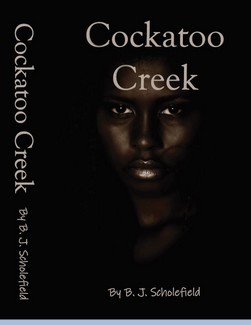
Set in the wild Kimberley country of northern Australia in the 1930s
This novel, set in the wild Kimberley country of northern Australia in the 1930s, paints a brutal picture of life in those early days, an era when men as dangerous as any that rode through the pages of the American west lived with apparent impunity. Lawless men with no regard for right or wrong. Men like Jan Muller, manager of the sprawling cattle station, Cockatoo Creek, a man with a secret, murderous past. A dangerous, sadistic man with no regard for the Aboriginal people that work on the huge property he manages, or those that roam the wild lands that was the Kimberley of those days. Men like, Max Crabbe, crafty opportunist, cattle thief and murderer.
Excerpt
PROLOGUE
Derby District Hospital Clarendon Street, Derby
Western Australia 15th August 2008
Sister Kathleen Murphy looked down at the name tag at the end of the white, wrought-iron bed. The words, Anna Cook had been hurriedly printed onto a piece of white cardboard and attached to the foot of the old woman’s bed. The young Sister stood by the edge of the bed and spoke softly to the old Aboriginal woman who lay there. ‘Hello, my dear, how are you today?’
The old woman did not reply but nodded her head in quiet acknowledgment. Outside, the urgent wail of an arriving ambulance broke the silence as it turned into the main gates.
The Sister smiled at the old woman and took her hand. ‘I wonder if I could talk with you for a while?’
The old woman stared into Sister Murphy’s eyes but remained silent.
‘My name is Sister Kathleen Murphy. I am a teacher here in Derby at the Holy Rosary School. We are encouraging our students to take an interest in local history. Many of them are Aboriginal and one of them told me about you, and that you were here in the hospital.’
The old woman’s expression remained unchanged, and the Sister began to wonder if she had understood her at all.
‘The young girl who told me about you said that you lived out at Cockatoo Creek Station for most of your life. We were hoping you may have some interesting stories to tell us about the old days. If you were to agree, perhaps I could take some notes; that is, of course, if you don’t mind.’
The old woman still did not answer, but Sister Murphy noticed that her eyes seemed to light up, if only for a second. The Sister stayed by the bed patiently waiting for a reply, but the old woman still remained silent.
‘I’m sorry my dear, you’re obviously very tired. Perhaps I could call again on another day. She smiled at the old woman. She knew she would not come again. She reached down and patted her hand. ‘Goodbye, my dear and may God bless you.’ She turned toward the door.
‘So . . . you want to know about the old days?’
The sudden sound of the old woman’s voice startled the young Sister. She smiled and returned to the bed.
‘They were hard the old days, you know, much harder than now.’ The old woman’s voice was hushed and tremored with age.
‘I am so glad you heard me, my dear. Would you mind if I sat on your bed, and we talked for a while? I promise we’ll stop as soon as you get tired.’
The old Aboriginal woman’s dark, noticeably oriental eyes seemed to come to life with memory. She lifted herself higher on her pillows and patted the bed for the Sister to sit close to her. ‘If you really want to listen to my story, then I’ll tell you. But, I warn you, some of it you will not believe, and some of it may make you angry, but I will tell you my story because I believe it should be told.’
The young Sister took out her exercise book and a brand-new ballpoint pen and waited while the old woman composed herself.
‘They are all gone now, all of them from those days out at Cockatoo Creek,’ she began.
Sister Murphy stroked the old woman’s arm. ‘Are you sure this is not too much for you, my dear?’
‘I am old now, very old, and there is no one left for me. I am alone. But back then, I had many friends, good friends some of them are buried out there among the boab trees.’
‘Please, go on, if it is not too painful for you,’ the Sister replied. She stroked the old woman’s arm again and opened her exercise book to its first page.
‘I remember when the very first one of my friends was buried out there among the trees; it was one of the saddest days of them all.’ The old woman stopped talking and closed her eyes for a few seconds before continuing. ‘But there were good times at Cockatoo Creek and I remember them so clearly, even now. We worked hard in those days, but we were treated well by the station owners. There were bad times though, very bad times, and I wish I could forget them. God knows I’ve tried, but I know now they will stay with me until I die. So, if you wish to listen to an old woman’s memories, then I will tell you my story.’
Sister Murphy nodded in agreement and began writing.
The old woman continued, ‘I was born in a bush camp long ago, deep in the wild lands, you call the Kimberley. My name is Jiiarnna―’
‘But―I thought your name was Anna,’ the young Sister interrupted, and then apologized quickly. She looked back toward the foot of the bed where she’d seen the name tag.
The old woman smiled. ‘My name is Jiiarnna. I am Aboriginal, but I am also part Makassar. My tribe is Ngarinyin and my people have belonged to this land since the beginning time.
Hello Baden.
We read Cockatoo Creek and found it to be a very captivating, extremely well written book. We actually finished it a few days ago, but we wanted to take time to review it.
I am French and I have been living in
Australia for nearly fifty years. I have the privilege of being married to a beautiful lady born in Adelaide but brought up and schooled in Renmark.
I love Australia and although we live in Perth, we both love the countryside, especially the river and the rugged plains.
We both think your description of the bushland regions is highly evocative and precise. We have enjoyed your choice of prose as well as the atmosphere and “feel” of a bygone era which in the eyes and heart of a European, such as myself, raises strong feelings of romantic nostalgia. These were nevertheless rough days when men had to be tough to survive and where women,and more particularly Aboriginal, had few rights and commended little respect. We think the way you portrayed Anna Cook and Jan Muller are very true to type. We fell in love with Anna but also with Isabella Montinari Nowadays, there are people in some political circles who are intent on promoting a false caricature of the “white man” and more particularly of any who have had the privilege of a good education. It is highly encouraging therefore to read how cleverly you destroyed by your pen that unfair portrayal and presented us, in contrast, with an Isabella and Michael Montinari who prove that good manners, compassion, love and respect can transcend all races, economic and educational status.
Truly, we loved your book and we think you are a leading author who deserves much greater recognition.
Meredith and I would love to meet you one day (or even chat on messenger) but above all, we would both love to read your next novel.
Please let us know if and when another of your fine works of prose is going to be published.
With much admiration and kind regards
Gérard & Meredith Goiran
I see that you are a jack of all trades. But, as a first-time author, you tell a spellbinding tale. I like well researched historical fiction, and especially those that accurately point out that the, "good old days," weren't really so good. I recently watched a two year television series called, The Son, a composite of the way South Texas was in the bad old days around the turn-of-the-century. Comanche Indians, the U.S. Army, cattle ranching, Mexicans with land grants, and the discovery of oil. A parallel to Cockatoo Creek, would be the King Ranch, where King, a lawyer, came down from New York and basically took land from the Mexicans living there by killing them.
I read very few books. But I will keep Cockatoo Creek in mind when I stop writing so much and have time to read. Whenever I read a book, I give a thorough review wherever that book is sold. This is not a review of your book, but from what I hear, I'm very intrigued with the story that you have created from history.
I'm still enthralled with my one viewing of the movie, The Earthling. Will have to go back and see it again sometime.
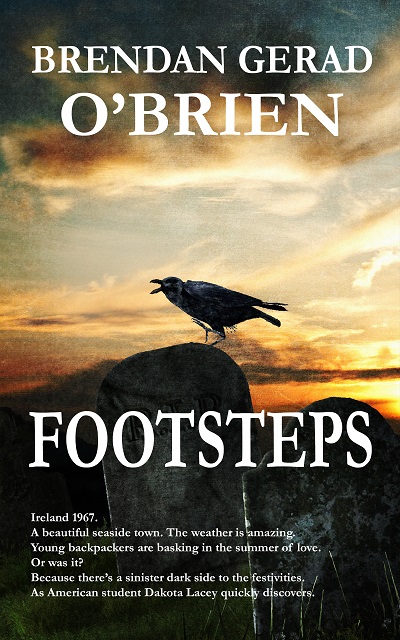
Ireland 1967. The Summer of love. Or was it?
A holiday weekend. Amazing weather. American student Dakota Lacey is hiking around Kerry.
But there’s a sinister, dark side to the atmosphere. Lone female hikers are being brutally attacked.
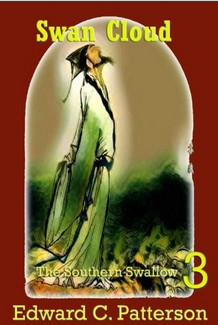
Third Book in Five Book Series - Southern Swallow - a tale of 12th Century China. Li K'ai-men becomes entangled in an intrigue that becomes his undoing.