Kindle Edition
Category:
Travel
Publisher: Post Hill Press
Type: Non-Fiction
Pages: 400
Copyright: Feb 17, 2026
ISBN-13: 9798895650158
Price: $16.99 (eBook)
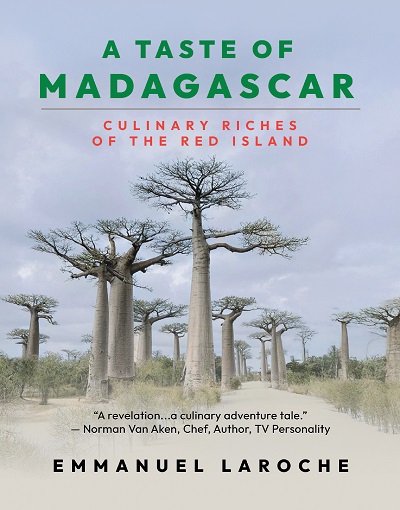
When people think of Madagascar, what may come to mind is a Pixar film, a lemur paradise, or the source of 80% of the world’s vanilla beans. In A Taste of Madagascar: Culinary Riches of the Red Island, Emmanuel Laroche—a Flavor Explorer and Culinary Storyteller—takes a captivating journey beyond that postcard image, into the kitchens, farms, and forests that shape one of the planet’s most biodiverse islands in the western Indian Ocean. Through the lens of food—vanilla, cacao, spices, honey, zebu, and caviar—he reveals how flavor becomes a force for preservation and pride. Part foodie travelogue, part cultural portrait, it’s a journey through taste, tradition, and transformation.
A Taste of Madagascar is a journey through one of the most flavorful and fascinating places on Earth.
It’s a book that blends travel, taste, culture, and biodiversity into one immersive story. I traveled across the island—meeting farmers, chefs, beekeepers, and entrepreneurs—each one working to protect Madagascar’s natural and cultural heritage while giving back to their communities.
Most people know Madagascar for its vanilla. But I discovered so much more—caviar raised in pristine lakes, endemic wild black pepper, pink peppercorns, honey from mangroves and lychee orchards. These ingredients became entry points into deeper stories—about resilience, tradition, and the future of food.
This book isn’t just about what we eat—it’s about where our food comes from, who it touches, and what it says about the world we want to live in. Madagascar didn’t just change my palate. It changed my perspective.
Excerpt
The scent arrived before the chef did: earthy truffle caramel on a black olive crisp, a citrus-and-chili bite of marinated red tuna, a frothy cappuccino of wild salicornia (a genus of succulent that grows wild in salty marshes and mangroves) with Tsiperifery pepper (a wild pepper that only grows on the island), and cauliflower paired with a sweet-tart passionfruit gel and local caviar. It was unexpected, precise, and unmistakably Malagasy.
Not served on a traditional plate, but in a sleek, minimalist bento box, the four elegant appetizers stood like edible vignettes—playful in form, complex in flavor. At that moment, inside the modern ambiance of Marais restaurant, everything else—our week of travel, the long roads north, the bustle of Antananarivo—fell away.
Just beyond the walls, Antananarivo buzzed with its evening ritual: streetlights flickered over busy intersections, taxis honking in tangled traffic, the scent of grilled meat curling through narrow alleys. But here, the city’s rhythm gave way to something else—a curated quiet, soft lighting, minimalist lines, and the gentle clink of glassware.
We had spent a week on the island, traveling from the capital in the Central Highlands, to the lush northeast, guided by our insatiable appetite for discovery and a deepening appreciation for the island’s unique ingredients. Each day unfolded like a revelation: farmers, artisans, and locals welcomed us into their world, sharing their passion, stories, and expertise. It was as if we were unearthing culinary secrets hidden within the very heart and soul of Madagascar. Our time in the famed “vanilla golden triangle” had only deepened our appetite for discovery and had left us hungry for more. Now, we enthusiastically anticipated the pinnacle of our journey: a meal that would marry the island’s flavors with the expertise of its most celebrated chef, Lalaina Ravelomanana.
One bite was all it took to understand why Madagascar’s ingredients had captured the hearts and palates of chefs who accompanied me on the trip. This wasn’t just the beginning of a meal; it was the beginning of a deeper story, one I had come here to taste, and now felt compelled to tell.
|