Category: Biography Publisher: University Press of Kentucky
ISBN-10: 081312123x
Type: Non-Fiction
Pages: 228
Copyright: Oct 1 1999
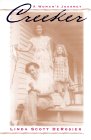
Creeker: A Woman's Journey takes the author from the head of the holler to the halls
of Harvard
Creeker is the story of a woman, born on a creek in Appalachia, who went on to
become a Ph.D. psychology professor. Her journey through life took her to all 50
states and more than 50 countries, while keeping her hill-country values.
Creeker, both laugh-out-loud funny and heartbreakingly poignant, chronicles her
life with remarkable clarity and without a hint of sentimentality.
Excerpt
Mine was not the Kentucky of blue grass, juleps, and cotillions; the Kentucky of my
youth was one of coal banks, crawdads, and country music. I grew up in the
Appalachian mountains of Eastern Kentucky, between the small towns of
Paintsville and Inez, in a place called Two-Mile Creek. This is my postcard from
Appalachia written from the beginning of the "Big War" through the "Age of Aquarius"
and running headlong, as quickly as all my baggage will allow, into the twenty-first
century.
I was born February 20, 1941, on a feather bed in the upper room of my Grandma
Emmy's log house on the left hand fork of Greasy Creek in what is now Boons Camp,
Kentucky. The birthing room was heated by a coal fire, illuminated by coal oil lamps,
and the aroma of the hams, curing above the bed, permeated the small room.
Dr. Frank Picklesimer drove the fifteen or so miles from Paintsville over winding dirt
roads to deliver what he judged as about four pounds of Linda Sue Preston.
At that time it was considered unusual for a doctor to be in attendance to deliver a
child in families of our circumstance, but my mother was sickly and it was thought
that one of us might well not make it through the experience. Hence the presence of
a physician.
My daddy's name was Life; my momma's name was Grace. Who could ask for a more
auspicious beginning? Daddy worked in the coal mines. We bred Hampshire hogs
- those are the big black ones with a white stripe around their midsection - and raised
most of our food on a couple of acres Grandma Emmy Mollette owned. We got
electric lights when I was in the second grade and indoor plumbing came
considerably later. I come from a rural community in deep Eastern Kentucky and I
am one of those who went away and stayed -- but I never got away, not really.
I want to take you back home with me to see the range of colors of the trees in
autumn, when the whole country smells of woodsmoke and leaves and apple-butter;
to see the mist that hangs in the valleys in the mornings and the glitter of the dew on
spider webs as the sun creeps over the tops of the trees. I used to lie on my belly on
the faded, wooden bridge, crossing the creek to my house and stare at the water until it seemed that the bridge was moving instead of the creek. As the water streamed past me, I would imagine that I was going on a big ship to someplace exciting.
Every time I have steamed into port in some far-flung, exotic place, I have thought
about my bridge and my creek and the path that led me from there to here.
Seems to me that it's time for me to mark that path so I want to take you back to
Two-Mile and the wellbox and the bridge and the church house and the graveyard
and the rock cliff and the coal bank and . . . and. . . .
Well, this Tennessee poet will have to read this Kentucky author's book. I love the way you've presented it without pretention or unnecessary melodrama. -- Jeff
Reviewed by Marge Sporleder
7/26/2001
For those of us that are from Appalachia understand the book very well. This book would make a great Oprah "Book of the Month". So many view people from Appalachia as dumb, but it is a cultural misunderstanding. It should be mandatory reading for those that think we're illiterate.
A book for every Muslim and everyone wishing to know about their way of life. The Diary of the Camp Manager at Mundihar following the South Asian Earthquake - October 2005. An account of life after the Earthquake in one of the largest of the 161 camp