Category: History Publisher: Infobase Publishing
ISBN-10: 1438182910
Type: Non-Fiction
Pages: 424
Copyright: Aug 1, 2019
ISBN-13: 9781438182911
Price: $75.00 (eBook)
This valuable educational tool for students and teachers not only entertains with engaging stories on the lives and events which comprised the Harlem Renaissance of the 1920s. It also provides important case studies of diversity, multiculturalism, and activism relevant to the 2020s.
The critically acclaimed Encyclopedia of the Harlem Renaissance has long been an important and entertaining resource on African-American and American history of the 1920s-1940s. Just as it became a highly-valued addition to libraries like the Smithsonian Collection and Yale University upon its initial publication, the recent online edition has become an equally important resource for virtual classroom learning during the COVID-19 pandemic.
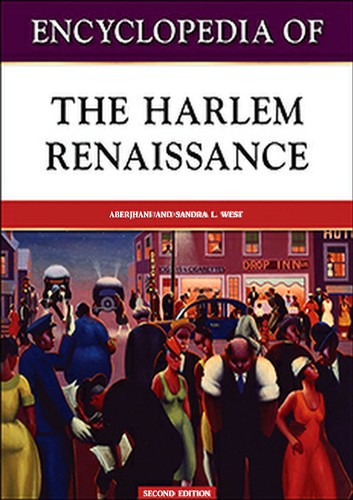
While the first edition of this encyclopedia was readily recognizable by Jacob Lawrence’s classic 1954 artwork “Village Quartet” on its cover, the second offers readers something new in the form of cover art featuring Archibald J. Motley’s painting: “Black Belt.”
Just as the Harlem Renaissance itself helped lay the foundation for the 1960s Civil Rights Movement and today’s Black Lives Matter Movement, the Choice Academic Title award-winning Encyclopedia of the Harlem Renaissance helped pave the way for additional publications on different facets of the era. This groundbreaking volume remains notable not only for its informative articles on such figures as Zora Neale Hurston, Adam Clayton Powell Jr., Gwendolyn Brooks, James Weldon Johnson, and many more influential figures. It is also treasured for its revealing texts on the components of diversity, sexuality, politics, and immigration which served as definitive backdrops for the renaissance and springboards for contemporary social justice and racial justice initiatives.
Excerpt
“Notwithstanding the memories of slavery, and in the face poverty, ignorance, terrorism, and subjugation still deeply woven into their lives, the embittered past of blacks was taken onto a much higher plane of intellectual and artistic consideration during the Renaissance.”
― Clement Alexander Price
“The leaders and followers of the Harlem Renaissance were every bit as intent on using Black culture to help make the United States a more functional democracy as they were on employing Black culture to 'vindicate' Black people.”
― Aberjhani
“Sandra L. West and Aberjhani have compiled an encyclopedia that makes an important contribution to our need to know more about one of modern America’s truly significant artistic and cultural movements. It helps us to acknowledge the complexity of African American life at a time when the nation’s culture was taking on a recognizable shape, when race was becoming less of a crushing burden and more of a challenge to progressive people and their ideals, and when cities and their inhabitants symbolized the end of the past and the seductiveness of the new.”
― Clement Alexander Price
Professional Reviews The writing is superb 5 Stars
I'm absolutely, positively NOT an expert on this topic. I'm interested in the topic for its own sake, and I'm also interested in cultural and environmental factors that foster creativity. I have kept this book in my car for the last couple weeks, and I find myself reading a passage or two here and there. I've been reading it along with Abdul-Jabbar's recent book. There are quite a few books out there on the Harlem Renaissance, and the last 100 years of African-American history. I'm not familiar with most of them.
Here's why I loved THIS book.
The writing is superb. The passages are about 1-4 pages each, and they confront the reader with the snap, crackle and pop of concise, crisp journalistic prose. The authors have a knack for deepening knowledge while causing the reader to want to know even more about the topic. The portraits tend to be descriptive without being judgmental, which adds credibility to the passages and force to the general topic. At the same time, the authors seem psychologically savvy, providing internally consistent life histories in many instances. There's a phenomenal amount of information here about remarkable people and places. The scholarship appears to be quite good, with helpful references following each passage.
DH Peterzell on Amazon
No one trick pony
Aberjhani’s and West’s collective genius is in expanding the idea of the Harlem Renaissance to include trends that either contributed to it or resulted from it, thereby making this book less a snapshot of American history than a sweeping landscape.
For example, not only do you get very Manhattan-specific listings such as ‘Lenox Avenue (Malcolm X Boulevard)”; under “B” you get an entry for the “Black Unit of the Federal Theatre Project,” a New Deal project that began influential black theatre groups across the country from Boston to Oakland.
No one trick pony, Harlem Renaissance also contains a timeline, a glossary of period slang, and a comprehensive appendix of maps showing various aspects of the African American diaspora following the Civil War, tracing migratory trends from the Deep South.
Even more than the text itself, these maps graphically illustrate how African Americans became this country’s cultural driving force only after forsaking the rural South for urban melting pots like New York, Chicago, Baltimore and St. Louis.
--Connect Savannah
A wealth of information
"Aberjhani and West delve deeply into the roots and broader effects of the
Harlem Renaissance...This meticulously cross-referenced volume will provide
the serious student or special interest classroom with a wealth of
information about this fascinating period of American history....a thorough
and well-researched book...a capable resource for collections that have a
high demand for information about this juncture in American history."
A work in American history and existentialism Which is an Invitation to connect and create the dots in your life to other revolutions like the Cuban Revolution.