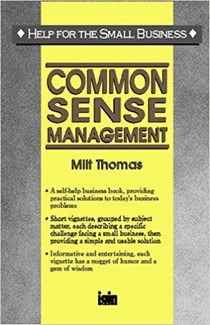
Easy-to-read retail business management guide. Originally published in 1997, this book has recently been reprinted after gaining recognition as a top guide for small business.
What Is Your Management Style?
Management styles are almost as diverse as personalities and we all try to perfect a style that fits our vision of success.
There are five basic styles:
"Management By Intimidation" assumes employees are mindless simpletons who must be harassed and herded like sheep. This style fails to account for that basic human need -- dignity. No normal person wants to be treated this way These days you might even run the risk of intimidating an employee who collects guns.
With "Management By Default," employees are supposed to perform in precisely the manner their boss neglected to tell them. The boss might know what to expect of every employee, but that information must still be communicated. It is not transferred through osmosis or special genes like the ones that determine athleticism and good looks. The risk with this style is that in the absence of communication, employees fill the vacuum with their own expectations, often a much shorter list.
"Management By Example" is most often the style of a manager promoted from the ranks and expected to supervise people he or she went bowling with last night. A new manager does not want to alienate longtime friends, so the first thing he or she does is pitch in and work alongside them. The employees are then somehow supposed to believe their former co-worker has been magically transformed into a manager. It does not work.
"Management By Consensus," utilizes the very principles of democracy that made our country great. Unfortunately, democracy rhymes with anarchy when running a business. Unless an employee has a stake in your company and is prepared to suffer the financial consequences of bad decision-making, forget Management By Consensus.
Style, as it turns out, doesn’t define management anymore than style defines quality in an automobile. Good management is a blend of teaching and encouragement, leadership and cooperation, reward and discipline. Management is not showing your employees you can do their job -- it is showing them how important their job is to you. Criticism for unsatisfactory job performance (in private, of course) is good management when coupled with recognition for satisfactory job performance. Initiative and pride should be nurtured in an employee, dishonesty and disrespect cause for dismissal.
If you approach management with these qualities in mind, you will end up with the fifth and final management style, the one known as "Effective Management."
Professional Reviews
Book Description
Written by a seasoned manager and a respected author, this book takes each aspect of a small business and suggests a common-sense approach to managing it effectively to minimize conflict and inefficiency, and maximize harmony and productivity. Fun to read and easy to understand, each chapter will relate to the reader in a profound way.
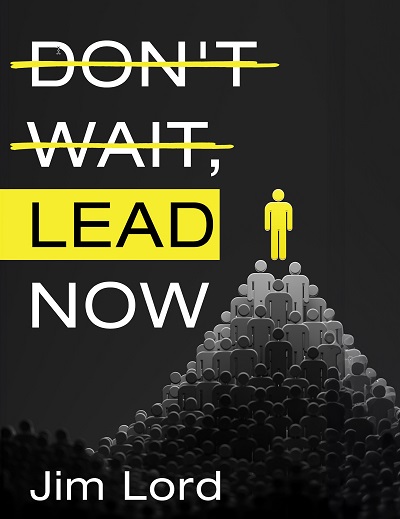
Don’t Wait, Lead Now is a must-read for emerging leaders and anyone in leadership that wants to up their game— full of practical, real-world examples that highlight the traits and behaviors that create high-performing teams.