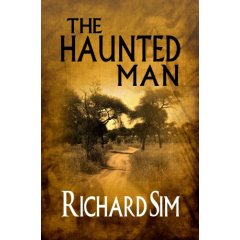
Native New Zealander, Chief Inspector Bruce Cordell, unravels the mystery of a boy brutally murdered in the last days of the Gold Coast. His investigation leads him to the uncovering of a corrupted society deeply embedded in local religious beliefs. As the story unfolds skepticism turns into fascination for the dark practices which underscore this sleepy African town. In order to solve the seemingly senseless murder Bruce will have to adopt the mindset of a religiously motivated psychopath. His rationality is put into question as he finds his cynical disbelief transformed into justly provoked fear.
Excerpt
ONE of the nastier sides of the job was wakening in the small hours of the morning feeling like a stunned fish. It was something I would never get used to. I came round, hardly conscious of what was going on, and groped for the receiver, dimly remembering that I was the Chief Inspector, the Officer in Charge when there was trouble at hand. That particular morning, I remember, I had suddenly become aware that the telephone had been ringing several times and lifted the receiver but heard nothing except crackling and buzzing, a common enough occurrence if the call had originated from outside the city. Then I heard a voice, a chattering sound from afar.
“Yes!” I yelled down the line. “This is Chief Inspector Cordell.” The luminous dial of my watch showed that the telephone had rung at precisely four thirty. Then I heard a sharp stabbing in my ear.
“We’ve got a body. It’s a small boy.” I made no answer, my mind still coming round from its nocturnal cocoon. “We’ve been told to report all ritual killings as soon as they are known. I suppose this death counts. I’m the Sergeant at Aquapim. I’m speaking from there. The body’s been dumped by the look of it.”
“Why there?”
“No ideas. No sign of a struggle, just a killing. You’d better come on up here, Sir. We can’t talk like this. I can’t hear you properly.”
“OK. We’ll phone back and tell you when we can be there.”
He demurred a moment. Clearly, the local police didn’t want to hear of possible delays so I confirmed that we’d leave right away. I phoned DI Ado immediately to inform him of our intentions. He didn’t seem too pleased but he took it with the calm of which only a native of the tropics is capable.
“We’ll have to spend the night there,” he warned. “Killing each other we can manage but as for building roads ... well, we’d better expect a stop-over.”
“Alright. I’m coming over to pick you up. I’ll be there as quick as I can.” I was about to hang up when I added, “Have there been any other reported troubles at Aquapim?”
“Not that I know of.”
I replaced the receiver in the handset, pulled back the mosquito net, and swung my legs out of bed. Katie was still asleep, looking beautiful and young and happy as I slipped out of the bed. I covered her fresh skin with a sheet and kissed her gently on the shoulder. She didn’t stir. Quietly, I went to the bathroom, washed and dressed as quickly as I could manage at that hour, my mind already returning to its familiar pre-occupations but with a new twist this time. A ritual killing in a remote village, by the sound of it. Unexpected. Decidedly unexpected.
Hurriedly, I packed a bag in case of an enforced overnight stay, made out a note for Katie and checked that the investigative tools I carried in my attaché case were in order. Then, I pushed the outside door open and let the rich scented air wash over me. It was hard to believe that this was a night for murder. Distantly, I could hear the hum of the bush and my mind reached out across the expanse of wild and the creeping fringe of jungle, which would encircle Aquapim.
Then quite suddenly and unexpectedly I found myself musing on how I came to be here. Well, where to start? I have tried to fix my recollections on some sort of human scale but it is never easy to appraise one’s own feelings accurately. So let’s start with the basics. It had all began so innocently and with such high hopes. Everybody had said I couldn’t do it, shouldn’t do it and wouldn’t do it. The idea of taking up a poorly paid colonial police officer’s job in the tropics was too unattractive for most. “It’s only the beer talking”, was about the kindest comment I received. Many think you have to be born with a wanderlust or an itching to roam the world. It wasn’t exactly like that for me. “Roaming” in my mind was more like taking a long walk. I wasn’t brought up in one of those big ports like London, Liverpool or Newcastle where the screeches of sea gulls and the talk of mariners sometimes has a Pied Piper effect on restless young lads. I was born in New Zealand; in Nelson, South Island to be exact but I never tired of sailing off our coast where perhaps the seeds of a lust to see the world were sown. Well, wherever the idea came from I don’t really know but let’s just say a spell in Her Majesty’s Gold Coast colonial Police seemed to offer the best chance for me and as I was in my thirties I still considered myself youngish and healthy so I signed on for three years, starting at £900 a year, ‘rising’ to £1700.
It was a new challenge and in a way I was looking forward to getting my teeth into the job. If anybody had told me then that I would be thrown into almost continuous conflict with Juju and the forces of Black Magic - well, I suppose I’d have laughed in their face. I was a New Zealander, schooled in English police work, and had spent most of my adult life in criminal investigations. You can’t do that without developing a streak of scepticism when it comes to superstitious beliefs.
When this adventure began I had been in my new Gold Coast post barely six months. Now it was just gone Easter 1956 and Jesus was dead. It was always going to be a challenging job, of course. I knew that immediately. To be made a Police Inspector in the colonies would be tough going at any time but at that moment the Government of the Gold Coast had just embarked on a five-year development programme involving enormous quantities of men, materials and equipment. There were going to be plenty of opportunities for graft and corruption; I soon found that as I’d feared fraud, theft, protection rings and embezzlement were spreading like the plague.
Some things, however, are the same the world over. For a moment, when I first arrived, I hesitated outside, knowing it was not the sort of place I liked to work. Our offices had a cold impersonal feel to them. They were located in a brand new complex off Station Road that you may know better by its modern name of Kwame Nkrumah Avenue. We enjoyed excellent liaison facilities with most government departments. Superintendent Parker had welcomed me at the door and taken me in. The hallway was spacious. An African policeman manning the duty desk gave it the familiar look of police stations the world over.
From the outset I was lucky in that some highly intelligent and capable African detectives staffed my office. The most senior were Detective Inspector Ado, a native officer, and DI Flugell, the only other European officer, apart from the Super and me. There were also three African Detective Sergeants: Kwanu, Nimo and Manful. The usual complement of Detective Constables, clerical officers and stenographers made up the rest of the team. The office itself was light and airy. It always had a simple straightforward feel to it and an air of expectation. The window held forth over the street and the room was plain as I liked a working office to be. There were no personal items, no books, no mementoes, not even a photograph from the War years but a good solid desk, three chairs and a dark blue filing cabinet. Set behind my spacious desk there was a range of dockets for different types of report and paperwork. Above me a powerful three bladed fan kept the office at virtually European temperatures. On the opposite wall I had pinned photographs of murder victims where they vied for position with assorted maps of the Gold Coast.
Though I didn’t like to parade my ignorance, the truth is that at the Accra police barracks I learned a lot very quickly, much of which I wouldn’t have learned back in England. I learned how to drive a car and a motorcycle; and I learned how to handle a revolver and a riot. Thus equipped I had to cope with whatever came along. Accra was a growing city but relatively crime free; and I listened with great interest to the Old Coasters with their tales of an African wild now gone or going. I guess in those early days I learned skills without even knowing that it was an education.
Not that all was plain sailing. A sprinkling of rapes and murders came our way but none for which I had to use any Maigret methods. Most crimes were inspired by drink or lust. My fictional heroes could not help me at all to deal with the principal crimes I encountered: bicycle thefts, a result of the irresistible status appeal of mobility to the native Africans. All in all it was not too bad a life but perhaps you’ll understand what I mean when I say that my first reactions to local superstitions were not overly sympathetic.
Then that night’s events at Aquapim were to change everything. At that moment I thought I was only beginning a journey into the bush, not one that would transform my life. So before putting the key in the ignition I looked at the maps. Aquapim. It was a little village deep in the bush with, so far as I knew, little crime record though I dimly recalled that it had a policeman routinely covering it. If local police were already investigating, there might not be a lot for Ado and myself to do. However, I didn’t want the evidence clogged up by too much amateur sleuthing. I turned the key and in a few moments the Land Rover slid out of the compound. I picked up Ado at his home: he was as spruce and bright as a needle despite the ungodly hour, a real credit to the Colonial Police Service.
They say all roads lead to Rome. I can just about imagine some toothless Dark Ages pensioner mouthing this imbecilic bit of nonsense. But the road we travelled that night led to Aquapim and nowhere else. According to the map the road, or should I say track, ended there but sometimes it felt as if it were going all the way to Hell. The trees stood high and the jungle sprang up all around, wrapping us in gloom. The usual potholes and hairpin bends assumed a new menace in the darkness. Here and there, the phosphorescent eyes of wild animals shone for an instant in our headlights or there was a startled rustling of wings as some frightened bird fled from our path.
Thirty miles later we arrived at the little town of Aquapim, just as the first rays of dawn were piercing the eastern sky. I had thought I was in a virtual wilderness of jungle, so dark and disturbing was the night. My initial reaction when I saw a building, more like a wooden shack actually, was akin to fear. There had been no warning sign of habitation here but when we drove towards the cabin we saw a whole village huddled close to the roadside. Aquapim’s obscurity was its greatest protection. The village lay on the Tettegah, a tiny tributary of the Volta. The villagers worked mainly on the fruit plantations not far from the huddle of huts, which comprised the village. Until only a few years ago about eight hundred people had lived here but the greater part of them had decided to better their lot by emigrating to Accra. Now there were only about half that number left and they too, no doubt, dreamed of escaping. A village street curved away from our vision with little more than a dirt track threading its way between the huts. Everywhere, creepers and palms had forced their way into the little openings.
So this was Aquapim, I thought to myself: a place of huts, children, fruit and hard work, ignorance within and the wide jungle all around. But what kind of a people lived in a place like this? Did it offer the key to the mystery of the ritual killing?
It didn’t take long to find what seemed to be the spot. We could see figures gathered together by the roadside and a lone dog was barking monotonously. But when we parked and got out there was no-one to greet us. A tall gangling, white clad figure who I took to be the Sergeant stood some distance away, waiting to be approached. I was both irritated and discomforted by this. I was as tired and lethargic as only a white man can be after a long drive through the tropical heat. Already, I longed to be indoors in the cool and to take a cold bath. The sky was still moodily dark and the air hazy with humidity. I was glad to get out of the car and stretch my legs. Overhead, the outlines of innumerable stars still blinked at us but they were fading rapidly now as dawn broke through the eastern skies.
“That must be the local police sergeant over there. I suppose we should introduce ourselves,” DI Ado said. Like me he was a uniformed police detective but unlike me he always seemed to be spruce and dapper no matter what the time of the day or location. I hesitated and Ado looked at me quizzically, brow furrowed.
“Now, tell me honestly, Sir,” he asked, his voice almost a whisper as if he were speaking in Church, “is it visiting the scene which is causing you the problems or do we have other concerns here?”
Who's ripping off the Federal prison system---and how?
A funny crime caper with a diabolically clever scam--Imagine Charlie's Angels starring in 9 to 5 Meets the First Wives Club