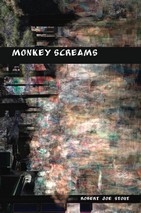
The War in Vietnam bursts forth poetically s participants describe their fears, hopes and retaliations, as do small town Americans reveal the pressures and joys of life at home and a retiree looks at his life, his past, his friends..
Monkey Screams thrusts the horrors, the idiosyncrasies, the fallacies of the War in Vietnam into the vividly personal reactions of participants whose fears, accomplishments and shame burst forth in descriptions that surpass journalism or propaganda. They are both confessions and recriminations, yearnings for home and struggles to make sense out of the senseless. In similar fashion the second section of these poetical narratives reflects the anxieties, conflicts, resolutions of the succeeding generation: life as it is contrasted with what life could or should be. Telephone linemen, football coaches, foreign-born account clerks wrestle limitations imposed by laws and society, proud of their achievements yet poignantly aware of what is missing in their lives.
The third and final section pushes into the present through the eyes, thoughts and imaginings of a journalist nearing the end of his career. Poems of acceptance, of remembrance, little details of life that never important before become planks between acceptance and eternity. Facts give way to dreams and dreams to definition of what his life has been and why. The factual world—lentil soup, the cat asleep—offsets perceptions of monstrous fish, a boyhood unicorn that only he could see as he experiences existence beyond that apparent to routines of daily life.
In Vietnam, the silence that followed battle was eerie, frightening, until the sounds of the jungle resumed—the monkey screams as one G.I. describes it. But the normal to which it returned was itself surreal, something to be apprehended intuitively, not understood by superficial observation. Throughout this book the intuitive pierces the commonplace, transforming the ordinary into something feared, loved, shared.
Professional Reviews
Poems To Make You Thnnk
This, Stout’s second full-length poetry volume, is divided into three main sections each containing a set of revelations but all concerning in greater or lesser degree the ways in which our government supports or fails to support its citizens and disillusion at the core of our society. Through a series of vivid images and forceful dialog, Stout serves up late 20th century America for us to chew and digest.
The book’s first section deals with Stout’s time in Viet Nam. He sets up his premise in the first poem, “Hero,” in which a soldier about to receive a Purple Heart reflects upon what he will tell his parents of the ceremony, and events leading up to it, that will spare them the horrors of war. He also considers the major, standing among legless Marines, who has puffed out his chest to receive a medal for wounds received “when rocks—not shrapnel—bruised his legs and shin.” This is Viet Nam from a soldier’s point of view—not only the constant sweltering, constant fear, body count, but also the screw ups in supply lines, lack of intelligence (in both senses), selective news coverage, profiteering, and profound lack of humanity and respect for indigenous people. In the background, always, monkeys scream from the trees. Very visceral.
In the second section, Stout relates lives of American citizens, personal narratives of people like the man next door, an old classmate, someone you run into repeatedly at the neighborhood grocery. They are teachers, nurses, telephone installers. Each relates a bit about himself, how life is going, and how his dreams have moved out of reach. Again, it demonstrates weaknesses in our government and in our society.
In the final section, Stout becomes meditative. He reflects on his past as a husband and a writer, discusses the present—living alone in Mexico in a small apartment. He looks back on successes and failures, making an uneasy truce with the present and contemplating the future, always writing and rewriting. This book is a fascinating trip through late 20th century America designed to make the reader think, and rethink, his complacency.
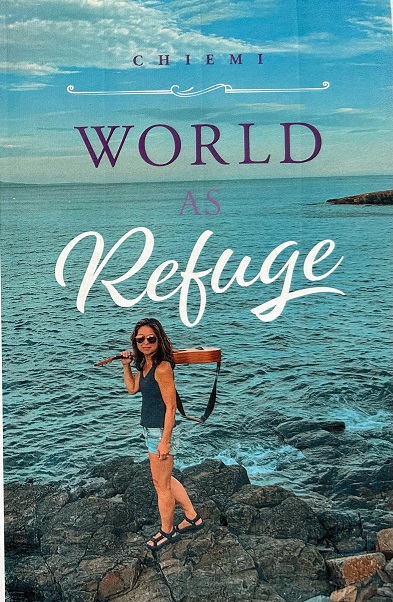
The songs and art in this book are about our collective emergence after the pandemic and trauma of the last few years - comprised of 5 collections: World as Refuge, Where We Live, In Our Hands, Rhythms of Change and What We See & Sow.
This book represents a thirty-day period of my poetry journal. Each poem addresses
the dominant thoughts occupying my mind during the early morning hours of a given
day.