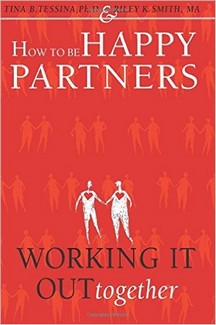
How to Be Happy Partners is the perfect tool for designing and creating a relationship unique to your individual personalities and situation. Written by the authors of How to Be a Couple and Still Be Free, this is a clear and concise handbook on how to achieve mutual happiness and individual satisfaction.
Includes Step-by-step instructions and guidelines to create a mutually supportive partnership allowing each individual to be equal in a relationship, based on a new model for a mutually happy partnership. Readers learn to use TheNegotiation Tree, an ingenious tool that can help any couple turn a struggle or fight into a cooperative problem-solving session.
This simple process can teach you and your partner to turn arguments into successful negotiations in which each of you can get what you want. It is based on The Negotiation Tree, which tells you where you are in any negotiation, and helps you create a mutually supportive partnership. With it, any couple can learn to create a loving, sustainable, healthy, and happy mutual relationship that both will treasure. The book is designed especially for:
* People who seek a model for equal partnership.
* Couples who want to transform struggle into teamwork.
* Couples who are married, cohabiting, or dating.
* Couples who are in a traditional or alternative relationship.
Want to review or comment on this book?
Need a FREE Reader Membership?
Reviews for "How to Be Happy Partners: Working it out Together"
Tessina’s book Creating Happy Partnership Working it Out Together is a must-have resource to turn to when couples disagree, have distorted expectations of one another, enter into power struggles, indeed, rescue a partner instead of asking for accountability, and during times of being challenged by a variety of normal to highly stressed conflictual, relational situations.
Picture the scene below:
June: I feel so neglected and hurt because you spend so much time away from me and when you are home, you plunk yourself in front of the TV and pay no attention to me.
Fred: What are you upset about? I bring home the bacon. I support this family.
June: Listen to me. All I want is more time with you because I miss you.
Fred: I expect to come return after a hard day's work to a peaceful home…not have you complaining all the time.
June: All the time? That’s it. I’m done!
Imagine door slamming, icy silence over the next days, and each partner holding inner resentments that very possibly will come out sideways in passive-aggressive behavior. Ouch!
If only June and Fred had Tessina’s book! She presents a model of how to deal with conflict that can create sustainable, happy partnerships for a life time. Tessina writes about the five qualities that make for happy partners. She focuses on cooperative problem-solving and presents a Negotiation Tree that allows couples the ability to work out happy solutions to everyday to severe problems that inevitably show up during the life time of long-term relationship.
Who should read this book? Ideally, it should be mandatory reading before forming adult relationships! Understanding, embracing, and living the communication and negotiation skills in Tessina’s book before entering partnerships would give the ability to have such high quality, really satisfying relationships and leave behind much unhappiness, power plays, and unsatisfying compromises that most couples resort to because they can’t negotiate their differences without shredding each other! In short, the book should be on everyone’s bedstand or nearby book shelf for ready reference to work out happy solutions to couple problems with the result there will be more time to love and enjoy each other that can only spiral upward into evermore satisfying levels of goodwill, martial satisfaction and enjoyment!
Hundreds of excerpts from the archives of the Narcissistic Abuse Study List regarding Pathological Narcissism, relationships with abusive narcissists, and the Narcissistic Personality Disorder (NPD).
Eight e-books regarding Pathological Narcissism, relationships with abusive
narcissists and psychopaths, and the Narcissistic Personality Disorder (NPD).