Amazon
Kerry Collison Titles
Dennis Jones
Category:
Historical Fiction
Publisher: Sid Harta Publishers
ISBN-10: 1921030984
Type: Fiction
Pages: 374
Copyright: October 2017
ISBN-13: 9781921030987
Price: $24.95 (eBook)
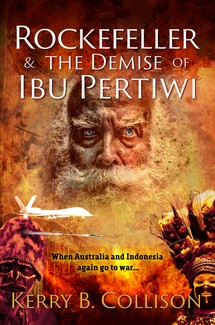
Decades have passed since heir Michael Rockefeller disappeared in West Papua and with the rise of the Free Papua independence movement with sightings of the hermit will Australia and Indonesia again go to war?
Will West Papua become another East Timor?
Michael Rockefeller disappeared in West Papua as Indonesia commenced occupying the territory preparing for what became a flawed UN sponsored plebiscite. Fifty years pass when an elderly European hermit is sighted in the Papuan highlands just at a time the Free Papuan Movement gains support worldwide for the United Nations to revisit the flawed referendum of 1969 dragging Australia and Indonesia into confrontation.
Excerpt
‘Time’s run out. We must decide now on what position we’ll take if the United Nations supports another referendum in West Papua,’ the Foreign Affairs Minister suggested. The Prime Minister’s Cabinet had been summoned to address the rising crisis on Australia’s northern doorstep. For months the diplomatic rhetoric between the two countries had been high, as Indonesian separatist groups across the archipelago took advantage of the political instability. Violence against Javanese transmigrants erupted across Kalimantan, Sulawesi, Nusa Tenggara and even Riau threatened to break away from the Republic.
Orchestrated demonstrations occurred on a daily basis against the Australian, Dutch and US embassies. The representative offices of African, Pacific and South American nations that supported the motion for a immediate UN referendum were attacked; some razed to the ground.
The mood was tense. None wished to raise the possibility of a military conflict with Indonesia. It was a taboo subject. In anticipation of Canberra vacillating as to where its loyalties should lie, Jakarta sent its navy provocatively close to Christmas Island. When the Jindalee over-the-horizon radar system reported a number of Indonesian, Russian-built Su-35 Russian fighters violating Australian airspace, the message was clear.
‘Indonesia has an inflated view of its military capability and their even suggesting conflict with Australia is insane.’
‘I don’t believe it will come to that,’ the PM offered, while mentally crossing his fingers.
‘If it does, they wouldn’t get a shot off before the RAAF turned Jakarta to rubble,’ a muffled voice from their number muttered, nudging the member alongside.
‘We won’t see a land war on our shores. They don’t have the capacity to transport sufficient numbers of combatants by sea, to offer any real threat. I still believe they’ll continue to bluff. They might try disrupting shipping lanes and that could cripple our exports. But, apart from any direct land confrontation across the PNG-West Papua border, I am of the opinion that at the end of the day they will grudgingly withdraw from Papua, trashing the place as they did in East Timor.’ The Foreign Affairs Minister said with conviction.
‘Slash and burn…’ the Attorney General reminded. ‘The Indonesian military would systematically burn villages, shops, buildings and destroyed infrastructure if they are forced to withdraw.’
‘I don’t agree,’ the Defence Minister argued, ‘losing all of Papua would be a powerful precedent for other provinces to follow. Both the East Timor and West Papua independence movements have overshadowed other fractious ethnic groups such as the Acehnese, Moluccans and Dayaks. And for that very season I don’t envisage Jakarta ceding independence to the Papuans without a fight.’
The Prime Minister was deeply anxious. Australia was tied to defending Papua New Guinea by treaty and the Indonesians should undertand that commitment. But, should Australia join a United Nations Peacekeeping Force in Papua New Guinea, Indonesian-Australian relationships would surely rupture. A hostile neighbour would cause chaos with Australian shipping, not to mention the impact damaged relations would have on the 400 Aussie companies’ billions in investments, across the archipelago.
‘On the bright side we would save just under a billion dollars in Aid annually,’ a junior member suggested. ‘And…’
‘Sure…’ the Foreign Affairs Minister interrupte
|