Kindle Edition
Download to your Nook (eBook)
Download from Apple iTunes (eBook)
Download from Smashwords (eBook)
Category:
Historical Fiction
Publisher: Smashwords
Pages: 470
Copyright: June 15, 2011
ISBN-13: 9781458122155
Price: $4.99 (eBook)
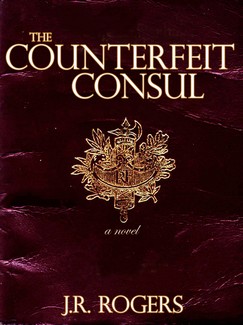
A French intelligence officer sets in motion a sabotage operation in New York City.
1916 – Gerard Le Caillec, a French intelligence officer with the Foreign Intelligence Section is trying to rescue his moribund career. In a calculated move he applies, and is selected, for an assignment his superior warns could become a career enhancing proposition or quite possibly the end of his career.
Le Caillec is sailing to New York City to fill the position of overseas resident officer. His mission hatched in Paris is to set in motion a sabotage operation—the destruction of armament warehouses on a Hoboken, New Jersey pier.
Set against a portrait of prewar New York City, WWI is raging in Europe but America is still neutral. The spymasters in the French capital want to pressure the Americans to put an end to their highly profitable practice of manufacturing munitions for the Germans, which are in turn being used against them on the battlefields of Europe. Operating out of the Upper East Side French consulate on Fifth Avenue, Le Caillec has his sights set on recruiting a bankrupt young French-American investment banker named Armand Barsoum to place the explosives on the docks.
Immigrated to New York from Paris, Barsoum is an inveterate handicapper and crippled by a crushing debt owed to a notorious bookie known as the “meanest man in New York.” Le Caillec extorts Barsoum’s help by agreeing to pay off his markers and to stand behind any further losses. But Barsoum balks. He wants to become an American citizen and worries his extorted cooperation by French Intelligence will lead to his discovery as a saboteur jeopardizing both his immigration application and his employment in the ‘white shoe’ firm that employs him.
But just as the plot is finally taking shape the Military Attaché at the Imperial German Consulate learns of it from a romantic interest of Barsoum’s, and makes immediate plans to deal with it.
Excerpt
Flags lined Fifth Avenue as Barsoum took a cab up to the consulate for the yearly reception. Massive, brooding thundercloud skies that had moved in during the morning now lay piled over Manhattan and threatened to disrupt the afternoon reception that began at three. The driver pulled up behind a long line of taxis, limousines and horse-drawn carriages in front of the three-story mansion in the Lenox Hill district across from Central Park. There was a long, distinct rumble of thunder overhead. Across the street people were fleeing the park ahead of the rain. The doorman at the curb cast a worried glance overhead as he helped a continuous stream of guests from their cars and onto a crimson carpet. A young man at the foot of the steps held a large wicker basket from which he dispensed paper French flags glued to little wooden sticks.
Barsoum leaned forward, tapped the driver on the shoulder, paid him and alighted from the taxi before it had inched its way to the front door. Like many others, in formal attire and top hat, he moved quickly up the sidewalk to avoid the imminent rain. He accepted his boutonniere and passed under the large, limp French flag that hung from an angled pole over the entrance. Barsoum took the stairs two at a time and was through the entrance flanked by two consulate employees. Reaching into his jacket, he presented his elaborate, engraved invitation and was ushered through to the marble entrance hall beyond, the space set off by an elaborate, glittering chandelier. The centerpiece of the reception was the wood paneled and parquet-floored grand salon. The room, adorned with tricolor bunting on the walls, was a spectacular setting with its elaborate coffered ceiling, damask silk drapes and high arched window panes that fronted the park.
As he pushed his way into the salon, he encountered the consul general looking for his wife. The two men remembered each other from last year’s reception, shook hands and after a word, went their separate ways. Barsoum avoided any mention of the much-admired Alco because he didn’t want to have to explain under what circumstances he had come to learn about it. Instead, he moved one pace at a time through the crowded and noisy room, the air colored with the scent of perfume and tobacco. The crush was awful, the din unbearable, the guests packed shoulder to shoulder. A hundred or more invitees drawn from the four corners of Manhattan filled the room, all of them conversing excitedly in French. The men correct in their dark suits, the women elaborate and overdressed, flamboyant in their once a year jewelry. Everyone clutched champagne flutes tightly to their chests, as Barsoum pushed his way through and inched across the room toward the windows. Comfortable, as he listened to the French jabber that surrounded him, Barsoum couldn’t help but notice the contrast between the crush of the boisterous, freewheeling and motley crowds at the racetrack and the champagne reception for the French of New York. At the consulate that afternoon, it was the same racetrack crush, though the faces he looked into were more content, the poses different, and the assemblage more pleasant and delightful.
Barsoum glimpsed a recognizable cabaret chanteuse from Paris, no doubt performing somewhere in town and smiled at a young woman teacher as he remembered their outing. He brushed past the two diplomats of the consulate staff huddled around an important looking, older visitor, perhaps from the Quai d’Orsay, and here Barsoum wondered about Gerard. When he reached the back of the room, he recognized and shook hands with a few familiar faces. Gaston, the maître d’ from his favorite restaurant was there, as was his haughty, blonde American wife who sat behind the register. She pretended not to recognize him though Barsoum ate dinner at the restaurant at least once a month. André, his barber was there and Véronique, the bubbly counter girl from the Upper West Side patisserie and bakery saw him too, waved and gave him a big smile as he approached. There were others, too, expatriates all and for the most part successful and happy in their new homeland though at heart he guessed they would be, as he always would, French first and foremost.
After a last, long panoramic view around the noisy room Barsoum was quite sure he hadn’t spotted Gerard. He pushed his way back over to the hall where he accepted a glass of champagne from a waiter who circulated with a heavy silver tray. He turned and made his way down the long hallway that led to the garden. As he passed the open doors to a small ballroom, he heard the band tuning their instruments. They were preparing to launch into “La Marseillaise” after the ritual speech by the consul general later in the afternoon. At last, he caught sight of Gerard who carried an empty glass held out in front of him as a way to part the crowd. Barsoum held up his arm in recognition and Gerard nodded and the two flattened themselves against the wall to let the continuous stream of guests moving back and forth to the rear of the mansion.
“Ah, so there you are,” said Gerard. “I was looking for you.”
“I wouldn’t miss this for anything. I love these affairs. Why all the shopkeepers in Manhattan are here today,” said Barsoum. He laughed as the two quickly shook hands.
“Well, let’s not forget it’s Bastille Day, too,” said Gerard with a tight smile.
“Yes, by all means, let’s not forget that,” said Barsoum. His voice was tinged with sarcasm annoyed at being reminded why he was there. “I just hope this year the consul general’s speech doesn’t go on forever. Last year it was much too long.”
“Have you met my boss, by the way?” asked Gerard.
“Monsieur Dusserand?”
“Yes.”
“Of course I have. We just spoke earlier. I met him in the hall,” said Barsoum. The question surprised him.
“Excellent. I was going to introduce you otherwise,” said Gerard. He sounded miffed.
“I appreciate your concern, Gerard. I’ve known Dusserand since I moved to America two years ago. We meet here, every year, on Bastille Day.”
“I see,” he said. He sounded surprised by Barsoum’s revelation. “Look. I was on my way to find some more champagne. Have you seen any of the waiters by any chance?”
Barsoum pointed down the hall toward the grand salon.
“Alright,” he said. He nodded his head. “Where will you be so I can rejoin you?” He looked up at Barsoum as he prepared to leave and how short he was again struck Barsoum.
“I’m going outside into the garden for some air.”
“Alright,” said Gerard. “I’ll find you after I fill my glass. This champagne is delicious, don’t you think?” he asked as he pointed at his glass.
“Yes. It’s quite good,” answered Barsoum chuckling dismissively. Champagne had never been his favorite drink. He couldn’t say the same for most of the women he had known in Paris and New York.
“Listen, Armand, I was thinking,” said Gerard. He had still not moved on and Barsoum, just for once, wanted to be left alone for a few moments. He wanted to listen and watch people and enjoy the pageantry. For a second, a dim homesick wave engulfed him and left him wondering what his friends and parents were doing in Paris, and why he was so drawn to the celebration at the consulate every year. He heard Gerard, his thin voice with its Breton twist, speaking to him, as two women brushed past him and gave him a glance.
“Why don’t we find a nice quiet place after this is all over with,” he said. “We could have a few drinks, and then dinner if that would suit you.”
“A reasonable idea, I suppose,” said Barsoum. They were still flattened against the wall as he rotated his head to watch the unending crowd funnel down the hall, his attention drawn to the many attractive women. “Find the champagne and join me outside.”
They parted ways at last. Gerard joined the stream of guests who flowed toward the front of the mansion, while Barsoum turned and continued down the hall until he met the steps that descended into the expansive walled garden. On his way down he passed Mayor John Mitchell, known as “The Boy Mayor of New York,” elected to office when he was only 34, going the other way. Barsoum, who had never met the man, recognized him at once from his pictures in the paper and wondered whether he had brought along the pistol he was thought to always carry. Barsoum nodded respectfully, but was not recognized.
Outside, behind the low-cut hedges, were planting beds with colorful summer flowers in geometric patterns of white, lavender and red. Narrow gravel paths crossed the garden and wrapped around an obelisk limestone fountain in the center, the water falling quietly into a small hexagonal basin. In the sultry afternoon air Barsoum was surprised to find it was as unpleasant in the rear garden as it had been indoors. He felt only a faint, sporadic breeze across his cheeks, just enough to lift the cigar smoke over the top of the garden wall. The crowded back yard, full of guests in animated conversation, was so dense it took Barsoum awhile before he found a place to sit. The feel of the cold, hard, granite bench reminded him of sitting on the basin’s edge in the Tuileries Gardens. On hot summer afternoons as a young man he would pull off his shoes and socks and dip his feet in the cool, clear water.
After a few moments Barsoum looked up and watched Gerard skirting the wall as he made his way toward him. In one hand he carried an empty glass and in the other clutched a dark champagne bottle by the neck. He grinned and held the frothing bottle up for Barsoum to see as he wound his way around the guests. Soon, he stood in front of him and showed off the dark yellow label.
“1911 vintage, the best of the best from the private wine cellar in the consulate.”
“Well done.” Barsoum was grateful for Gerard’s initiative as he pointed at the bottle.
“Let me have your glass, Armand. Champagne is always best when it’s ice cold.”
Afterward, he placed the bottle on the ground between his two feet, twisting the bottle back and forth so it would stand more securely in the loose gravel. The two talked for a while about the well-attended reception and sipped their champagne. As he listened to Gerard, his own mind wondered at the outcome of the day’s race at Aqueduct. He’d placed a thousand-dollar place bet on Mister Fancy the evening before convinced Bastille Day was to be his lucky day, the day Orlando and Mister Fancy would win the race.
At six o’clock, after the consul general delivered the annual speech, the reception ended. Guests, drawn from the grand salon and the garden, began to stream out of the mansion where they spilled out onto the sidewalk. Some, strangers to each other when they first met, now came together as friends and laughed and promised to meet again before the end of the year. Inevitably, as with any reception, there were the lingerers. Unwilling to leave, they ignored the waiters and caretakers who swirled around them busy collecting glasses, sweeping the floor and climbing ladders to remove the bunting. In the ballroom, the musicians stood around sipping warm champagne after having collapsed their music stands and snapped shut their instrument cases.
Barsoum stood aside and waited in the lobby for Gerard to appear. When he emerged from a back room, he said he was ready to leave and the two men made for the cloakroom to reclaim their hats. Afterward, as they walked out onto the sidewalk, Gerard mentioned he had a suggestion for dinner. He said the place he had in mind was not far away. The specialty of the house was Czech, food that the consulate staff said came well recommended. They had their choice of cabs, the drivers lured to the building by the guests flowing out onto the sidewalk. Gerard gave one of them an address off Second Avenue on East 72nd Street in Yorkville.
It was an informal and comfortable looking room, not at all elegant, the kitschy decor reminiscent of a hunting lodge the walls covered with historical photos and artifacts scattered throughout. Deep, red leather booths lined both side walls and, in the center of the room, narrow tables for parties of two were aligned. As the server led them to their booth, they passed beneath a large, black wrought-iron chandelier, the subdued lighting adding to the dimness of the room. The heavy, multiple page, leather bound menu featured a long list of intricate foods Barsoum found didn’t much appeal to him on a hot summer evening. Nevertheless, in the spirit of conviviality he settled on something he thought he might enjoy. Both of them skipped the soup and instead ordered a mayonnaise potato salad appetizer with caviar-topped boiled eggs that they washed down with cool Staropramen beers. The well-presented entrees soon followed. Barsoum had the roast loin of pork and Gerard chose the beef goulash. For dessert it was fruit crepes with sugar and whipped cream. After they had eaten well, and their table cleared, it was Gerard who opened the conversation over coffee.
“It was an enjoyable Fourteenth of July, wasn’t it?”
“Yes, it was, all things considered,” said Barsoum as he leaned back in the deep, leather booth. He removed his napkin from his lap and placed it on the table, then loosened his collar. His stomach ached because he had overeaten. “So many more people this year. I’ve never seen such a crowd.”
“Well, I’m not surprised,” said Gerard as he settled himself more comfortably on the banquette. “After all, we are at war now, you know,” he reminded him. “People want to show their solidarity.”
“Yes, the war. It’s strange,” said Barsoum musing. “You just don’t feel it in this country. Everything is happening in Europe and we’re completely insulated from it over here.”
“Perhaps,” said Gerard. He shrugged. “Though maybe, it’s because you have strayed, in a manner of speaking. You, my friend, have become caught up in the capitalist spirit that seems to drive this country to the exclusion of everything else.” As an afterthought he added. “Perhaps, you need to reconnect with your country in some way. France is in dire need, Armand.”
“Reconnect?” said Barsoum. He asked the question sharply. “What do you mean? I thought we closed this subject the other evening at the hotel.”
“You volunteered to give blood and make a donation,” said Gerard, remembering aloud for both of them. “Those were mere tokens, if you don’t mind my saying so; admirable, but insignificant. Every Frenchman and woman in New York should give blood and make a donation under the circumstances. In fact, you know, I mentioned this to Dusserand just the other day and he agreed. He told me he would have his wife look into perhaps mounting a campaign. Anyway, that’s not my point, Armand.” Gerard motioned away his words with a wave of his hand. “All the blood and money in the world are not going to help you reconnect with your heritage. These contributions of yours, your blood, the money, they fall short, don’t you think? Do you suppose these modest expressions of your concern, no matter how heartfelt, are truly supporting this enormous struggle we Frenchmen are facing? You see, Armand,” he said excitedly as he struggled to sit up. “What I’m thinking about, is finding a way for you to become involved without leaving New York. Lending your considerable talents and your energy, and your savoire faire—know how, to the cause of your country. What would you think of that?”
Barsoum leaned forward, put his right elbow on the table and with his index finger aloft pointed at Gerard. “You’re not suggesting I should enlist again, are you?” he asked all at once in a huff. “Because it’s out of the question. I’m not leaving America to put on a uniform again just to be slaughtered in some muddy field. No, Gerard. Not me. I’m way too invested, both financially and emotionally, here in America. I love France, of course, but this ... you’re asking too much.”
“I know, I know,” said Gerard quickly as he sought to calm him, conscious he might have pushed too hard. He leaned back. “Though frankly, I must tell you, I’m certain there are others here in New York who would be willing to take your place. Mind you, it’s just my opinion.” He shrugged.
“Yes, there probably are,” said Barsoum, with deliberation. He was becoming ill-humored as he reached for the little white pot and poured himself more coffee. “They should go if it’s how they feel,” he said grumbling. He offered to pour some for Gerard who declined by placing his hand over his cup. Barsoum parked the pot and then unwrapped a sugar cube. His mind was overwrought having to listen to Gerard harping on the same subject. He slid the sugar down into his coffee then picked up his spoon and began to stir. “Somehow, Gerard,” he said as he looked up after his spoon had circled his cup half a dozen times. “I have the feeling you have something in mind for me. Do you?” He tried to relax, their conversation beginning to amuse him. Barsoum really couldn’t decide whether Gerard was serious. He was the darnedest diplomat he had ever met, a one-man booster for the war. Maybe, he thought, it’s what the Quai d’Orsay wanted their far flung diplomatic staffs doing – out promoting wayward French citizens to come home and join the war effort. Barsoum took a sip from his second cup and looked at Gerard with interest, waiting for the consulate man’s proposition.
“You know, Armand, I have thought about it. About how you could help. And, yes, I might have something in mind, though frankly it’s still an idea, a concept, if you will. In time I will want to share it with you.”
“I see,” said Barsoum. He smiled unable to imagine what Gerard might have in mind. He decided to drop the subject. He was tired of skirmishing with Gerard over making amends for not participating in the war. He’d served his damn time in uniform and all for what? To learn about explosives and shells and fuses, and how to procure them for an army of illiterate, conscripted yokels who didn’t give a damn and would live out their lives as street cleaners, bus drivers and farmers? Just thinking about it again made him livid. Yes, he would donate his blood and write a damn check if that’s what Gerard wanted. However, it would be a check he could ill afford. Heaven help him if he failed to follow-up on his promise. Gerard would probably cancel his French passport and arrange to have the Americans deport him, kicking and screaming back to Paris where he would no doubt be conscripted again. Barsoum shuddered at the possibility because he knew he was still in the reserves and had narrowly escaped being recalled.
The two lapsed into silence with Gerard staring off into the narrow distance of the room.
Barsoum sipped his coffee. His mind was back in Ingrandes at the sprawling ammunition depot southwest of Paris, midway between Poitiers and Tours, in the picturesque agricultural valley of the Vienne. Reflecting on his time there was rare for him. Though it had been twelve years since his discharge, he still remembered with fondness aspects of his quiet, inconsequential life in uniform retiring at night to his narrow bunk in the uncomfortable old stone barrack built by Napoleon I.
After several months at Ingrandes he had mastered the details of his job, and settled into a routine that consisted of twelve hour work days with only Sunday to rest. In his first year Barsoum made a few friends, the men drawn to one another because they were all from the Paris region. Eager to escape the confinement of the camp when they could, they changed from their Kepis, tunic, red trousers and greatcoats into civilian clothes, fixed trouser clips to their ankles and explored the countryside on bicycles. Often, after a long, hard day of peddling, sightseeing and cursing the Army, they ended their day in Châtellerault, the larger town on the Vienne River six kilometers away from the depot. Under the pitched roof of the Hôtel de l’Arrivée, with its unpretentious country dining room and its appetizing home cooked menu, they would eat well and plan their lives after the Army.
The silence endured. Barsoum, no longer caught up in his reverie, glanced at the nearby tables and booths almost all emptied, and watched the staff idling in the corner waiting for the last few guests to depart.
It was Gerard who broke the silence. “Armand? Why don’t you come over to my apartment and have a nightcap before going home? I’d like to hear more about your skills in picking horses and jockeys. It’s only eight-thirty.”
|