Category: Music Publisher: Independently published
ISBN-10: 1095596098
Type: Non-Fiction
Pages: 138
Copyright: May 24, 2019
ISBN-13: 9781095596098
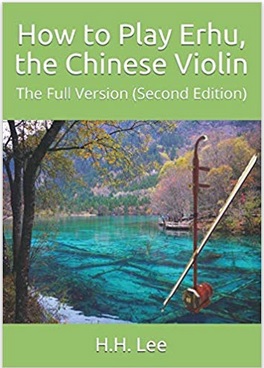
A completely revised edition of the previous book, which is holistic in nature and caters for the needs of both beginners and advanced learners of the erhu.
This book entails all the contents of the previous books on the erhu with new materials added, ranging from the very basic to advanced skills that are conducive to mastering the erhu. It basically consists of three parts:
Part I - details of the erhu, viz. knowing the erhu structure, choosing an erhu, setting up the erhu and maintaining the erhu;
Part II - knowledge about playing the erhu, such as the numbered music notation, postures, fingering charts, fingering techniques (glissando, vibrato, trill, overtone, pizzicato), bowing techniques (legato, martelé, staccato, spiccato, tremolo, ricochet, double stop, bow hitting and neck bending), as well as ways to change the setting of open strings; and
Part III - erhu sheet music and the list of songs under the Central Conservatory of Music Practical Examination for the Erhu.
After reading the whole book, you should have known almost everything of the erhu and acquired all necessary skills with which you can play a lot of songs by yourself.
Excerpt
Throughout the above chapters I always stress that the erhu strings are tuned at D4/A4 by default. However, there are indeed a number songs that require other settings of the open strings, and two notable examples are The Moon Reflected on the Second Spring/二泉映月 and The Great Wall Capriccio/長城隨想曲. The open strings for these songs are tuned at G3/D4 and C4/G4 respectively. In this connection, there are strings (Chang Cheng Xian/長城弦) and even erhus (Er Quan Hu/二泉胡) specifically designed for them. Having said that, we still employ the D-major fingering chart when playing both of these songs.