Amazon
Stateless
Cyberwit.net
Category:
Philosophy
Publisher: Cyberwit.net
ISBN-10: 8182531047
Type: Non-Fiction
Pages: 214
Copyright: March 10, 2008
ISBN-13: 9788182531048
Price: $20.00 (eBook)
What is Poietics? The subject of poietics (la poïétique in French), with its origins in the Greek word poïein ( to make with the intellect ), deals with the science and/or the art or philosophy of creation.
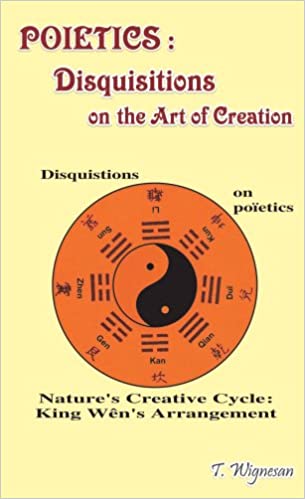
Poietics: Disquisitions on the Art of Creation. Allahabad: Cyberwit.net, 2008, 214p.
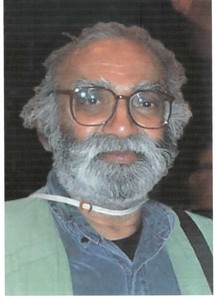
by T. Wignesan
Dedicated to René PASSERON, Director of Research, National Centre for Scientific Research (CNRS), University of Panthéon-Sorbonne: "In homage for his daring defense of a Wanderer"
BOOK BLURB by the Author:
What is Poietics? The subject of poietics (la poïétique in French), with its origins in the Greek word poïein ( to make with the intellect ), deals with the science and/or the art or philosophy of creation. To French academics working in the field, the subject has variously meant one thing as a definition and another as a programme of research - from Valery s probes into the making of a poem to Passeron s involvement with the creator s relations with the objet d art during the creative act. In this book, the author attempts to lay the foundation either for the formulation of a theory or, contrariwise, for the impossibility at arriving at any such formulaic circumscription on poietics. His Disquisitions on Poietics serves as a theoretical inquiry into the subject at large without, however, limiting itself to the fine arts. The author adopts an open-ended approach to the concept of creation. To him, the preparation of an elaborate dish in the kitchen is as worthy of attention as the Big Bang itself. As for tools, he does not exclude the methodology of experimentation in the laboratory or the theoretical calculations and observations of the exact sciences as perfectly valid means by which to unravel the mysteries of creation. The author created and edited the first academic bi-lingual journal on the subject: The Journal of Comparative Poietics/Revue de Poïétique Comparée in 1989, and in which appeared articles by Henri Morier, René Passeron, Eric Mottram, José Augusto Seabra, Ananda K. Coomaraswamy, Germaine Prudhommeau, Andrew Greig, Clive Bush, and T.Wignesan.
Excerpt
A curator of art in India (Punjab & Delhi by name: Alka Pande) actually plagiarized a number of pages of this essay - wholesale - in her own piece on Indian aesthetics. Very daring of her, to say the least ! T. Wignesan.
The Exotic in Aesthetics:
A Case Study of Poïetics as the “Science
and Philosophy of Creation”
T.Wignesan
Chercheur au CNRS
Poietics can and may be construed as the exotic in aesthetics, for the simple reason that aesthetics as a subject is part and parcel of axiology, the study of values. To be brief then, research into poietics is not about the study of values, and as such the French School’s definition of poietics as the « science and philosophy of creation » which, to the latter, constitutes an integral part of the subject of aesthetics can be called into question. But, for the sake of argument, we’ll go along with the examination of the French definition.
If by the term « exotic » we mean the « unusual » in the sense of « not native to the place where found », poïetics [or la poïétique, in French, from the Greek: poïein, to make with the intellect as opposed to prattein, to make with the hands] is probably not the exotic element in aesthetics. If by the term exotica [from the Latin singular exoticus] we mean « strikingly or excitingly different or unusual », we are not far from the idea that poïetics lies embedded in the general realm of aesthetics. Closer to the notion of a link between poïetics and aesthetics is the term exostosis in the sense of an outgrowth, such as, a spur in the heel-bone or the root of a tooth. Quite frankly, the medical term synarthrosis meaning « an immovable articulation in which the bones are united by intervening fibrous connective tissue » describes better the constitution or situation of poïetics within aesthetics. Such a comparison is likewise appropriate for the simple reason that the recent history of research into poïetics, at least in France, displays many painful similarities with the osseous or osteal ailments that many arm-chair athletes or sybaritic gourmands, if I’m not mistaken, suffer from.
In the words of René Passeron who was largely responsible for the research undertaken in poïetics in the last twenty years in France: « ...poïetics exists from a long time ago and it conceals itself as a diluted and unavowed element, within [the body of] general aesthetics. » [Passeron 1976: 11] What would therefore constitute its « exotic » status as a subject vis-à-vis aesthetics is the ability of poïeticians to « undilute the unavowed element » in aesthetics, in theory, a task - if we are to adhere to Passeron’s admission - which would be tantamount to producing an elephant out of a magician’s top hat. Passeron’s choice of words here is perhaps at fault, for he has - as we shall see later on - shown by his deliberations, especially in his Pour une philosophie de la création [Passeron 1989: 251]that only rabbits or pigeons may legitimately be produced from a magician’s top hat, though these latter may be just as, or infinitely more, productive.
In any case, Passeron separates poïetic activity, - that is, according to Lilian Guerry, Passeron’s predecessor at the Sorbonne’s CNRS research centre, the study of the dynamic relations of the creator with that of the work of art he or she is in the very act of creating/producing, - from the receptive and evaluative tasks of aesthetic judgment, by comparing the study of poïetics to the act of going upstream (« amont » in French) from the work of art as opposed to going downstream (« aval » in French) which involves the reception of the oeuvre, which, according to him, is the province of aesthetics. From this one could glean that going upstream is always an exotic act, the act of going into the uncharted primitive interior, into virgin territory, the land of the unconscious where everything you encounter is unusually or strangely outlandish.
The French School
The great French poet Paul Valéry in his inaugural lecture at the Collège de France [Valéry 1938: 13] proposed the study of the genesis of the poem, and though he did not then use the word poïetics, he made references to the medical use of its Greek origin: poïea. It then fell to the lot of his successor Jean Pommier at the venerable institution, during his inaugural lecture on May 7, 1946, to cite the Valéryian definition of poïetics taken from Valéry’s paper, « Discours sur l’Esthétique ».
What in effect is Poetics or rather Poietics? You shall be told. It is everything
that concerns the creation of works, of which the language is at once the substance
and the means. This consists, on the one hand, of the study of invention
and composition, the role of chance, that of reflection, that of imitation, that [those]
of culture and the environment; and, on the other, the examination and analysis of
techniques, processes, instruments, materials, means and agents of action.
[Valery 1937: 1311; Pommier 1946: 7-8]
Until then, at least, as far as the French were/are concerned, poïetics which became later known as la science et la philosophie de la création (the science and philosophy of creation) was considered part and parcel of aesthetics, though French accomplishments in the field remain more or less philosophic but in no way scientific. Apart from René Passeron whose training was in philosophy, no other member (with the exception of one affiliated member) of the group of researchers he led has had either a scientific or a philosophical background.
No one seems to know, or has even recorded for posterity, whether what Valéry proposed as a line of investigation took hold of French curiosity and interest, until the early seventies when the Groupe de Recherches Esthétiques du Centre National de la Recherche Scientifiques(The Esthetics Research Group of the National Centre for Scientific Research), under the overall - but detached - guidance of the eminent French aesthetician, Etienne Souriau, began to probe into the possibility of working on poïetics as a separate sphere of activity within the encompassing realm of aesthetics. The director of this research group, Lilian Brion-Guerry, declared in the first volume of Recherches Poïétiques, published in 1975, and in which Tzvetan Todorov, Etienne Souriau and René Passeron, contributed articles:
Extending a concept that Valéry limited to the literary arts, these studies
propose to analyse the steps that precede the institution of a work of art -
the dynamic relations which unite the artist to his work of art while he
is in the act of creating it - to retrace the stages of the movement between
genesis and structure; finally, to try to find, through a comparative methodology,
the relations that can exist between such processes from one [sphere of] art
to another. [Brion-Guerry 1975: s.p. Preface]
A little later, René Passeron, a painter with the necessary French philosophical training, took over the research centre, and although his direction of the centre alienated a good many members of the group ( Tzvetan Todorov and a few other younger researchers left to form another research centre at the Ecole des Hautes Etudes en Sciences Sociales), research into the subject has primarily remained within Passeron’s particularly protective hands. As the theoretician of the group, he led them through a morass of attempts at defining the subject which hadn’t really added to one’s knowledge of what was expected of the research at hand; with the result, the centre was closed down in 1988. In the meantime, however, the group published five volumes under the title of Recherches Poïétiques though the contents - primarily grounded in the plastic arts - had not paved the way for fundamental research in the field.
The achievement, if any, of Passeron’s group of researchers in the field of poïetics may be relegated to an attempt at circumscribing the limits of defining - by no means complete however - the subject. The articles in the five volumes of Recherches Poïétiques and the proceedings of the First International Conference on Poïetics (Premier Colloque International sur la Poïétique), and the now first issue of the journal: Recherches Poïétiques, published in 1995, [several more but equally less edifying issues have been added since] devoted to the proceedings of colloquies, organized by the Société International de la Poïétique, constitute a variety of academic posturing, a sort of academic beating about the bush, and which in no way brings the reader closer to a view of what is meant by the act of creation or how an intimate knowledge of this process may offer insights into a/any work of art. Typically, they refuse to take into account the existence or findings of any other school of poïetics, a-frog-in-the-well attitude that characterizes much of their research. For instance, the group spent some five years, from 1983 to 1988, postulating détournement or the act of « diverting, hijacking or rerouting » as a mode of creation, that is, « which consists, in general, in diverting earlier cultural elements in order to do something new, more or less to change the ends while retaining the means » [Wignesan 1990/91: 45], wishing by this means to work out what they thought was a new approach in the study of creation without realizing that it was part of the usual tasks in comparative literature influence studies, and in which comparatists sought to trace the influence of one or more forms, styles, techniques, etc., on another. In this context, though, one has to consider the German comparatist, Horst Rüdiger’s views on the certainty of establishing the existence of influence between the émetteur (emitter) and the récepteur (receptor) every time there apears a resemblance or similitude in style, theme or form, etc, in works of art.
... I would suggest that we avoid the term ‘influence’ altogether and use
instead, ‘effect’ and ‘reception’, which denote a dynamic attitude on the
part of the author rather than a passive one, which makes him a powerless
instrument. [Rüdiger 1971: 19]
Furthermore, the group was informed of the existence at the beginning of this century of an entire series of studies and publications in Russian on heurology (which is yet another word of Greek origin for poïetics) at the first international meet (that I proposed and organized as general secretary) from April 28 to May 2, 1989 [Passeron 1991: 284-6], but they have preferred to dismiss all the work produced by P.Engelmeyer on the subject by simply claiming that Paul Valéry certainly had not heard of Russian research into poïetics or, as it was in this case, heurology (from the Greek heuro meaning « discovery » and logos (science or discourse). From 1907 to 1921, the Russians published a journal (which did not appear regularly on account of the war) on heurology, and Engelmeyer is credited with having produced in 1913, according to those who have read him, a tract on the act of creation, entitled: Questions on the theory and psychology of creation. [Engelmeyer 1913 & 1915]
The research group headed by Passeron also refused to accept the work of other schools of poïetics, such as, the ancient Indian theory of creation as first mooted in the Natya Sastra of Bharata of the 2nd or 1st century B.C. and developed subsequently by Bhatta-Lollata and Sri Sankuka (800-840), Bhamaha to Rudrata of the Pracina school (650 -850 A.D.), Anandavardhana of the Navina school (c.850 A.D.), Bhatta-Nayaka (900-1000 A.D.), Abhinavagupta (980-1020 A.D.), Pratiharenduraja (900-950 A.D.), Kuntaka (950-1000), Mahima-Bhatta (1020-1100), Mammata (1050-1100) to Jagannatha (1620 -1660). [Ramachandran 1979 & 1980; Wignesan 1987]
French poïeticians also refuse to recognize the fact that closer home there already exists a whole theory fashioned by a Spanish contemporary critic and poet. Carlos Bousono’s Teoria de la expresion poética [Bousono 1970] is without doubt one of the most convincing attempts at working out a poetical basis for the subject of poïetics, though there may remain some doubts about the unassailability of his laley del asentimiento or the law of consentment, which is a corner-stone of his theory. From the point of view of poïetics, few theories of artistic creation could posit a more ingenius and consummate formulation of the principles underlying any one genre; the theory works its way back from the surface analytical nature of the language of poetry to its creative sources and motivations, permitting the legitimate constitution of several « laws » distinguishing the ordinary use of language from poetic diction, while applying these distinctions to other related propositions, such as, the nature of humour and absurdity. Bousono does not stop there: he goes on to elaborate a whole series of underlying principles for the appreciation of poetry and literary movements, in general. By contrast, French researchers into poïetics have not even come up with a mere statement of the possibility of a theory after over half a century of deliberations.
To take things yet a step further, Passeron’s followers have turned a blind eye even to the publication of the first bilingual journal on poietics at their very own doorstep: the Journal of Comparative Poïetics/Revue de Poïétique Comparée, [Wignesan 1989-1992] a journal which has in the first place made known to, at least, the English-speaking world the very existence of the French group and their efforts in the field. Any study of the nature and evolution of the subject must take into account these details since French poïeticians claim that it was they who invented the subject, and which, of course, is no mean feat, let me assure you.
Let us now examine the French school’s « findings ». The five volumes of Recherches Poïétiques were devoted to various aspects of the problem of defining and very probably taking stock of the possibilities of the subject as a branch of aesthetical research.
According to Passeron, the first volume of their publication probed poïetics as
a way of locating yourself before the work of art is completed in order to be
able to study the creative processes. Corollary: the aim of poïetics is not the artist,
is not the work of art, it’s not necessarily psychology or semiotics, it’s the
moveable evolutionist bond during a certain time which links the artist to
his oeuvre, to his unfinished work of art. [Wignesan 1990/91: 44]
This, Passeron says, is the aim of poïetics [compare Brion-Guerry’s definition given above], and that « with the aid of poïetics, one can nevertheless describe clearly the structure » of a work of art. [Wignesan 1990/91: 44]
The second volume was taken up with the question of analysing the materials used in the fashioning of a work of art, the material of which « is not only a substance, that it is also cultural, for example, language, or that it is physical: sound », and, as a corollary, the relations one entertained with Nature since that was where one obtained one’s materials, and the relations are of a triple nature. [Wignesan 1990/91: 44-45]
First of all, it is that which is exterior to us and which is perceived by the senses,
and in such a case one can’t very well distinguish between works of art and natural
objects.[...] The second aspect is the world where one takes - exactly like predators
- the materials. And, finally, the third aspect [consists] of a world of force with
which one is [entangled] in a battle. [...] ...a sort of struggle against the power of
Nature... [Wignesan 1990/91: 45]
Passeron or rather the group which he led, believed that Nature sometimes is a useful force « since you’re going to issue orders to Nature while at the same time [be seen to be] obeying it, and sometimes Nature refuses to obey us ». [Wignesan 1990/91: 45]
The third volume expanded on the version of the individual creator to that of the collectivity: group, community or species, and that certain « objects », such as, language and the popular folk dance, were the property of the collectivity, and the French group « quite fruitfully sampled the types of collectivity. It could span the smallest possible number up to the entire human species. » [Wignesan 1990/91: 45]
By the time the French researchers worked on the fourth volume, they felt that poïetics began to take shape as a subject, that it began
to assume consistance, began to demonstrate that it contributed something - we
wanted to find an antonym, that is to say, the thing which is the contrary
of creation. One said to oneself that to repeat was after all not to create, to repeat -
it is to do something that was already done. [Wignesan 1990/91: 45-46]
According to Passeron, repetition was an activity hampered by obstacles, and he proposed the image of Sisyphus rolling a stone uphill which always rolled down as an activity which was both sterile and punitive. He then relied heavily on the French philosopher Deleuze’s thesis on repetition which postulated difference as an accompaniment of repetition, that is, la repetition qui fait la différence [repetition which makes a difference] in order to be able to see that
there is a certain repetition in the interior of the process of a conditioned reflex,
or of the more complex process of creative behaviour. So there is an integrated
repetition which permits insistance on the material, thereby forcing it to submit
itself to creation. You see, we found a sort of a crack inside repetition itself which
made it possible for poïetics to pass through. [Wignesan 1990/91: 45-46]
The fifth and last volume concerned itself with the problem of presentation which, though a philosophical issue, became grounded in the socially ritualistic act of presenting a work of art. Here, Passeron and his group clearly contradict themselves. Whereas in the beginning, they advocated that the object of poïetics was neither the creator nor the finished product, now they insisted that the finished product compromised the creator socially - the creator of a work of art was responsible for his creation even after he had nothing to do with it. Yet, there is some truth in saying, as Passeron does:
There is in art an activity of presentation. One causes a work of art to be
presented, a work of art which has the aspect of a person, and with
which one maintains relations as between persons [...] taking into consideration
the temporel and social aspects of presentation...[...] ... it is to bring to
life something which wasn’t there until then and which is to be embodied in
the work of art, that something which one can talk about. [...] ...we concluded
that, in fact, in every work of art, one could think that art presents the act
of presenting, that art, when one is conscious of it, is the act itself of making
present something.... [Wignesan 1990/91: 46]
The last volume on détournement, however, for the reasons I gave you earlier on, never saw the light of day, and it would seem that, despite the revival of colloquies on poïetics and the proposed publication of the proceedings, French research into poïetics has stymied itself and wallows in a sort of play on words and the richly pulpy academic sonorities which recall high-faluting intellectual imponderables of the past rather than the rigorous examination of creative processes, that is, les conduites créatrices that Valéry and Souriau may have expected of their followers to undertake seriously. [Wignesan 1990/91: 46]
The Indian Classical School of Poïetics
One of the earliest consummate views of poïetics is that of the Vedanta school of sanskrit Indian thought. Though other views exist in ancient and medieval Indian philosophy, such as, the popular view that art procures personal pleasure to the receptor, and the Sankya view that art is an end in itself, the Vedanta school, which is Brahman-centred, posits the realisation of the « ultimate reality » through art, that is, the attainment of moksa or final liberation from this existence.
The consensus of opinion among Indian philosophers is that the creative power
is a native endowment blossoming without any reason, though a few like
Rudrata also concede some role to training and learning, or knowledge and
scholarship (vyutpatti), in the flare-up of creative (poetic) disposition. They stress
the spontaneity of pratibha, [imagination]but at the same time acknowledge that
pratibha may be acquired. However, with Jagannatha, pratibha is not a natural
propensity but an outcome of unimpeded cultivation (utpadya); and perhaps he is
alone in this conviction. [Ramachandran 1979:]
The creator is considered a seer or muni who has the skill or kausala to represent in concrete form his insights into the « ultimate reality »; his skill lies in his ability to perceive the unity and harmony of the universe which, to the ancient Indians, signifies « perfect beauty » and then to convey this unique insight of the Brahman to the receptor. « It is in answer to this need that we seek works of art. To one who has realized Brahman and has a synoptic view of nature art is superfluous. » [Ramachandran 1979: 81]
The creator does this by three stages. First, the perception of cosmic beauty through « self-forgetful » activity, made possible by the use of his imagination or pratibha, when contemplating common experience or observing typical facts; second, the transformation by pratibha of these observed facts and experiences into a general idea symbolizing the ultimate reality or the perfection in perceived beauty; and finally, the conversion of this general symbol, as the case may be, into concrete material form.
But Indian aesthetics postulates that the receptor must be of a similar temperament or trempe as the artist or creator, that is, sa-hrdaya[in other words, one of « similar heart »], in order to be able to fully appreciate the work of art, while insisting on his lack of skill in constructing the concrete form of the work of art.
The process of appreciation is, in order, the reverse of the process of creation.
The work of art stands midway between the two processes, effecting a transition
from the one to the other. [Here, the French School’s postulates of « amont » and
« aval » is worth drawing attention to.]The transition is rendered possible by the
fact that the appreciator is of the same nature as the artist. But the appreciator
differs from the artist in the degree of that nature, and this is the reason why
appreciation waits upon creation. [Ramachandran 1979: 85]
This may be construed as a contradiction in aesthetic aims (even if the appreciator and creator differ only « in the degree of that nature »: who is to decide and/or measure the degree or extent of the difference?) since the aesthete-appreciator - if he is equally endowed with imagination as the creator - may not need art, like the muni to enjoy a glimpse of the « ultimate reality » or Brahman, and the creator may therefore not be called upon to transform his general idea into concrete form for the appreciation of the sa-hrdaya receptor. And since the layman is not supposed to be capable of consciously reconstructing the creator’s material manifestation into the general idea symbolizing the perfection in beauty, who then is the Indian creator creating for? What separates the Indian creator from the sa-hrdaya receptor is merely his ability to transform his unique perception into concrete form.
Just as art is a « science » that is learnt arduously by its practitioners, so may art appreciation be also learnt, or rather all art appreciation also depends on the knowledge of art in question and the ability to apply that knowledge. One learns to appreciate, for example, the « Waste land » by T.S.Eliot, perhaps the most famous poem in the English language in the twentieth century. One does not simply pretend (even if Eliot claimed that true poetry communicates even before it is understood) that the poem has registered with one simply by the act of reading and reacting to it uncritically. After all, isn’t it curious, despite the pitfalls to be expected in the critical concept of intended fallacy, that Eliot himself had never really intended expressing what the oft-quoted phrases: « the disillusionment of a generation » or « the malaise of our time » meant in the poem, and that, I quote: « To me it was only the relief of a personal and wholly insignificant grouse against life; it is just a piece of rhythmical grumbling. » [Eliot 1971] We all know that he composed the sequence [Eliot himself called it a series of poems] when he had had a severe nervous breakdown, due probably to overwork, and while, and also even before, he was convalescing at Margate; later when he was under medical treatment at Lausanne he finished with: « What the Thunder said ». We all know that his marriage of seventeen years to his mentally suffering first wife, Vivien Haigh, or the boredom of a bank job, or both may have been the cause of much that he was complaining about or had been discontented with, and so forth. Even if we did not know the fact - at first reading - that Ezra Pound slashed the poem down to its bare rhythmic bones, that is, to half its original length, might the poem make more or less sense had we learned of its drastic revision by another hand since the original manuscript remained hidden and/or forgotten in a New York library until after Eliot’s passing in 1965, and that Eliot, himself, the meticulous banker and critic, was averse to reviewing his own creations once they were completed. Whether the poem originally was a jumble of autobiographical reflections, underlaid by echoes from favoured masters Eliot had read, or whether it was about the Holy Grail, or about the effects of the anti-boom conditions of post-First World War economic and political chaos on a sensitive intellectual, or just a Buddhistic meditation, or the sum of all of these themes and experiences, it is the amplitude of its ambiguities which gives the poem its particularly challenging qualities. The notes added subsequently by Eliot in the book form of the poem served to direct the reader further in his search for meaning which, in this case, is probably, as it is claimed, the lack of an overall comforting truth, an answer to, and a panacea for, the perplexities of life in which the individual finds himself in similar conditions everywhere in the world.
All said and done, it becomes quite clear that appreciation of art is as artful a task as the creation of art, and both may be learned, without claiming, like the ancient Indians did, with the exception of Anandavardhana, Vagbhata, Dandin, Mammata, Vamana and a few others, that this faculty is a mythically God-given right. Of course, there may be differences of degrees between appreciators and artists, as there are between appreciators themselves, but what does this mean? in the light of what can be learned of art and of the creation of art. Let me quote from Eliot’s 1921 poem, or rather Eliot-and-Pound’s 1922 poem: « You! hypocrite lecteur! - mon semblable, - mon frère! » (You! hypocrite reader! - my fellow creature, - my brother! ») [Wain 1986: 333]
It will be interesting to study the reactions of a « classical » Indian sa-hyrdaya appreciator without the necessary critical training in Euro-American poetry when confronted by the « Waste Land » without the notes supplied by Elliot. Eric Mottram, an equally erudite poet, coined the word « resources » instead of notes, for these constitute an essential key to understanding. No less a critic than Ralph Ellison admitted that the poem moved and intrigued him in 1935 « but defied my powers of analysis [...] and I wondered why I had never read anything of equal intensity and sensibility by an American Negro writer » though he somewhat contradicts himself in the same interview when he says that the understanding of art depends on the knowledge of human life and the willingness to extend one’s humanity. [Ellison 1967: 167-68 & 175] Would the Indian reader’s disillusionment at not experiencing the Ultimate Reality mean that the poem was/is by Indian aesthetic standards worthless, even if Elliot himself considered his work « a piece of rhythmical grumbling ».
(Do, please, read the rest of the essay in the book. Article published in the Journal of Comparative Poietics (1992); Journal of the Institute of Asian Studies, Chennai, Vol. XVII, N° 2 ,2000 and Gombak Review, Vol. 5, N° 1, Kuala Lumpur, etc.)
(c) T. Wignesan - Paris, 1990.
|