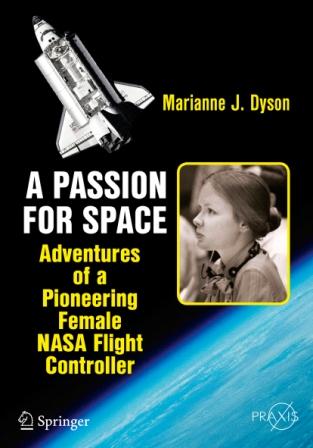
Dyson was fortunate to be one of the first female flight controllers at NASA's Johnson Space Center. This is her story of how she got there, what she did there, and the excitement and challenges of the early Space Shuttle Program.
Marianne J. Dyson recounts for us a time when women were making the first inroads into space flight control, a previously male-dominated profession. The story begins with the inspiration of the Apollo 11 landing on the Moon and follows the challenges of pursuing a science career as a woman in the 70s and 80s, when it was far from an easy path.
Dyson relates the first five space shuttle flights from the personal perspective of mission planning and operations in Houston at the Johnson Space Center, based almost exclusively on original sources such as journals and NASA weekly activity reports. The book’s historical details about astronaut and flight controller training exemplify both the humorous and serious aspects of space operations up through the Challenger disaster, including the almost unknown fire in Mission Control during STS-5 that nearly caused an emergency entry of the shuttle.
From an insider with a unique perspective and credentials to match, this a must-read for anyone interested in the workings of NASA during one of its busiest and defining times, and the challenges faced by women pursuing scientific careers.
Professional Reviews
The Observatory
“The book is well written, and flows energetically with a diarist’s detail through all the many assignments to which she was entrusted at NASA … . This book encourages, inspires, and delights, and should be on the reading list of everyone – educators, scientists, and particularly women – scientists or not.”
A good read
I am a nerd for the American space program. I was inspired by the Apollo program when I was growing up and have devoured a lot of books on the subject. I say that to give context for my comments on Marianne Dyson"s autobiography. You may need to be a space nerd to completely enjoy this book, although she does spend time on other subjects of interest. I really liked the detail that she delves into in her descriptions of working the flight controller consoles for the early shuttle program. You get an inkling of all the preparation, sims, and planning that went into each space flight. It was a tough environment to have decent personal life; which is another aspect she addresses much more than the other books on the space program. She was truly a pioneer at NASA, she met with some resistance along the way because of her femaleness but she was a tough cookie. Congratulations Marianne on a good book.
Never mind the astronauts, what about life in Mission Control?
A fascinating insider view of Mission Control in the late 1970s to early 1980s, as the Shuttle program began. What was it like to be a flight controller for the first Shuttle missions? The author also tells us about some of the challenges she faced as a woman in male-dominated Johnson Space Center ( but sadly doesn't name names for the managers who discriminated against her and the other women controllers!)
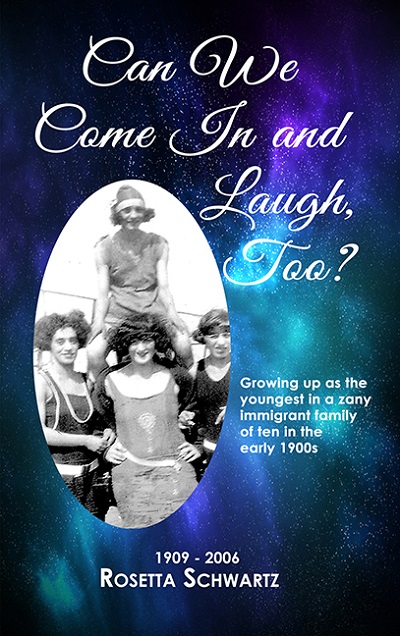
Rosetta was born in 1909 as the youngest of ten children. The family had more laughter than money and neighbors would knock on their door to ask, "Can we come in and laugh, too?"
A passionate and poignant memoir written by a woman whose life has been guided by the words: "I am here to learn how to love well." The book is a deep examination of relationships, family, motivation, and honoring of the Self.
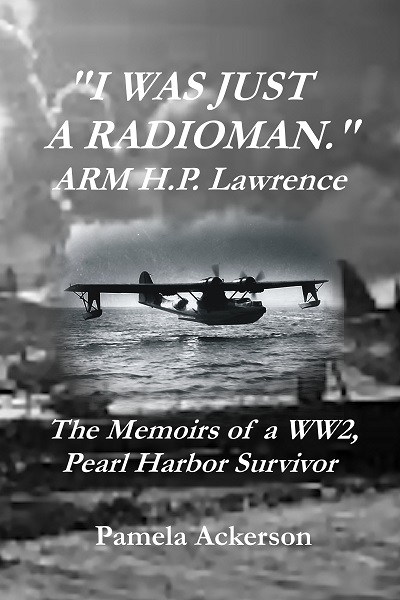
This is not a drill. The attack on Pearl. They were the ghost planes of the night, deadly, illusive, sharp-clawed Black Cats. The Memoirs of ARM H.P. Lawrence, a Pearl Harbor survivor, Black Cat, and decorated war veteran.