|
|
| 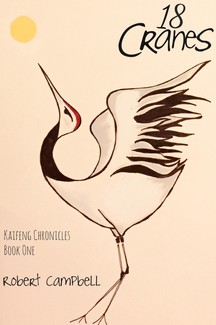 | | 18 Cranes (Kaifeng Chronicles, Book One)
In the late summer of 1630, 23-year old Li Bing writes the provincial level imperial examinations, the first step towards entering the Chinese civil service. He is tormented by a dream of 18 cranes, and as he awaits his exam results he seeks out insights from those around him to help him understand his dream. In the end, he learns more than he imagined.
| |  | | Governance and Social Leadership
This book explores the relationship between governance and social leadership, with an emphasis on the idea of building capacity to act.
| |  | | Grand Canal (Kaifeng Chronicles, Book Three)
Li Bing travels from Hangzhou to Beijing along the Grand Canal, planning to stop at Kaifeng along the way. Meanwhile, developments in his new wife's family take some interesting twists. Unforeseen circumstances have a way of derailing even the best plans.
| | 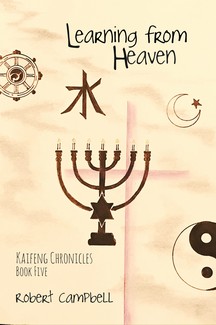 | | Learning from Heaven (Kaifeng Chronicles, Book Five)
Li Bing travels to Ningxia to begin serving in his first administrative role. Along the way, he stops in Kaifeng and engages in a series of provocative discussions.
| | 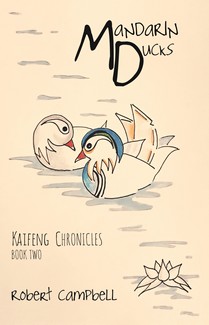 | | Mandarin Ducks (Kaifeng Chronicles,Book Two)
In late autumn 1630, Li Bing prepares to depart for Beijing to write the metropolitan examinations. Before he goes, he learns more about his heritage from his maternal grandfather and hopes to marry his childhood sweetheart Xiaoyun. However, political intrigue between his father and hers has the potential to derail more than just his marriage.
| |  | | Reading the Qur'an in English
This introductory guide to reading the Qur'an in English is meant to raise the comfort level of Western readers trying to gain a greater appreciation of Islam by reading what might be considered a foreign and confusing text.
Designed to be read in conjunction with an English translation of the Qur'an, this book provides practical advice to readers who have no knowledge of Arabic or Islam and who need guidance when their expectations about the use of narrative, description, and dialogue are challenged by this seemingly difficult text. One of the first pieces of advice given is not to try to read the Qur'an from beginning to end. Rather, a suggested reading order is provided, along with explanations about the use of such literary devices as contrast, repetition and chiastic structure, all of which will help reade | | 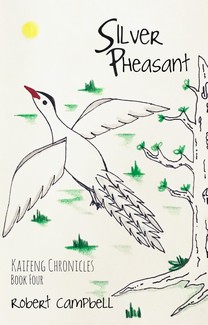 | | Silver Pheasant (Kaifeng Chronicles, Book Four)
In Beijing, Li Bing continues his quest to enter the imperial civil service.
| |  | | Women, War & Hypocrites
This book demonstrates an approach for those trying to understand whether and to what extent the practices and ideas that we now associate with Islam have a firm foundation in the Qur'an.
In this book, Dr. Campbell provides an analysis of the thematic structure of the fourth surah (The Women), a large and complex surah containing some of the most controversial verses and ideas in the Qur'an. The key issues addressed are women (on marriage, lewdness, wife beating and hijab), war (on killing, battle, jihad and terrorism) and hypocrites (on believers, the People of the Book, idolatry, intoxication and the crucifixion of Jesus).
|
|
|
|
Dear Margaret,
by Pamela Ackerson
|
 Based on the memoirs of a Pearl Harbor survivor. Letters from two pen pals take the reader on a journey into the past, a past where nightmares came true, and when hatred reigned. Based on the memoirs of a Pearl Harbor survivor. Letters from two pen pals take the reader on a journey into the past, a past where nightmares came true, and when hatred reigned. |
Member BookAds
|
|
|
|
Operation Oboe
by Miller Caldwell
|
 A delightfully rare Historical Novel. 85% a biography of a spy, musician, mother and her neice trapped behind German lines in World War I. This background led to a diplomatic post in World War II. Aged 92, Vera disclosed her past life one year before A delightfully rare Historical Novel. 85% a biography of a spy, musician, mother and her neice trapped behind German lines in World War I. This background led to a diplomatic post in World War II. Aged 92, Vera disclosed her past life one year before |
Member BookAds
|
|
|
|


