|
|
|  | | Ancient Wisdom, Management and Negotiations in China
In the context of accelerated globalization, Chinese stratagemical thought highlights the comparative advantage of its people towards management with an adaptation of ancient wisdom for the new times and modern condition. This edition exercises Chinese style of management and business negotiation implemented via strategic thinking worked out and developed in China throughout the ages of history.
span style="font-size: medium;">In the context of accelerated globalization, China’s stratagemical thought highlights the comparative advantage of the Chinese towards management with an adaptation of ‘ancient wisdom’ for the new times and modern environments. This edition exercises Chinese style of management and business negotiation implemented via strategic thinking worked out and developed in the Central Kingdom throughout the centuries-old history. Adopted here research methods include elemental analysis, inductive proving and deductive reasoning based on classical mo | |  | | Deciphering the 36 Chinese Stratagems
The term 'strategy' has different connotations in the course of its generation transformed into a due implementation. The subject of how such a transformation can be made effectively and how much it depends on sociocultural factors and mechanisms by which it works is discussed within the scope of the second book of my trilogy dedicated to the problem of canonical structures and their deciphering.
div align="left">span style="font-size: small">span style="font-family: Arial">To realise the causes of a great rejuvenation of the Chinese civilization started with the new sixty-year cycle in 1984, we need to have recourse to an inescapable problem of inheritance and further development of cultural traditions in China. In this book the 36 stratagems and their overall characteristics are discussed within the framework of canonical macro and microstructure put through the 'image and numbers' study, the circular and linear arrangements built on the basis of Chinese strategic t | |  | | Decoding of the Lao-zi (Dao-De Jing): Numerological Resonance
As a canon, the "Dao-De Jing" is a symbolic work and its symbols transcend its context. When this is properly understood, all 81 sections of it divided into nine divisions and two halves have universal application. Any attempt to translate them with no account taken of the numerological and symbolical systems means to remove them entirely from canonical context and narrow the field of application.
p style="text-align: left; margin: 0cm 0cm 6pt; mso-para-margin-bottom: .5gd" class="MsoNormal" align="left">span style="font-size: 11pt" lang="EN-GB">font face="Times New Roman">Since the end of the nineteenth and throughout the twentieth century interest in the Chinese "Lao-zi," better known as the “Dao-De Jing,” has risen to unprecedented levels in Europe and st1:country-region w:st="on">st1:place w:st="on">America/st1:place>/st1:country-region>. It has gained an immense popular reputation as a piece of one of the most ancient world philosophies, a reputation no | |  | | From 001 to 100: One Hundred Poems Completed by Alexander Goldstein
By this, I invite every curious reader to make a fascinating voyage together, entering into the realm of imagery and revealing a conceptual understanding of the transiency called image thinking. To override a poetic thought is to adjust mentality while to get an image means to express the matter in full. And the reader of this can do it oneself because everyone is one s own master of poetry.
span style="font-size: 12pt;">Image thinking is a phenomenon when a concrete image intimates an abstract notion or viewpoint to express. In the sense, the term ‘image’ supposes the figurative imagery and its explanation, as well as an imaginative significance and its associations. To explain the image we use language while the idea of it reflects its abstract thought. As is well-known, language is an instrument of thinking, imagery makes a thought content. However, language is unable to express the idea or thought content directly; for this, it resorts to concrete imagery | |  | | Monks, Beasts & Dreams on Heavenly Terrace
This book pages form the record of events that really happened in the Tang period China in the 8th century at Guoqing Temple secluded on Mount Tiantai. For this no extra charge has been made with the exception of joyful insight into the background of the four figures: three eccentric persons and the forth, the unnamed tigress, a creature on the back of which Chan monk Feng Gan usually rode.
p style="margin: 0cm 0cm 0pt" class="MsoNormal">span style="font-size: 12pt; mso-bidi-font-size: 11.0pt; mso-ansi-language: EN-US" lang="EN-US">font face="Times New Roman">Legends concerning the "Tiantai Trio" recorded in Buddhist biographical sources tell us next to nothing about the main events of their life. They focus instead on conversations Han Shan (Japanese Kanzan) had with Shi De (Jittoku) and their common old master Feng Gan (Bukan) who was understood as incarnation of the Buddha Amitabha. The historical Chan (Zen) iconoclasts are pictured all the three immersed in deep | | 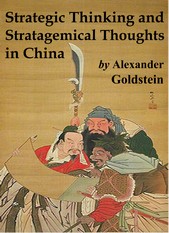 | | Strategic Thinking and Stratagemical Thoughts in China
This ebook exercises the linear structure of concise Classic entitled "The Thirty-six Stratagems," which has received wide recognition of international experts in the field of military strategies and psychological war. The 36 Chinese stratagems are accompanied with in-depth explanations and historical episodes so that they will be clearer to the Western readers.
span style="color: rgb(51, 51, 51); font-size: 14px; line-height: 20px; background-color: rgb(252, 252, 252);">There is a Chinese saying that “it is better to be a dog in peaceful times than a man in times of unrest.” All Chinese are wishing they were dogs in peaceful times, but they have not that luck. In martial arts’ parlance, all boxing defensive process consists of three parts: acceptance, transformation (redirection or redistribution of forces) and counter-attack. All three parts are interrelated and interact with one another for the benefit of a defender, not | |  | | Taste of Hanshan (Cold Mountain)
Han Shan and Shi De are two inseparable characters in the history of Chan Buddhism, forming one of the most favourite subjects of Oriental fine arts: Shi De is often pictured with a broom, and Han Shan with a scroll to represent two of many paths to Enlightenment honest labour and scriptural studies. Their poems became famous Chan quotations to be a compulsory reading for Chan practitioners.
span style="font-family: "Times New Roman"; font-size: 12pt; mso-fareast-font-family: 宋体; mso-ansi-language: EN-US; mso-fareast-language: EN-US; mso-bidi-language: AR-SA; mso-bidi-font-family: Arial; mso-bidi-font-size: 11.0pt" lang="EN-US">Tian-tai/span>span style="font-family: "Times New Roman"; font-size: 12pt; mso-fareast-font-family: 宋体; mso-ansi-language: EN-US; mso-fareast-language: EN-US; mso-bidi-language: AR-SA; mso-bidi-font-family: Arial; mso-bidi-font-size: 11.0pt" lang="EN-US"> st1:placetype w:st="on">Mountains/st1:placetype | |  | | The 108 Zen Poems
To introduce the reader to the world of Zen, there is no alternative but to resort to the use of language, the best alternative of which is poetry--the most precise form of speech. This ebook is comprised of 108 examples of the Zen way of realization, while the number 108 is considered sacredly special because of its place in many religions, connected martial arts, yoga and dharma based practices.
span style="font-size: medium;">As a sinologist, I have been asked many questions by people wanting to know time and again what Zen ('Chan' in Chinese) actually is. The problem is that it is not an easy task to describe this term. It is something that cannot be talked about nor expressed in written words. The moment language is used, we are no longer dealing with the true spirit of Zen, which is beyond all words. However, Zen cannot be left unexpressed. To introduce the reader to the world of Zen, there is no alternative but to resort to the use of language, the best alternative of w | |  | | The Canon of Grand Triad (Tai Xuan Jing)
This is a new translation of Yang Xiong's oracle composed at the turn of millenniums for diviners in practice rather than idle intellectuals. Relying on the earliest commentary, this enriched with ninety charts and illustrations book is an invitation to master the ritual of divination as a tool of sages, by means of which the reader will be able to disclose one's mind on the way of self-discovery.
p style="text-align: left; margin: 0cm 0cm 6pt; mso-para-margin-bottom: .5gd" class="MsoNormal" align="left">span style="font-size: 11pt" lang="EN-GB">font face="Times New Roman">This is a new translation of the key work of Han-period China spread out in the "land between the four seas" in the period from 206 BCE to 220 CE, the epoch which has left its indelible footprint in the entire thousands years old history of the country traditionally named "tian-xia" (Under Heaven), present-day "zhong-guo" (Central Kingdom). The Han dynasty can fairly be considered as t | |  | | The Fifty Odes
The vibration of number 50 supplies natural pleasures and needs to watch over-indulgence and impulsiveness. The impulsive nature of this divining number allows us to enter a situation and be then able to discard it smoothly, without hard aftereffects. Its energy does not hold onto anything that creates monotony in life; it is the sign of progress and growth, for without change there is stagnation.
p style="margin-bottom:0in;margin-bottom:.0001pt">span style="font-size: medium;">The reader of this book may ask: What was the reason to put the number 50 in the title of this book? The number 50 is an auspicious number with importance in both everyday life and higher mathematics. People celebrate milestone 50th birthdays and 50th anniversaries with more pomp than they do other year markers. Half of a century is 50 and is a denomination of coins and paper money in most of the countries. When people write best-of of worst-of lists, they often try to select an even 50 items. In many ways | |  | | The Foundling: A Novel of Wandering in the Dreamland of Ch'an Masters
"The Foundling" is a story that everyone can learn from. While the majority of us will never set out on a path like the hermits did, being able to read of their experiences and descriptions of the places that they have been and the hardships that they have endured let the reader learn about their life lessons as an arm-chair traveler. You can spend a short moment reading one poem of four lines and a lifetime trying to truly understand it. Their verses of simple construction are amazingly managed to capture something so unfathomable. No, not to capture but illustrate. And they are illustrated in the fullest by fluently running Chinese brush paintings and calligraphy to underline Zen essence that comes through silently but clear.
p style="text-align: left; margin: 0cm 0cm 0pt" class="MsoNormal" align="left">span style="font-family: "Book Antiqua"; color: black; font-size: 11pt; mso-font-kerning: 18.0pt; mso-ansi-language: EN-US" lang="EN-US">o:p>/o:p>/span>
p style="text-align: left; margin: 0cm 0cm 0pt" class="MsoNormal" align="left">span style="font-family: "Book Antiqua"; color: black; font-size: 11pt; mso-font-kerning: 18.0pt; mso-ansi-language: EN-US" lang="EN-US">“The Foundling” is the book for anyone seriously interested in Ch’an (Zen) studies and free-style poem | |  | | The Moon Pool
Li Bai's poems have been spread out thru the ages; even today they are highly praiseworthy. But only some know about his style of fencing called Li Bai's Drunken Sword. In terms of his famous works, the reader will discover how the poet's swordplay and wine drinking under the moon affected his poetic legacy. The author's 60 newest moonlit verses are also exposed herein for immediate contemplation.
p style="margin-bottom: 0.0001pt;">span style="font-size: medium;">It sounds obvious but, again, we learn more about the world literature by studying the evolution of poetry through the centuries; as a result, we find out more of the world's history, evoke our interest and understanding of the ancient writers and of humanity in general./span>
span style="font-size: medium;"> span style="line-height: 115%;">Poetry analysis and its translation from the language like archaic Chinese, which is the foreign language for the contemporary Chinese as well, is not scientifically exac | | 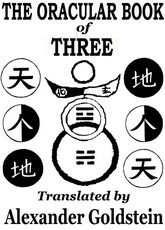 | | The Oracular Book of Three
From the beginning of time the ancients multiplied everything by three and took this number very seriously as a code of dynamic evolution and qualitative leap from one grade to another. They believed that employing it for prophecy was mostly peculiar and singular figure appropriate in various situations. This means that following the divine line of three we can predict the forthcoming changes.
span style="font-size:11.0pt;Times New Roman","serif";">We use the oracular guidebook as a source of insight, the penetration into the nature and operating system of the human mind. Specifically, we concern the central issue of relationship between the still substance of the mind and its effective functioning. Yang Xiong (53BCE-18CE), the author of the “Oracular Book of Three” saw the oracles of great antiquity as an inexhaustible repository of cosmic patterns and the source of values rooted in Heaven-and-Earth. Treating the Oracle as an analogue of the sag | |  | | Yi Jing: The True Images of the Circular Changes (Zhou Yi)
This is the first book of my trilogy entitled "The True Images, Numbers and Ideas of Changes" and written to help the diviners by the 'Yi Jing' in their interpretations. Any attempt to translate the statements without translating of the diagrams themselves is to shallow their oracular significances. The book is enriched with 69 illustrations to invite the reader to master the ritual of divination.
br />
|
|
|
|
The Easy Study Bible: James
by Trennis Killian
|
 Finally! Understand and learn from the New Testament Book of James.
Try James first for free
Now there is a Bible translation that is easy to read, understand, and study.
This translation is unique in that it is arranged Finally! Understand and learn from the New Testament Book of James.
Try James first for free
Now there is a Bible translation that is easy to read, understand, and study.
This translation is unique in that it is arranged |
Member BookAds
|
|
|
|