|
|
| 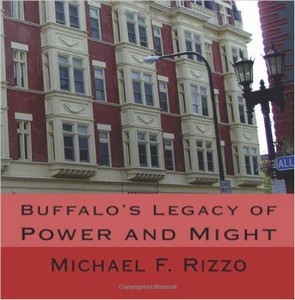 | | Buffalo's Legacy of Power and Might
Full-color photos of some of Buffalo's once-great businesses and short histories of the companies.
span style="font-family: verdana, arial, helvetica, sans-serif; font-size: small; ">Buffalo was once a proud, strong, important city. Burned by the British during the War of 1812, it rebuilt and eventually became the Erie Canal’s western terminus. From its earliest days through the Industrial Age, Buffalo welcomed the 20th Century with open arms, reaching a zenith of sorts when it hosted the Pan-American Exposition in 1901. It was a time when every aspect of a building mattered. Offices and factories were designed to reflect in outward appearance the strength of the company it | | 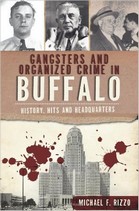 | | Gangsters and Organized Crime in Buffalo
The history of gangsters and the Mafia in Buffalo, New York.
span style="font-family: verdana, arial, helvetica, sans-serif; font-size: small; ">Stories abound about legendary New York City gangsters like "Lucky" Luciano, but Buffalo has housed its fair share of thugs and mobsters too. While many were nothing more than common criminals or bank robbers, a powerful crime family headed by local boss Stefano Magaddino emerged in the 1920s. Close to Canada, Niagara Falls and Buffalo were perfect avenues through which to transport booze, and Magaddino and his Mafiosi maintained a stranglehold on the city until his death in 1974. Local mob | | 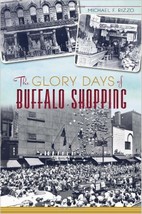 | | Glory Days Of Buffalo Shopping
Buffalo native Seymour Knox helped his cousin Frank Woolworth open his famous chain of stores nationwide, and Cresbury Clothes remained a multigenerational family business for most of the twentieth century. Well-recognized national chains, like the A&P, and local department stores like AM&A's and Sattler's were among the great retailers that dotted the main streets of the Queen City. Others, like Tops Markets, were bought out by larger corporations.
span style="color: rgb(51, 51, 51); font-family: Arial, sans-serif; font-size: 14px; line-height: 22.4px;">Buffalo boasts many attractions, from sports teams to unique culinary offerings. The city also once was a shopper's paradise, and those fond memories live on today for generations of locals. Buffalo native Seymour Knox helped his cousin Frank Woolworth open his famous chain of stores nationwide, and Cresbury Clothes remained a multigenerational family business for most of the twentieth century. Well-recognized national chains, like the A&P, and local department stores like AM& | | 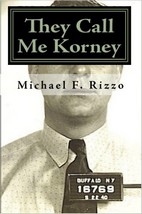 | | They Call Me Korney
True story based on the life of the Polish Korney Gang during Prohibition-era Buffalo, NY.
span style="font-family: verdana, arial, helvetica, sans-serif; font-size: small; ">Tony Kalkiewicz was a hardened career gangster. When he met the younger, up-and-coming bootlegger John Kwiatkowski, they hit it off. But when the smarter John took over his gang, Tony gave up the life. In the end they would need each other for one last, explosive heist that would be their undoing and send one of the gang to the chair. Set in Prohibition-era Buffalo, New York, "They Call Me Korney" is based on a true story and is full of never-before-seen photos and original research./span> | |  | | Washington Beer: A Heady History of Evergreen State Brewing
Brewing history touches every corner of Washington. When it was a territory, homesteader operations like Colville Brewery helped establish towns. In 1865, Joseph Meeker planted the state’s first hops in Steilacoom. Within a few years, that modest crop became a five-hundred-acre empire, and Washington led the nation in hops production by the turn of the century. Enterprising pioneers like Emil Sick and City Brewery’s Catherine Stahl galvanized early Pacific Northwest brewing. In 1982, Bert Grant’s Yakima Brewing and Malting Company opened the first brewpub in the country since Prohibition.
span style="color: rgb(51, 51, 51); font-family: Arial, sans-serif; font-size: 14px; line-height: 22.4px;">Brewing history touches every corner of Washington. When it was a territory, homesteader operations like Colville Brewery helped establish towns. In 1865, Joseph Meeker planted the state’s first hops in Steilacoom. Within a few years, that modest crop became a five-hundred-acre empire, and Washington led the nation in hops production by the turn of the century. Enterprising pioneers like Emil Sick and City Brewery’s Catherine Stahl galvanized early Pacific Northwest |
|
|
|
The Search for Edward Lewis
by Glenn Martin
|
 This is the story of the author’s great great grandparents, Edward Lewis and Sarah Crosby, who were convicts transported to Van Diemen’s Land in the 1840s. It is told from the perspective of a detective agency searching for what happened to Edward, w This is the story of the author’s great great grandparents, Edward Lewis and Sarah Crosby, who were convicts transported to Van Diemen’s Land in the 1840s. It is told from the perspective of a detective agency searching for what happened to Edward, w |
Member BookAds
|
|
|
|