|
|
| 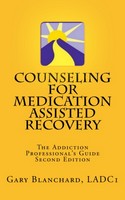 | | Counseling for Medication Assisted Recovery
The use of medication as a part of the addiction recovery process is becoming more common, yet many treatment professionals know little about the challenges of counseling those who are using medication. Gary Blanchard offers a look at some of the issues involved and offers tips for effective treatment in medication assisted recovery.
The use of medication in treating addiction can be controversial; some treatment professionals fully embrace it while others totally reject it. As more medications are developed, however, those cliniciams who decide to work with clients in medication-assisted recovery programs must look at the issues involved and develop the skills needed to help clients find success in this treatment modality.
Gary Blanchard has presented on this topic at several national conferences and in numerous trainings.
| | 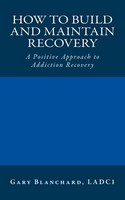 | | How to Build and Maintain Recovery
Licensed alcohol and drug counselor Gary Blanchard offers a common-sense approach to treating addiction based on 12-step philosophy, evidence-based tools and techniques, and his own Positive Path Recovery. This book offers ideas, suggestions, and a number of worksheets that will help those who want to overcome addiction.
While working as an addictions counselor, Gary Blanchard realized that, while many were helped by the 12-step approach of AA, a large number of people were resistant to aspects of the 12-step approach. He also discivered there were tasks that people needed to complete in order to be successful in recovery. This led him to develop his own Positive Path Recovery approach; one that is compatible with the 12-step philisophy but could also be used on its own.
This book outlines the Eight Principles of Positive Path Recovery, and offers a series of simple worksheets to help pe | |  | | Positive Path Recovery: A Clinician's Guide
Positive Path Recovery (PPR) combines a number of evidence-based addiction treatment methods to provide clients with a positive and hopeful view of the recovery process. Treatment professionals learn how to motivate people for change, to encourage personal awareness, growth, and acceptance, and to facilitate building and maintaining successful recovery from addiction.
Gary Blanchard developed Positive Path Recovery as a result of his studies and clinical experience in the addiction field. Gary realized that there were a number of people who, for various reasons, did not respond to the 12-step approach of AA; he also realized that there were recovery tasks that AA did not address that needed to be addressed in treatment. Positive Path Recovery is designed to work as an adjunct to the 12-step approach, yet can stand on its own. This book is a clinician's guide to this treatment methodologythat combines the best elements of cognitive/behavioral |
|
|
|