Amazon
Kendall Hunt Publishing
Category:
Psychology
Publisher: Kendall Hunt
ISBN-10: 1465283501
Type: Non-Fiction
Pages: 151
Copyright: 2015
ISBN-13: 9781465283504
Price: $27.96 (eBook)
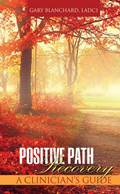
Positive Path Recovery (PPR) combines a number of evidence-based addiction treatment methods to provide clients with a positive and hopeful view of the recovery process. Treatment professionals learn how to motivate people for change, to encourage personal awareness, growth, and acceptance, and to facilitate building and maintaining successful recovery from addiction.
Gary Blanchard developed Positive Path Recovery as a result of his studies and clinical experience in the addiction field. Gary realized that there were a number of people who, for various reasons, did not respond to the 12-step approach of AA; he also realized that there were recovery tasks that AA did not address that needed to be addressed in treatment. Positive Path Recovery is designed to work as an adjunct to the 12-step approach, yet can stand on its own. This book is a clinician's guide to this treatment methodologythat combines the best elements of cognitive/behavioral therapy, 12-step philosophy, and positive psychology.
Excerpt
From the time of the founding of Alcoholics Anonymous (AA) in the 1930’s, the Twelve Steps have been a primary tool for the treatment of substance abuse. Originally created to deal with alcohol addiction, the steps were later adapted by Narcotics Anonymous (NA) and Chemically Dependent Anonymous (CDA) for the treatment of addiction to drugs other than alcohol.
While the Twelve-Step approach has been successful for many people, there are others who do not respond to it. I knew people in both groups before I became involved in addictions counseling, and I met many more once I began working in the field. Those who did not respond to the Twelve Steps often cited particular reasons. Some people expressed discomfort with the “spiritual” nature of the steps. Others felt that the Steps discouraged the use of intellect. There are a number of other reasons that have been given. These concerns are valid and people should have alternatives.
The Positive Path Recovery (PPR) model is just that: a complementary alternative to Twelve-Step recovery. It is based on academic study and clinical experience. There are some small areas where they differ in belief from the Twelve Steps; these differences, however, are outweighed by the similarities and should not lead to opposition. PPR and the Twelve-Step approach can co-exist as allies in the treatment of substance abuse.
The development of PPR has been influenced by many of the major writers and theorists in the field of addiction treatment. The work of Alcoholics Anonymous (AA) is highly influential in addiction treatment and cannot be ignored. Albert Ellis, with his Rational Emotive Behavior Therapy (REBT) also makes a major contribution to this work. Terence Gorski, considered to be an expert in relapse prevention and treatment, is another person whose work helps to form a basis for the PPR approach. The work also includes a survey of the theories of other people that have written about addiction treatment. Motivational Interviewing, and the Stages of Change Model that informs it, also play a major role in PPR.
|