|
|
| 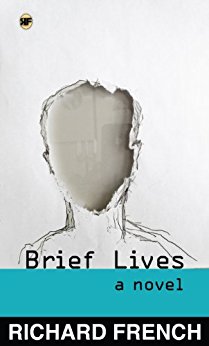 | | Brief Lives
An almost-forgotten 19th century entertainer who performed magic tricks, wrote highly original songs, and got into grave trouble provides the subject for a play in the 1950's and later an opera.
Loretta Freeman persuades her friend Bruce to write a play about a 19th century American entertainer who told stories, performed magic tricks, wrote songs, and got into deep trouble when he strayed from his calling. Loretta also persuades her parents, who run a theater company, to produce the play.
The bulk of the novel consists of brief accounts of people involved in the production or who are interested in it. As well, the story includes two novellas, one consisting of the diary of the entertainer's wife Grace, the other about a composer and librettist who put together an opera based on G | | 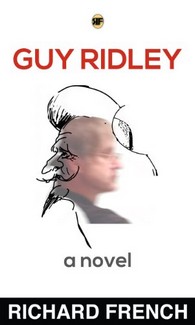 | | Guy Ridley
An imaginative man, a used book-seller, looks for creative remedies for a multi-faceted mid-life crisis.
Guy Ridley runs a second-hand bookstore near a large Midwestern American university. He copes with several challenges. He is separated from the wife he loves. He tries to resolve the scandal that prompted her to leave the university at the beginning of her life as a professional. A mental illness that takes the form of visitation from demons troubles him.
One part of his journey seems to go well. Guy writes fictional sketches about university that are included in the novel. Besides that, he is a great fan of Don Quixote. Like Cervantes knight, he does his best to help most of the people w | | 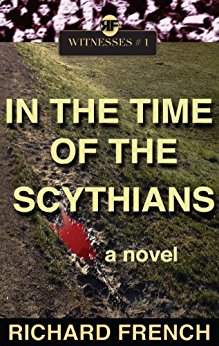 | | In the time of the Scythians
Paul Kingsley -- journalist, teacher, father and husband, veteran, story-writer -- fights the influence of a cultish secret society called the Scythians. Unknown to him, others also take up the struggle. This is the first volume of a series called "Witnesses".
This novel consists of several narrative threads with similar themes. Two 17th century colonial American women and a native guide travel through an area where a devastating war took place. Centuries later, American soldiers train to fight in an Asian war. Later still, several people contend with the Scythian cult that threatens to destroy the democratic way of life.
The story includes examples of private memories, personal creativity and references to the historical record of the American people. It takes up several questions: How do ordinary folks deal with major calamities like war? What | |  | | Love Builds a Nest in Our Park
21 brief prose sketches about people in a large urban park dealing with issues in romantic relationships.
Various fictional characters work out the complexities of romance. Each relationship is unique: refugees, artists, youngsters, middle-aged folks and older, business people. Some relationships are rocky, some are in holding patterns, others look as if they will thrive. What do the characters in these vignettes do well or poorly? | |  | | Send Me
A novel about war and its aftermath and its effect on ordinary people.
Wars in the 17th and 20th centuries...a fight in the recent past against a destructive cult. These conflicts come to points of resolution in "SEND ME", the fifth and last novel in a series called "Witnesses".
The editor Stephanie Markham finishes her work on the last stories and novellas of Paul Kingsley, which are included in the novel, about the troubles and courage of ordinary people in times of war.
Stephanie also finds satisfaction, after a spell of turbulence and uncertainty, in the birth of her first child and the likelihood that she will marry a man she has come to love and res | |  | | Surveys
Daniel Morley, a painter, and his wife Sonja, a photographer, move to a university campus and find themselves on the edges of a notorious scandal that eventually touches them. Can they rebuild their marriage and complete the work they planned to do?
"Surveys" takes place in the 1960's, in the shadow of a fear that the world is about to end. The setting is an imaginary university in the American Midwest. Daniel Morley, a painter in his 60's, and his wife Sonja, a photographer, come to stay at the school, in whose neighborhood Daniel spent his childhood and hasn't seen for 40 years. Along with working on paintings and photos of the area, they become involved in the doings of a demonic secret society that spreads fear and death, the worst scandal at the university in 50 years. Sonja and Daniel create a body of work there that future generati | |  | | Testimonies
The third novel in a series called "Witnesses", "Testimonies" begins with these words: "The stories of a free people aren't always smooth and orderly." Never mind what challenges the main characters face, they are usually sturdy and resilient.
This novel consists of several narratives about people who are determined to improve their lives. They contend with such obstacles as war, plague, corruption, inner waywardness, and the ambitions of a cult that has become destructive. Do the main characters give up on their goals or do they persist in their quests for renewal of life for themselves, for people close to them, and for their society as a whole? | |  | | The Angel of Recovery
Read about the experience of ordinary Americans during and after wars in three centuries. This novel, the 2nd in a series called "Witnesses", also tells about people who battle the influence an imaginary and dangerous cult in the recent past.
This novel continues the examination that began with "In the Time of the Scythians" of certain aspects of America's past and present. Warfare touches the lives of many people. Almost no one is cut out for it by nature. The narratives in this volume are about soldiers on the edge of war and people coping with the long-term effects of it. Enemies of peace and prosperity, of democratic ways, come in many forms. In this story, reluctant, volunteer crusaders prepare to fight the influence of a noxious cult and its leader. The title refers to a force for good active in life that we don't always | |  | | The Hills of the Tigers
Carl Norberg has the soul of an artist and spends as much time as he can painting. How does he cope with life as a soldier at the start of a war and then with the pressures of a competitive city?
"The Hills of the Tigers" explores two features of modern-day life, civilian and military. Carl Norberg is an artist who serves in the American army at the start of a war in Asia that doesn't go well. The reader will also learn about the arts community in a large northeastern city, where Carl decides to start his civilian career. Can a man who isn't at home anywhere he goes use his talents to benefit others and build a satisfying, fruitful life? Can he find a woman to love? | | 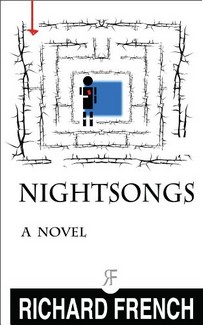 | | The Nightsongs of Arthur Goodbody
A minor devil plays on the grief of a young widower. Arthur Goodbody reluctantly goes along with him and discovers that he must fight the devil's empire.
Though not yet 30, Arthur Goodbody has been in a slump since his wife died five years before. He works for a museum, not as an officer in the U. S. State Department as he'd once dreamed. He hasn't much money and few prospects. His social life takes place entirely at a bar in his neighborhood. He writes poems, some of which are included in the novel. Just as he is about to strive for a better way of life, a minor demon named Mr. Octavius barges into his affairs and offers to bring Arthur's late wife Laura back to him if he will enlist in Octavius's campaign to banish faith from the human sce | |  | | The Opinionists
This novel puts two periods of America's past side by side -- the 17th century and the mid-20th. Both tell about frustrations that occur in the quest for creativity and freedom.
The well-known film director Vincent Adair arrives in Stilton Fields in the mid-1950's hoping to find the subject for a movie that will revive his career. He decides to adapt the story of Lydia Bowstreet, a woman who was involved in a 17th century theological controversy and spent her last days in semi-exile in and near Stilton Fields. "The Opinionists" tells two stories in alternating chapters, one about the controversy that Lydia was involved in, another about the making of the film. The novel explores various aspects of the quest for freedom in North America. | | 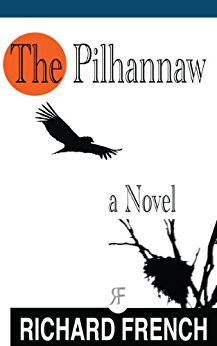 | | The Pilhannaw
"The Pilhannaw" starts with a case of supposed witchcraft in a North American English colony in the middle of the 17th century. It's about more than witchcraft: fights for social justice and the spiritual health of the people the governor of the colony leads.
March, 1649. A court in Botolph sentences a woman to hang for supposedly trafficking with the devil. The old governor of Sagadac does everything he can to stop an outbreak of hysteria as a wave of accusations of witchcraft washes over the colony.
The story is based on an isolated case of alleged witchcraft that took place in Massachusetts.
"Pilhannaw" is an old native term for a bird of prey like an eagle. | |  | | The World, the City, and the Wakemans
The Wakemans are talented, well-established, and ambitious. They're not heroes, so how do they cope when they get into situations that call for heroes?
The Wakemans live in a large city in the northeastern U. S. Life tests them as they struggle to get out of physical, mental, and spiritual low points. Do they rise or sink? The novel includes three interludes that take place in a faraway country that has gone haywire with technology and the paranormal. One of the characters wonders if reality is disintegrating. | | 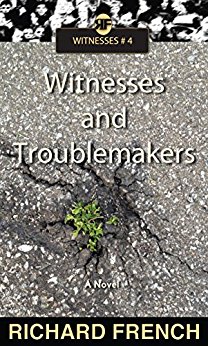 | | Witnesses and Troublemakers
A novel about the effects of warfare on ordinary people and the rewards that come with reflecting on one's experience later and talking or writing about it. This is the fourth volume of a series called "Witnesses".
While he is a student at a community college in the United States, Paul Kingsley is horrified to learn that he is the illegitimate son of a notorious ideologue who re-established an underground, sociopathic cult called the Scythians. In reaction to his father's war on democracy, Kingsley leaves school and takes a step no Scythian would ever make -- he enlists in the American army and ships out overseas to serve behind the lines of combat in an Asian war. He marries, returns to America, and establishes a family.
In later life, he reaffirms his personal commitment to democracy by writin |
|
|
|