|
|
| 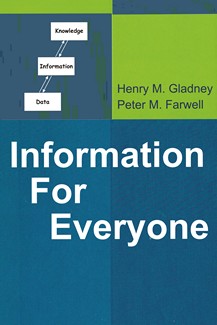 | | Information for Everyone
About information philosophy, because information is more basic than any tool with which it is created, found, or enjoyed.
p class="MsoNormal" style="margin-top:6.0pt;margin-right:0in;margin-bottom:9.0pt;
margin-left:0in">span style="font-size: larger;">span style="font-family: "Times New Roman";">i>Information for Everyone/i>/b>i> /i>is a book for late secondary school, early college, or curious adults. For span style="line-height: 107%;">humanities’ students, it is the easiest source for information philosophy. It avoids discussing digital technology, because /span>information is more basic than any tool with which it is created, found, or enjoyed. /b>/span>/spa | |  | | No Taxation without Representation: 1768 Petition, Memorial, Remonstrance
A remarkable 1769 tripartite imprint surfaced in 1994 auction, for sale by heirs of David Hartley, sometime Member of Parliament and the official British signatory of the 1783 Treaty of Paris that formally ended the American Revolution. Entitled The Petition to His Majesty, The Memorial to the House of Lords, and The Remonstrance to the House of Commons (PMR), it came from the Virginia colonial legislature—the House of Burgesses whose membership included George Washington and Thomas Jefferson.
Examining the PMR history probes difficult communications that led up to the American War of Independence. Many of its points were reiterated in the July 4, 1776 Declaration of Independence. Not co-incidentally, Thomas Jefferson and other Virginia signers of the Declaration had participated in drawing up this 1768 protest.
See span style="font-family: "Bookman Old Style","serif"; font-size: 10pt; mso-fareast-font-family: Calibri; mso-bidi-font-family: 'Times New Roman'; mso-ansi-language: EN-US; mso-fareast-language: EN-US; mso-bidi-language: AR-SA">a href="http://www.hgladney.com/PMR/No_Taxation_without_Representation_(book_description).pdf">http://www.hgladney.com/PMR/No_Taxation_without_Representation_(book_description).pdf/a>/span>
| |  | | Preserving Digital Information
Almost all new information is created with digital tools. Much of this is distributed primarily in digital form, partly because its analog representations lose information contained in digital sources. This creates demand for means for preserving reliably authentic versions of authors’ works—versions that will be intelligible and/or otherwise usable many years from now.
|
|
|
|