About information philosophy, because information is more basic than any tool with which it is created, found, or enjoyed.
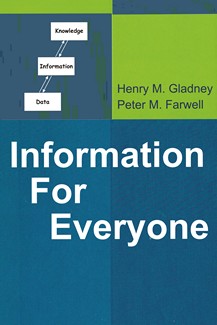
Information for Everyoneis a book for late secondary school, early college, or curious adults. For humanities’ students, it is the easiest source for information philosophy. It avoids discussing digital technology, because information is more basic than any tool with which it is created, found, or enjoyed.
In 50 B.C., Lucretius taught that information is inherent in a pattern—a letter order. In the 14th century, when the word ‘information’ first appeared, it meant something like “incrimination”. Since then it has taken on many meanings. Its Latin precursor is informare—to shape, to mold, to infuse with form. Where? In the mind. We become informed.
Information for Everyone draws on the most influential 20th-century philosophers. It avoids highfalutin language, using English just as at home, on the street, and in schools. Helped by 32 pictures, its text is sure to please you. And if you want to dig deeper, concise summaries of its ~80 citations expose excellent digging spots!
Excerpt
Everyday language is full of ambiguities. A “bit” is the smallest part of a number or else a tiny amount of matter—something tangible. To “compute” is either a mental process or what a computer does. Being “governed by” a law of physics is a behavior, not a political relationship.
We can never be certain that somebody else understands our words. Idiomatic English is particularly difficult. “What works”—such as techniques to make artistic performances successful—has little relationship to “what does work”—energy expenditure to move objects. Such nuances might be understood only by natives.
“Knowledge Management” workers manipulate information, not knowledge. “Information Management” specialists handle database systems more than they strive to inform others.
The boundary between knowledge and information is less ambiguous in the case of the cognate verbs, ‘to know’ and ‘to inform’. Almost nobody would misunderstand the difference between knowing something and informing somebody about something.
This book presents a narrative story of one person's journey of transcendental Awakening and Enlightenment as guided by his two Sage companions. It is grounded in Zen Buddhist and Taoist perspective and uses the I Ching as its structural framework. T
This book presents a narrative story of one person's journey of transcendental Awakening and Enlightenment as guided by his two Sage companions. It is grounded in Zen Buddhist and Taoist perspective and uses the I Ching as its structural framework. T
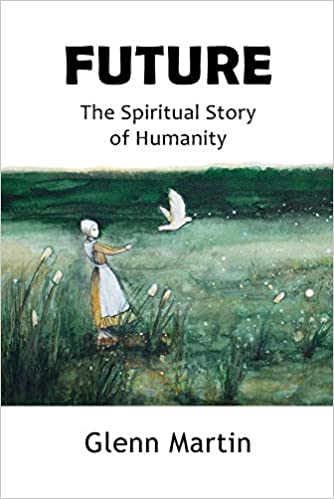
Histories of the world are generally written to either celebrate technology and science, or to herald doom. My book examines the path of the spirit in the onward rush.