|
|
|  | | Gypsy Prince: War Horse
A horse struggle to survive as part of the German Army in World War Two.
Gypsy Prince was born small, the last foal of an old German war horse who had survived World War I. The stablemaster hoped he would grow up to pull a beer wagon in Munich, but it was the late 1930's and Germany needed every horse for the conflicts to come.
Gypsy Prince sees action on the Eastern Front at Moscow and Stalingrad, then D-Day in Normandy. Before the war ends he helps the Americans and the French resistance before trying to make his way home to Bavaria. | |  | | The Ballad Of Ol'Hook
Two young cowboys, a songwriter and a bucking bull all struggle to make in the world of modern day rodeo and country music
Ol'Hook never did have much use for humans, coyotes, or horses. Coyotes killed his mother. Horses chased him. Humans took away his freedom, his only friend and cut off his horns. So when they hauled him to a rodeo and made him a bucking bull, Ol' Hook figured it was time to get even.
The Ballad Of Ol' Hook is the story of a rodeo bull, a girl from East Texas who immortalizes him in song and a wild young cowboy who must ride him at the moment when everything, including his life, hangs in the balance | | 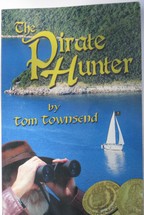 | | The Pirate Hunter
When twelve-year-old Peter Bartholew's reclusive cousin dies, leaving him a metal detector and cryptic clues to a buried treasure, Peter and his friend Vin set sail for the mysterious Black Jack island. But things get complicated when they encounter a ghost and real pirates.
"Beginning with WHERE THE PIRATES ARE, Tom Townsend has not yet exhausted his pirate knowledge."
JoAn W. Martin
Review Of Texas Books
In 1985, Eakin Press published my first middle reader novel, WHERE THE PIRATES ARE. A year later it had broken all Eakin sales records, won the Friends Of American Writers Award and was a Bluebonnet Master List book. The story wa set in the eighteen-forties and was eventually followed by two sequels, THE DARK SHIPS & POWDERHORN PASSAGE.
THE PIRATE HUNTER continues the story in the twenty-first century.
|
|
|
|