AuthorsDen.com   Join | Login    
Where Authors and Readers come together!

SIGNED BOOKS    AUTHORS    BOOKS    SAMPLE CHAPTERS    AUDIOBOOKS    eBOOKS    STORIES    ARTICLES    POETRY    BLOGS    NEWS    VIDEOS    SUCCESS    TESTIMONIALS

Featured Authors:  Judith Bailey, iDavid Arthur Walters, iBob mitchley #shock stories, iFrank Whyte, iPaul Lonardo, iAlvin Romer, iShirley Francis-Salley, iLisa Loucks Christenson, iCharles Keller, iH.G. Potter, i

  Home > Reference > Articles Popular: Books, Stories, Articles, Poetry      Authors: A B C D E F G H I J K L M N O P Q R S T U V W X Y Z     

Michelle Buckman

 Follow Me  

· Contact Me
· Books
· Articles
· Poetry
· News
· 13 Titles
· 13 Reviews
· Save to My Library
· Share with Friends!
·
Member Since: Before 2003

Michelle Buckman, click here to update your pages on AuthorsDen!


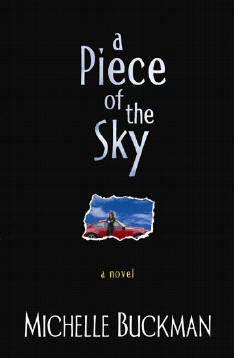
Books by
Michelle Buckman


See all Books
by Michelle Buckman


Writing Dialogue in Stories
by Michelle Buckman   
     
Recent articles by
Michelle Buckman

• Olympic Furniture
• Love Chocolate?
• The Write Series - A review
• Star Wars Episode Two: An Opinion
• Summer and Barney Fife
           >> View all

Steps to writing more effective dialogue from a long time workshop leader.

The first step to developing effective dialogue is to listen. I know that sounds oversimplified, but if you start developing an ear for conversations, you’ll learn the rhythm and patterns of speech. You’ll learn how to invoke mood into your dialogue.

Effective dialogue only includes the portions that mean something. Readers don’t need to read “Hello” and “Goodbye,” or any other trivialities. Readers want the meat, the lines of dialogue that show emotion, change in opinion, or indicate a thought or future event. The part of a conversation that makes you tip your head towards two old ladies at a bus stop to hear what they’re saying – that’s what you put into your story.

DON’T use dialogue to expound on backstory. (Example of backstory dumping: “Linda, do you know how I came to live on this boat?” “No. Tell me.” “Well, my house had burned….)

Another important facet of dialogue is to create different voices for each character, not to the extent of being a distraction, but in order to define them. One may have a chip on his shoulder and speak in short sentences. One may have an exclamation she uses over and over. Another may be a child with improper grammar, or a farm boy with slang flavoring his speech.

As you create dialogue, don’t use a myriad of tags. (Tags are the words used to indicate who is speaking.) Unless noting that screaming or whispering is important to the dialogue, use said. Readers have grown so used to said that it disappears into the text and becomes invisible. When you use cried, exclaimed, moaned, screamed…. you interrupt the reader’s involvement. You remind him he’s reading instead being part of the story.

I suggest leaving off tags completely, as long as the speaker remains clear without the notation. Or you can place action in front of the dialogue to serve the same purpose: Tom plopped onto the bench. “I’ve had enough for one day.”

Remember, dialogue is one of the most powerful methods of moving a story forward. Use it with a purpose.


Want to review or comment on this article?


Need a FREE Reader Membership?
Popular Reference Articles
  1.  Naming Characters
  2.  Anatomy of a crisis: part of a continu
  3.  Language Acquisition by means of Liter
  4.  Relevance
  5.  The White Male Case-A Deafening Statem
  6.  What's Your Writer's Score? Inspiratio

Free Book Review Program
Select a book to read and review today!

Prepared to Survive: A Guide for Everyone by Margot Dillard

preparing you and your family for natural disasters, covid like situations and other threats to your family.  
Member BookAds

First Responder Supervisor Guide by Trennis Killian

This book is for all first responders (law enforcement, fire, or other emergency personnel) who are or want to be supervisors in their agencies. It goes through all facets of being a good supervisor. Being a supervisor in any occupation is  
Member BookAds

Writers' Tricks of the Trade: 39 Things You Need to Know About the ABC by MORGAN ST. JAMES

Writers' Tricks of the Trade is like the appetizer table at a writers' buffet, filled with tips, techniques and tricks. Written in easy-to-read prose. Available in paperback, eBook and Kindle from multiple sellers  
Member BookAds