AuthorsDen.com   Join | Login    
Where Authors and Readers come together!

SIGNED BOOKS    AUTHORS    BOOKS    SAMPLE CHAPTERS    AUDIOBOOKS    eBOOKS    STORIES    ARTICLES    POETRY    BLOGS    NEWS    VIDEOS    SUCCESS    TESTIMONIALS

Featured Authors:  Frank Ryan, iMichael Gorton, i Aberjhani, iMargaret Mullings, iChristine Boyce, iMargaret Evans, iPeter Jessop, iTeresa Walker, iSusan Smith, iD. Enise, i

  Home > Education/Training > Articles Popular: Books, Stories, Articles, Poetry      Authors: A B C D E F G H I J K L M N O P Q R S T U V W X Y Z     

Carol Culver Rzadkiewicz

 Follow Me  

· Contact Me
· Success story
· Books
· Articles
· Poetry
· News
· Stories
· Blog
· Messages
· 65 Titles
· 167 Reviews
· Save to My Library
· Share with Friends!
·
Member Since: Dec, 2007

Carol Culver Rzadkiewicz, click here to update your pages on AuthorsDen.


Copyright Law
by Carol Culver Rzadkiewicz   
Rated "G" by the Author.
     
Recent articles by
Carol Culver Rzadkiewicz

• The Good Life
• Subject/Verb Agreement
• Verb Tense
• Identifying Nouns
• Similes & Metaphors
           >> View all

Why is it important for writers to know what materials they are free to use and what materials they cannot use without leaving themselves open to charges of “copyright infringement”?


What does it mean when a work is “copyright protected”? And why is it important for writers to know what materials they are free to use and what materials they cannot use without leaving themselves open to charges of “copyright infringement”?


Copyright laws protect the rights of the people who create original works, and if someone owns the copyright on a work, this means that he or she is the sole owner of that work and possesses the exclusive right to do the following:


1)     Reproduce the work in any form, which includes making copies

2)     Use the work to create other works, including updated versions

3)     Distribute copies of the work to the public via selling, renting, leasing, loaning, or transferring ownership

4)     Display the work publicly, including dramatic productions, pantomimes, pictures, graphics, or sculptures


Works protected under copyright law are original works of authorship, even if they have not been published or distributed to the public. Works that are not protected under copyright law are considered “common property” and include works with no original authorship and those not fixed in a tangible form.


However, what falls under each heading?


Protected Works:


1)     Literature: books, poems, short stories, articles, essays, and even comic books 

2)      Plays: dramatic compositions or performances 

3)     Screenplays: stories written for production as movies, or scripts that are based upon a novel or existing short story

4)     Music: vocal and instrumental recordings, including DVD’s, CD’s, cassette tapes, video tapes, and even the old fashion 33’s, 45’s, and 78’s

5)     Art: paintings, sculptures, sketches, lithographs, etchings, etc.

6)     Film: movies whether they are made by a major studio, an independent studio, or an individual

7)     Photographs: images created through the photographic process

8)     Graphics: drawings, designs, charts, diagrams, etc.

9)     Computer Software: any computer program or data from a computer, such as Windows, Microsoft Office, Norton Anti-virus, etc.


Unprotected Works:


1)     Titles of literary works, films, plays, poems, etc.

2)     Improvised Speeches: speeches given without formal preparation or fixed in any tangible form, such as writing

3)     Familiar symbols: symbols recognized and used by the majority of people but whose creators are unknown, for example, the peace sign, the yin and yang symbol, etc. 

4)     Standard Calendar: table or chart that shows the arrangement of days and months within a year

5)     Concepts: ideas or thoughts that have not been fixed in a tangible form such as writing, recording, film, etc.


I hope this helps clarify what does and does not fall under copyright protection. After all, copyright infringement is a serious offense; and if someone is found guilty of copyright infringement, he or she can be heavily fined or even sued. So play it safe. If you ever have any doubt whatsoever about something you intend to use in your writing, remember the old adage: “It is better to be safe than sorry;” and with this in mind, do not use the material at all.  


Want to review or comment on this article?


Need a FREE Reader Membership?
Reviewed by Malcolm Watts (Reader)
Reviewed on February 14, 2008
Carol, what about if you want to quote some song lyrics in a story or book? Malcolm

Reviewed by D Johnson
Reviewed on January 26, 2008
Carol, this is great information, but forgive me if I seem a little dense...it might be something in my genes. If I wanted to quote someone and gave them the credit, i.e name, book, etc. Would this still be considered copyright infringement?

Thanks,
Dan

Reviewed on January 25, 2008
Thanks for writing this. I need to really learn more about this.

Popular Education/Training Articles
  1.  Why Peterson Field Guides are Best
  2.  5 Quotes from Greeting Flannery O’Conn
  3.  Book Covers and New Content
  4.  The 100th Anniversary of the Harlem Re
  5.  Malcolm X in a Time Such as This
  6.  Writer's Toolbox
  7.  Student Fighting in Public Schools
  8.  Tips for Success on AuthorsDen
  9.  Making an Author Hub
  10.  Main Street is Prison Street. Governor
  11.  Mind Ya' Own Business
  12.  Violence, Student Disrespect and Fight
  13.  Blake H.S. and Newton’s Laws of Motion
  14.  Through the Eyes of a Rapist
  15.  The Poisoned Parables
  16.  The Long March through the institution
  17.  The Great Australian Migration
  18.  The Joy of Learning (video)
  19.  THE PHANTOM SOVEREIGN
  20.  PATRIARCHY
  21.  Pronoun Predicament
  22.  Write a Novel
  23.  The Messy Paradigm Shift in Understand
  24.  Hamline Mitchell is NOT a Law School.
  25.  Arizona Literacy

Free Book Review Program
Select a book to read and review today!

Suicide Awareness for First Reponders by Trennis Killian

Suicide Awareness for First Responders helps you to better understand suicidal people, how to help them, what to do at a scene of suicide threats or completion. Suicide threats and completion among first responders is also covered.  
Member BookAds

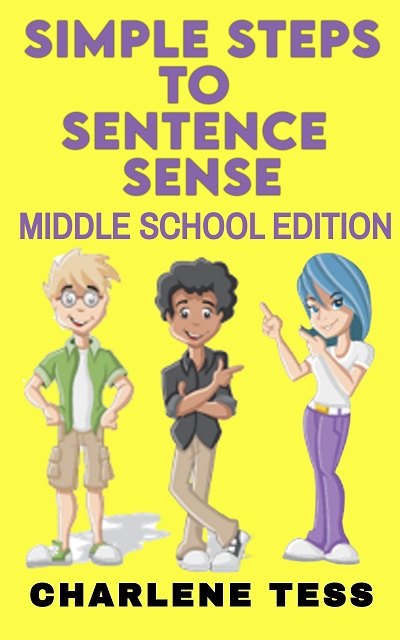
Simple Steps to Sentence Sense for Middle School by Charlene Tess

At last, a middle school version of Simple Steps to Sentence with all new practice exercises, tests, writing connection pages, and answers. Everything you need to teach your students the easy way to analyze sentences. Just print a page at a time, or  
Member BookAds

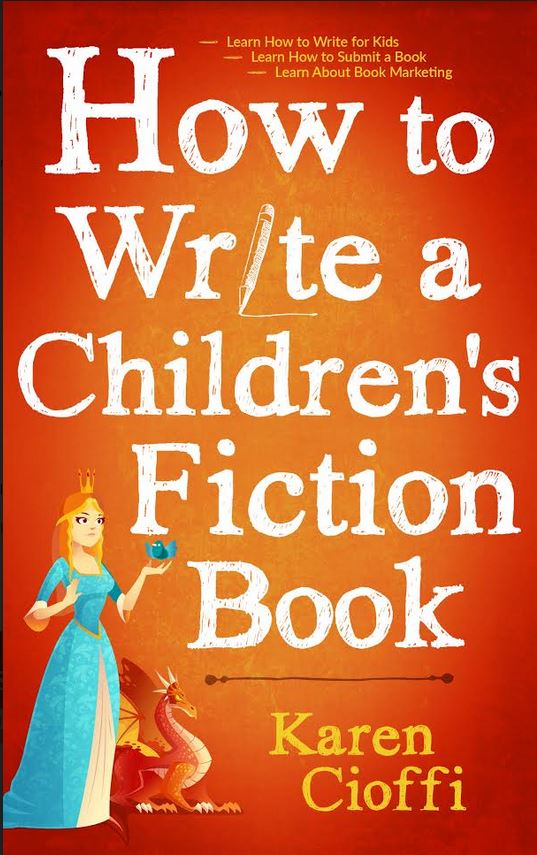
How to Write a Children's Fiction Book by Karen Cioffi

How to Write a Children's Fiction Book covers it all, including examples and assignments. It's well over 200 pages of no-fluff content.  
Member BookAds