AuthorsDen.com   Join | Login    
Where Authors and Readers come together!

SIGNED BOOKS    AUTHORS    BOOKS    SAMPLE CHAPTERS    AUDIOBOOKS    eBOOKS    STORIES    ARTICLES    POETRY    BLOGS    NEWS    VIDEOS    SUCCESS    TESTIMONIALS

Featured Authors:  Margaret Mullings, iDean Cambourakis, iWilliam Manchee, iWilliam Martell, i Aberjhani, iMaryAngela Nangini PhD, iJill Eisnaugle, iDiane Hundertmark, iDebashish Haar, iMatt Miller, i

  Home > Cultures > Articles Popular: Books, Stories, Articles, Poetry      Authors: A B C D E F G H I J K L M N O P Q R S T U V W X Y Z     

Mark M Lichterman

 Follow Me  

· Contact Me
· Success story
· Books
· Articles
· Poetry
· News
· Stories
· Blog
· 2,320 Titles
· 6,518 Reviews
· Save to My Library
· Share with Friends!
·
Member Since: Jun, 2008

Mark M Lichterman, click here to update your pages on AuthorsDen.


Prejudicial Misconceptions
by Mark M Lichterman   
Rated "G" by the Author.
     
Last edited: Monday, January 5, 2009
Posted: Monday, January 5, 2009

Recent articles by
Mark M Lichterman

• Deno, Donnie & Frank?
• A Pubic Dog
• Murphy’s Law
• God Bless America
• California Gun Laws (Purchasing & Obtaining)
           >> View all

The previous space housing a single family of three, four, five or six people became the spaces for two, three or even four families.

As the existing families vacated their ghetto apartments, the vacuum they left was quickly filled.

The Blight: Chicago, Illinois, 1951

The West Side had been stagnant for years.

Names on mailboxes had remained the same year after year, and if not the same name than certainly the same European derivation of that name, or the neighbor’s name.

In the years following World War II, millions of people from throughout the world flocked to America, and in particular to the city of Chicago.

The Europeans came, some with more, most with less, but all came bringing their own culture, wanting to be with their own kind, and settling, as silt in water, upon the suited financial ledges in the existing melting pot ghettos and, for the most part, harmonizing with those who came before them.

But now, slowly, all but unnoticed except by those who lived along the constantly changing, eroding borders, the European names on mailboxes changed, from Mazisyk, Binkowski, D’Angelo and Shapiro to “American names”: Smith, Jackson, Washington, Davis and Robinson.

As the multitudes flooded into the city, both from within and outside the borders of America, the ghetto neighborhoods grew constantly, continually encroaching inward, and the existing natives began to move either deeper into the melting pot, temporarily away from the erosion, or, if they had the means, out of it completely, to the suburbs or cities of Berwyn, Cicero and Brookfield to the west; Oak Lawn, Evergreen Park and Blue Island to the south; Lincolnwood, Skokie and Morton Grove to the north.

Previously well-maintained buildings changed hands and the newly found money was transferred out of the old neighborhoods and into the new… Into high-rise apartment buildings for the wealthy… Into shopping centers and countless tracts of suburban, pea-pod houses.

The blight was not the fault of the encroaching people because they were the victims, but rather the fault of the political representatives of the previously existing people for allowing the onset of these destructive conditions. Graft was widespread. Building violations ran rampant and, against all existing building codes, the new landlords subdivided individual two- and three-bedroom apartments into two, and even three separate apartments with shared bathrooms and Pullman-type kitchens.

The previous space housing a single family of three, four, five or six people became the spaces for two, three or even four families.

As the existing families vacated their ghetto apartments, the vacuum they left was quickly filled.

As the socioeconomic makeup of the neighborhoods changed, moderate to low income, previously decent neighborhoods became filthy, over-crowded slums, and in the passing of those going and those coming misconceptions and prejudices were formed that lasted lifetimes.


Want to review or comment on this article?


Need a FREE Reader Membership?
Popular Cultures Articles
  1.  Hawaii: Through the Looking Glass
  2.  Duality: The Trees of Mythology
  3.  The enduring charm of Austrian Trachte
  4.  Democracy and Dinosaurs down by the Ri
  5.  Interview VI with Caroline Kuliaikanu`
  6.  GRACISM
  7.  Celebrating National Poetry Month
  8.  War and Peace
  9.  The Chinese Experience in Hawaii
  10.  Hawaiian Sexuality and the 'Mahu' Trad
  11.  ADDICTION ?
  12.  Movers
  13.  Detroit Institute of Arts
  14.  Don't desert me my American Friends
  15.  ISLAMO-PHOBIA
  16.  African Americans and their issues of
  17.  5th IFLAC PAVE PEACE Impressions, LA,
  18.  How ditching social norms guarantees f
  19.  Many Today Laugh at Earth Day, and Cal
  20.  20th Century Blues
  21.  Blues Poetry
  22.  a Jew to be or not to be
  23.  Native American Osmosis
  24.  Oyster Connoisseurs' Concerns & Memori
  25.  Votre president est un faux imbécile!

Free Book Review Program
Select a book to read and review today!

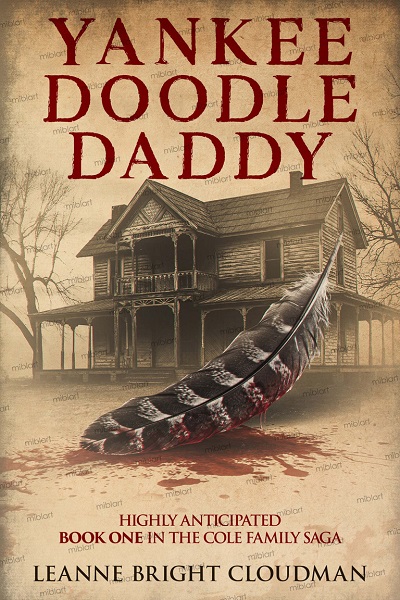
Yankee Doodle Daddy by Leanne Bright Cloudman

Yankee Doodle Daddy is a historical Appalachian Family Saga. The story follows a mother's reckoning as she struggles to survive and keep her four daughters alive.  
Member BookAds

Yankee Doodle Daddy by Leanne Bright Cloudman

Yankee Doodle Daddy is a historical Appalachian Family Saga. The story follows a mother's reckoning as she struggles to survive and keep her four daughters alive.  
Member BookAds

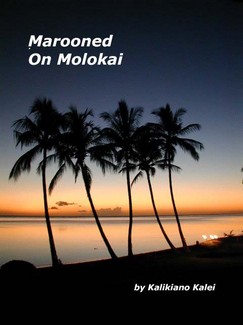
Marooned on Moloka'i: Coconuts, Dreams & Death by Kalikiano Kalei

A 30 day log (2005) of life on Moloka'i (HI), the last of the 'befoh time' Hawaiian holdouts, for a haole malihini.  
Member BookAds