Look through her leaded bay window,
How to describe a neighbor's magnolia tree?
The milky white flowers are so beautiful!
Smiles in the terraced garden,
she reads the park bench inscription,
'For Elizabeth Summers who cherished this place!'
Ah! she's had a lovely walk by the Thames.
Later, she'll go into London town
to buy a pink and pearl wedding gown.
The Terrace and Buccleuch Gardens, Richmond.
At the top of Richmond Hill the area collectively known as Terrace and Buccleuch Gardens is a public park made up of the grounds of three 18th and 19th century estates. Buccleuch House, Landsdowne House and neighbouring Cardigan House were all demolished but the layout of their gardens is still very much in evidence.
The area was useless as common pasture because the steep gradient made it too dangerous for grazing cattle. It had also been seriously undermined by clay extraction and continual landslips were endangering the Upper Road (Richmond Hill) and the adjacent buildings.
Horace Walpole said of a visit in 1790 that "[the garden] is perfectly screened from human eyes, tho' in the bosom of so populous a village: and you climb til at last, treading the houses under feet, you recover the Thames and all the world at a little distance. I am amazed that it is not more talked of."
Illustrations of 1822 and 1844 show the riverside part of the estate with grass and trees and a more densely wooded area behind. Newspaper articles in 1887 describe the garden to the east of Lower Road as "magnificently wooded' and 'charming in its leafy retirement".
In 1863, the fifth Duke of Buccleuch acquired Lansdowne House and estate,eventually demolishing the house and incorporating the gardens into his own. The Duke was noted for his lavish fêtes, and entertained many eminent guests including William IV and Queen Adelaide in 1833, Queen Victoria, Prince Albert, King Leopold of Belgium, the Duke of Wellington and Lord Melbourne in 1842 and even the Sultan of Turkey in 1867. When he died in 1884 he was by far the wealthiest man in England. He was succeeded by his eldest son William, who sold the Richmond estate for £30,000 in 1886.
The Vestry of Richmond, concerned that the Buccleuch estate might be developed with housing, which would destroy the view from Terrace Walk (which was subsequently and unusually protected by an Act of Parliament in 1902), bought the properties and immediately sold the buildings, namely the Three Pigeons Inn, Buccleuch House, and the stables. In May 1887, following some repair work, the remaining gardens were opened to the public as the Terrace Gardens.
In 1937 Richmond Borough Council bought back Buccleuch House; this was later demolished and the riverside garden and promenade were opened to the public. In the 1960s it planted more ornamental trees and rhododendrons from famous collections at Exbury and Ascott near Wing in Buckinghamshire.
A late 19th century terrace, recently restored, and laid out on the site of the former Lansdowne House, overlooks the gardens at the head of the site. On the upper platform of this terrace is a round pond with a Portland stone statue of Aphrodite, known locally as 'Bulbous Betty'. This statue was carved and presented to Richmond Council by A Howes in 1952 to replace a cast-iron fountain.
The views within the Terrace Gardens are many and varied. From the uppermost terrace along the top of Richmond Hill there are panoramic views across the curve of the Thames to Marble Hill, Twickenham and Surrey in the distance. Further north along this terrace, near Friar's Stile Gate, there is a view of the River Thames, framed by mature trees and in Buccleuch Gardens, there are beautiful vistas up and down river, framed by specimen trees.
Richmond Hill
The greatest view in London
The south westerly section of the view from Terrace Walk on Richmond Hill
Richmond Hill in Richmond, London is a hill that rises gently on its northern side from the ancient Thames meadowlands around the site of Richmond Palace up to and slightly beyond the Richmond Gate entrance to Richmond Park, the former royal hunting grounds enclosed by Charles I. T
This renowned hill offers the only view in England to be protected by an Act of Parliament – the Richm. Immortalised in paintings by Sir Joshua Reynolds and J. M. W. Turner
it was described by Sir Walter Scott as "an unrivalled landscape".
The scenic panorama may be viewed from Terrace Walk, laid out near the top of the hill in the 18th century. This promenade surmounts the Terrace Gardens and both are Grade II* listed in English Heritage's Register of Parks and Gardens of Special Historic Interest in England.
As the town of Richmond developed from its founding in the early 16th century, after Henry VII had established Richmond Palace, the attributes of the hill naturally attracted desirable residential and commercial development – with the result that many substantial properties came and went on the hill over the centuries, some of them with famous or notable persons as owners or occupiers. That situation is still in vogue today.
The original homes on Richmond Hill were built in what is now The Vineyard, including Clarence House,Halford House,Michel's Almshouses and Vineyard House.
THANKS FOR SHARING THE HISTORY OF RICHMOND HILL AND THEN FOR FOLLOWING UP WITH THE LOVELY WORK THAT TELLS OF HOW THE BEAUTY OF THE AREA TOUCHED A YOUNG WOMAN'S HEART. THANKS FOR SHARING. LOVE, BLESSINGS AND FAITH...JOYCE * HIS INSPIRATIONS
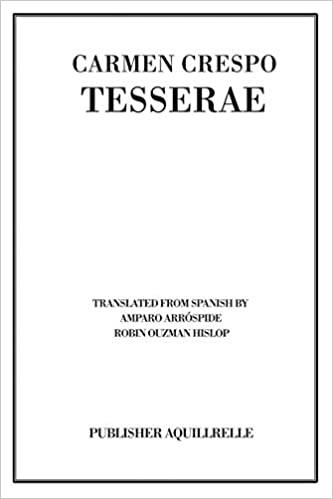
First Edition Translation of Teselas by Carmen Crespo X111 César Simón Poetry Prixe 2016 Translated from Spanish by Robin Ouzman Hislop and Amparo Arrospíde



 Share
Share Print
Print Save
Save Follow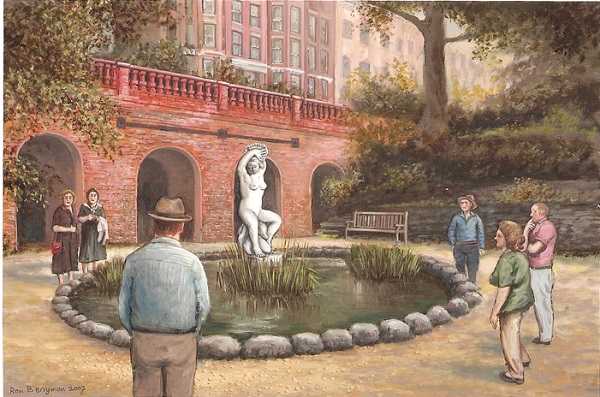






Love ya!
Jane