ALDEBARAN (Alpha Tauri). Aldebaran is by far the brightest, and therefore the Alpha, star of the constellation Taurus. The ancient name, from Arabic, means "the Follower," as the star seems to follow the Pleiades, or Seven Sisters star cluster, across the sky. Aldebaran, 60 light years away, is positioned in front of the sprawling Hyades star cluster (in mythology, half-sisters to the Pleiades) that make the face of Taurus the Bull, but is not a part of it, the cluster over twice as far away. In most renderings of the constellation, Aldebaran makes the celestial Bull's eye. As part of a constellation of the zodiac, Aldebaran is close to the Sun's path, the Sun passing to the north of it about June 1, the star also regularly covered, or occulted, by the Moon. This class K star, of first magnitude and 13th brightest in the sky, is a low- level irregular variable star that fluctuates erratically and to the eye unnoticeably by about two-tenths of a magnitude. Aldebaran's surface temperature of just under 4000 degrees Kelvin (compared to the Sun's 5800 degree temperature) gives it a distinct orangy color. It is a giant star, a star in an advanced state of evolution in which the interior hydrogen fuel has run out, the star now running on the fusion of helium into carbon. Some 350 times more luminous than the Sun, it has expanded to a radius about 40 times solar, making it big enough to enable astronomers to measure its small angular diameter of only 0.021 seconds of arc (the apparent size of a US nickel seen at a distance of 50 kilometers). This large star is an extremely slow rotator, taking almost two years to make a full spin. If placed at the position of the Sun, Aldebaran would extend halfway to the planet Mercury and would appear 20 degrees across in our sky, making life on Earth quite impossible. Yet Aldebaran may have its own "solar system." Recent, though still-unconfirmed, observations show that the star may be slightly shifting back and forth in response to a small body with a mass at least 11 times that of Jupiter and a two-year orbital period. We do not yet know if the body -- if it exists at all -- is a massive planet or a low-mass "brown dwarf," a failed star that is too small to run supporting thermonuclear reactions in its core.
Written by Jim Kaler. Return to STARS.
This really makes me wish it would stop raining here. I think if we get a clear night tonight I'll step outside and see if I can spot Aldebaran (assuming it is in my hemisphere). Although I doubt it will put me in the same mood as it did you, as I have no cobblestones or mountains. ~ Sara
The songs and art in this book are about our collective emergence after the pandemic and trauma of the last few years - comprised of 5 collections: World as Refuge, Where We Live, In Our Hands, Rhythms of Change and What We See & Sow.
BEFORE DARKNESS FALLS Retails for 14.95 / but you can have it now for only 11.95 This is a book of poetry and prose that deals with real life issues that all of mankind comes to face. Some of the poems deal with the tenderness of love, while others s
(Self-published. Please contact author directly to order.)
Enter the pages of diaspora in quiet introspection. Bathe your thoughts with subtle humor; synchronize your spirit-sense with history-in-heat; fall headlong with eyes wide open into


 Share
Share Print
Print Save
Save Follow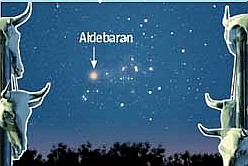








"Polished" perfection - style and verse that is simply astonishing ... exceptional!!
Best wishes,
Robert
Gina
mind painting!
"Eyelashes of moonlight snow..."
Exceptional..for sure!
And thanks for the info. Is was interesting to read.
ALDEBARAN (Alpha Tauri). Aldebaran is by far the brightest, and therefore the Alpha, star of the constellation Taurus. The ancient name, from Arabic, means "the Follower," as the star seems to follow the Pleiades, or Seven Sisters star cluster, across the sky. Aldebaran, 60 light years away, is positioned in front of the sprawling Hyades star cluster (in mythology, half-sisters to the Pleiades) that make the face of Taurus the Bull, but is not a part of it, the cluster over twice as far away. In most renderings of the constellation, Aldebaran makes the celestial Bull's eye. As part of a constellation of the zodiac, Aldebaran is close to the Sun's path, the Sun passing to the north of it about June 1, the star also regularly covered, or occulted, by the Moon. This class K star, of first magnitude and 13th brightest in the sky, is a low- level irregular variable star that fluctuates erratically and to the eye unnoticeably by about two-tenths of a magnitude. Aldebaran's surface temperature of just under 4000 degrees Kelvin (compared to the Sun's 5800 degree temperature) gives it a distinct orangy color. It is a giant star, a star in an advanced state of evolution in which the interior hydrogen fuel has run out, the star now running on the fusion of helium into carbon. Some 350 times more luminous than the Sun, it has expanded to a radius about 40 times solar, making it big enough to enable astronomers to measure its small angular diameter of only 0.021 seconds of arc (the apparent size of a US nickel seen at a distance of 50 kilometers). This large star is an extremely slow rotator, taking almost two years to make a full spin. If placed at the position of the Sun, Aldebaran would extend halfway to the planet Mercury and would appear 20 degrees across in our sky, making life on Earth quite impossible. Yet Aldebaran may have its own "solar system." Recent, though still-unconfirmed, observations show that the star may be slightly shifting back and forth in response to a small body with a mass at least 11 times that of Jupiter and a two-year orbital period. We do not yet know if the body -- if it exists at all -- is a massive planet or a low-mass "brown dwarf," a failed star that is too small to run supporting thermonuclear reactions in its core.
Written by Jim Kaler. Return to STARS.
What a fantastic, memorable line
from this superb poem! Thanks Franz!
Carmen :-)
...Michael
Sandie May Angel