Reclaiming Oneself
I.
A nation can limp the way a body does,
aching joints becoming policy,
clouded thoughts turning into weather that never clears.
We call it “the price of survival,”
as if chronic pain were a border
and self‑worth the tariff no one can afford.
Whole countries inherit a third‑world state of mind,
believing scarcity is destiny
and dignity a luxury tax.
And within that landscape,
a small religious community
sits like a lantern in a windowless house,
glowing against a storm that wishes to snuff it
with wind made of neighbors who think
their own beliefs would shatter
if they didn’t grind someone else’s down.
Economies buckle next,
the lowest classes wearing invisible bruises
from jobs that eat their hours and futures both,
the way rust feasts on the belly of a ship
until even the sea pities it.
II.
Families carry this, to,
dinners where silence weighs more than plates,
where a child’s small achievements
are treated like mispronounced words,
corrected rather than cherished.
A father frowns;
a mother looks away;
a sibling laughs just a second too long,
and suddenly a life is shaped
like a tree forced to grow around
the fence that cages it.
So teens run into alleys lit by promises
made by strangers with cracked morals
and open hands.
They choose connection over safety,
because connection feels like oxygen
and safety feels like a story told about someone else.
Healing turns into a labyrinth,
every decision a door they hope leads out
but instead opens into rooms where the mirrors distort them
into creatures unworthy of rising.
III.
Until one,
the one who ran farthest,
becomes a wanderer wrapped in night air,
a teen by age, a veteran by hardship.
Hunger becomes a clock;
cold becomes a landlord;
the streets become a lesson in how small
a person can feel when the world forgets their name.
Tonight a crowded bus takes him in,
a metal lung breathing strangers.
He clings to the pole,
his left leg throbbing with the memory
of a fall on wet pavement,
a bruise blooming beneath torn denim.
He hides the pain as if pride were a blanket
he is afraid someone might steal.
Then…
A soft voice, a gentle motion.
An old lady, crocheting as though stitching
stray moments back into the world,
offers her seat.
Her yarn loops like a heartbeat, steady.
He stares, startled,
the question slipping out raw:
“Why?”
She stands without dropping a stitch.
“You deserve some kindness,” she says,
“sitting might help that bunged‑up leg of yours.”
She looks up then,
eyes threading warmth into him with the precision of her needles.
“Kindness helps the mind, too,” she adds,
“worked for me and for my friends here.”
She nods toward the needles clicking softly.
“Crocheting teaches the heart and mind
how to mend what the world has torn


 Share
Share Print
Print Save
Save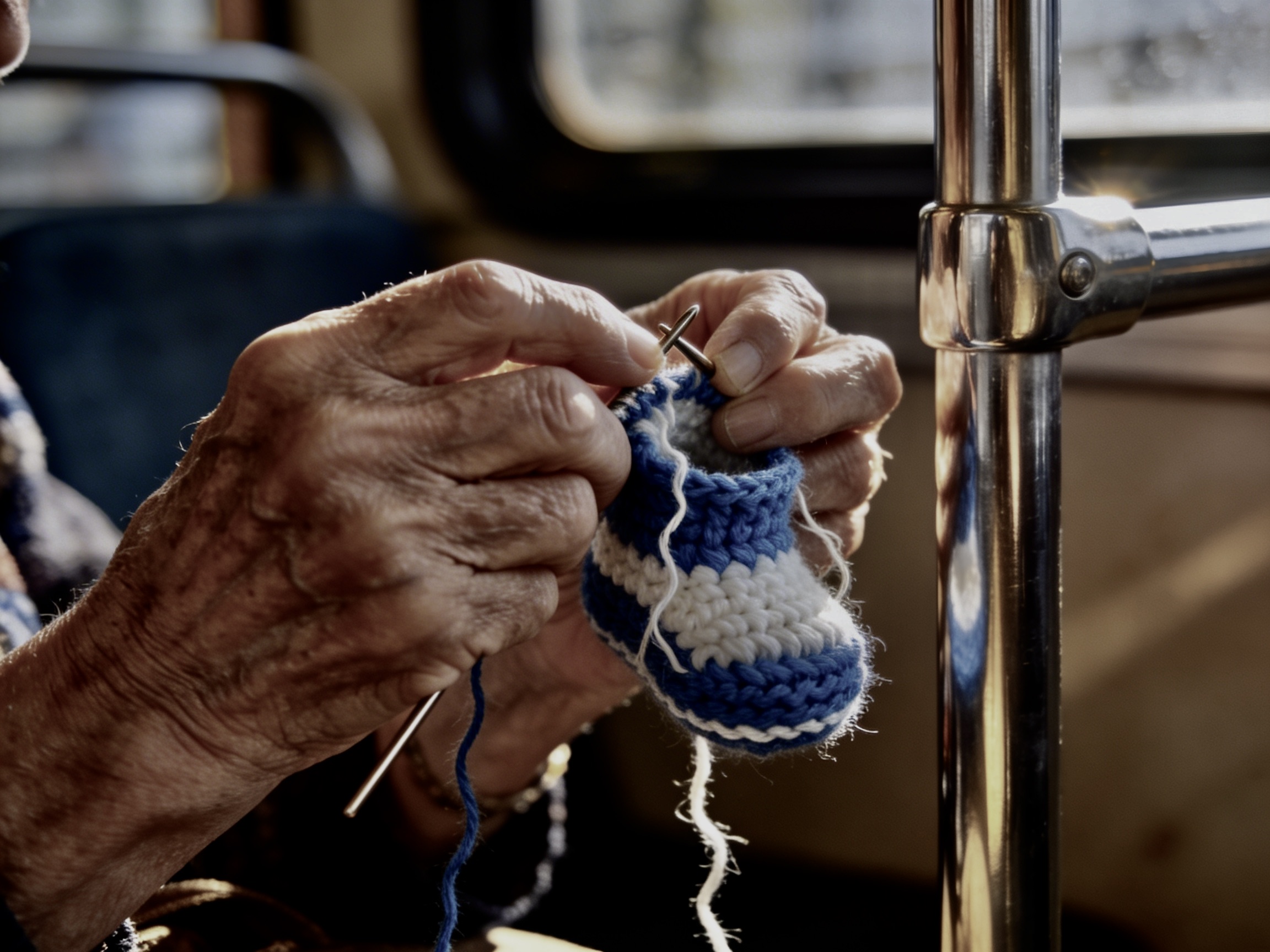



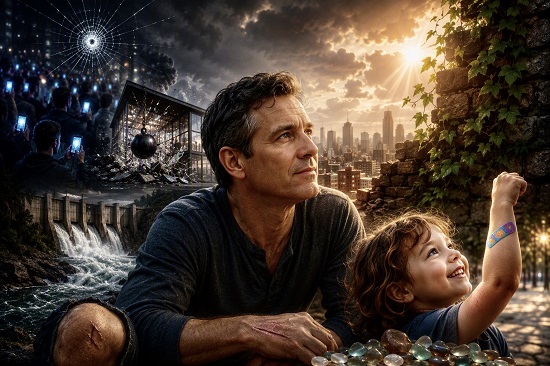

Kindness goes a long way to mend our world. My aunt was abundantly kind. She charged me $13 for a 13 star flag she crocheted many for the bicentennial. When I asked her how long it took her to make it, she said, "a week."
The world is kind. The news is the sensational nasty tip of the iceberg. While much of the world continues in abject misery while still staying kind to its neighbors.
A hug helps a whole lot, too.
Ron