Craquelure Aging
I.
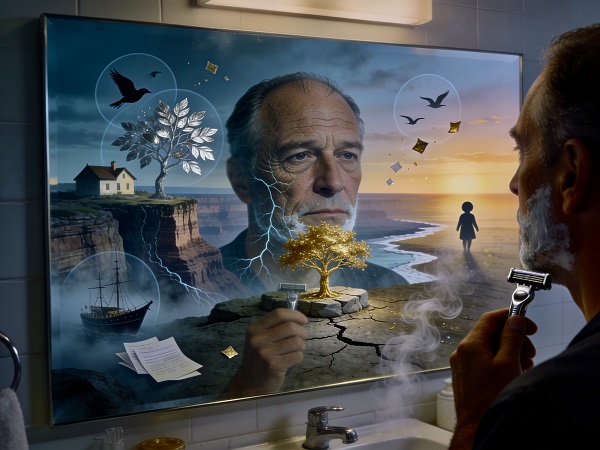
Time begins as a glaze laid warm across the face,
milk-smooth porcelain, kiln-bright, ringing when tapped.
Then come the habits, invisible hands at the surface:
sleep honored or stolen, water chosen or sugar poured.
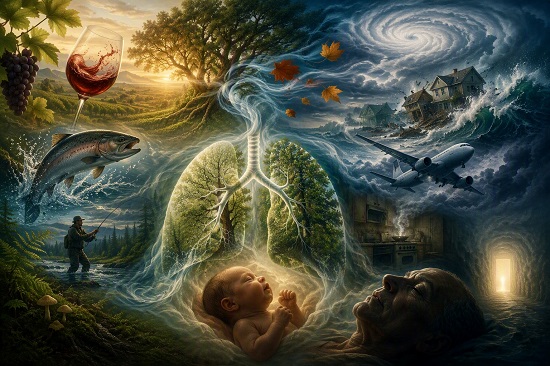
Some mornings arrive with lungs rinsed clean as rain glass,
others with breath tasting of ash and debt.
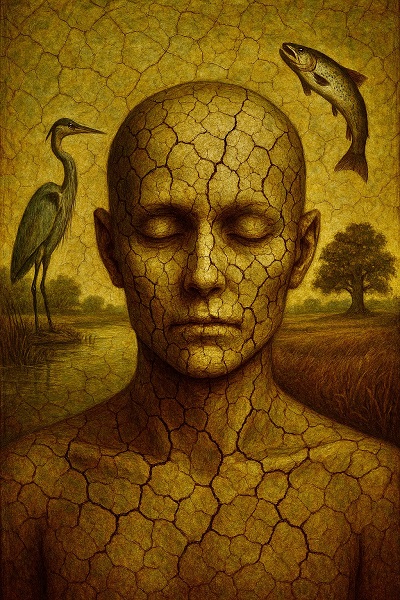
The first fractures appear like frost-veins on a pond,
not yet broken, only forecast.
II.
There are lives lived under constant combustion,
fluorescent nights, drive‑through salt, stress clenched like a subservient jaw.
Skin dries into droughted earth, riverbeds split open, while inside,
organs swell like overfed engines.
Fat wraps the heart in pale insulation,
the liver clouds, the blood thickens to traffic.
Craquelure grows loud here, each widening crack fed by smoke, sugar, sitting still too long.
III.
Others move with measured flame and shade:
meals that look like color wheels,
feet that strike ground more often than brakes.
Muscles stay elastic, the metabolism hums,
and fat learns when to leave.
Their faces take on wood-grain lines, not breaks,
creases pressed in by laughter, sun filtered through leaves.
Disease circles them like weather, not destiny.
IV.
And still—look to the heron, iron-legged in the marsh,
unchanged across decades of patient standing;
the trout, silver and swift until almost the end;
the oak, thickening, not collapsing, with age.
After maturity, they hold their form,
little decay until the final brief season,
or none that the eye can mourn.
So we ask, not softly now: if we are the so‑called superior species,
why do so many of us crack early, sicken inwardly, carry our excess like anchors,
while the rest of life sails on, continuing to learn how not to break?


 Share
Share Print
Print Save
Save