As I have written in my newest book- The Buddha’s Radical Psycholohy: Explorations, there are direct implications for ecological ethics throughout the Buddha’s teachings. There is a holism. The Buddha emphasized the interdependence of human and non-human life, the importance of the ecosystem and of natural processes. By rejecting the concept of a substantial ‘self’, and comprehension of the interdependency of all phenomena, the importance of the distinction we usually make between ourselves and other living beings lessens. Such an attitude views the world as a vast interdependent field, in which no life form, no matter how insignificant it may seem, is an outsider. There is a state of connectedness and interdependence of all phenomena. The significant realization that there is no independent ‘self’– that the perception of ‘self’, of ‘me’, of ‘mine’ is only an egotistical representation, therefore leads every person to inter-dependently co-exist. Undercutting the usual ignorant anthropomorphic view of the validity of the successful domination and control of the environment by humans, naturalist Aldo Leopold claimed that, ‘The biotic (life factor) mechanism is so complex that its working may never be fully understood.’ There is a deeper ecology that recognises the inherent worth of other beings aside from their utility.
Another writer who expressed a similar deep view of ecology was R.G.H. Siu:
‘The term Ecology, as used locally, does not have the connotation of the “environment” as used in America. There is no separation of man and his environment; rather there is a fusion of man and his environment. Ecology represents the study of the ecological entity as a whole. When a given ecological complex appears unfavourable from the standpoint of man, for example, he does not have a prior claim to adjustment on the part of the other elements of the complex. The others have just as much “right” to demand modification of his behaviour as he has on theirs. All are one in Nature. There is an appreciation of this Oneness and the delicate interrelationships of its diffusions.’
So humans are not an isolated island in a sea of existence, but rather their being is shared ultimately with all. This becomes a clear and apparent relationship with all existence through the Buddha’s teaching of anatta.
The interdependency of nature is not news, but it's certainly important enough to drum because humans have upset the balance of our ecological systems. The warning signs are plentiful and are not to be ignored or downplayed.
Your article (not story) clearly shows the interdependence we humans have with our planet and its other lifeforms that is so important for our very survival.
Unfortunately, the biblical reference that man shall have, "dominion over all…," Has led humans to believe that they can destroy whole ecosystems justified by earning a profit and conquering ego. We all need to learn from Buddha and not from the Bible.
Finally, the commentary that adds even more to the diagramed version of The Easy Study Bible. Follow the diagramed verses of this new clear translation with a verse by verse commentary. Understand even better the New Testament book of Philippians.
<
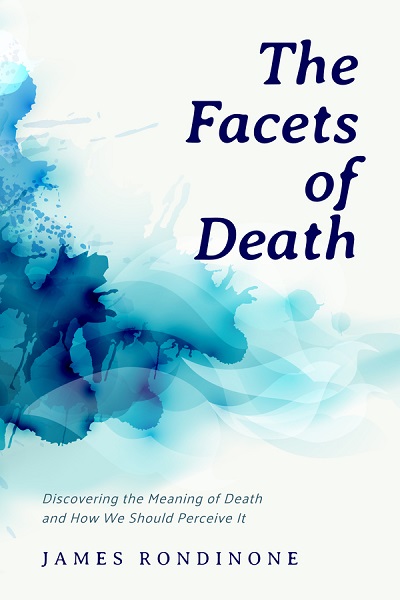
Are you still angry at God for having lost a loved one due to sickness or unexpected circumstances? This book will give you a better understanding of death, God’s role in it, and what decision is before each of us that would allow us to see them agai


 As I have written in my newest book- The Buddha’s Radical Psycholohy: Explorations, there are direct implications for ecological ethics throughout the Buddha’s teachings. There is a holism. The Buddha emphasized the interdependence of human and non-human life, the importance of the ecosystem and of natural processes. By rejecting the concept of a substantial ‘self’, and comprehension of the interdependency of all phenomena, the importance of the distinction we usually make between ourselves and other living beings lessens. Such an attitude views the world as a vast interdependent field, in which no life form, no matter how insignificant it may seem, is an outsider. There is a state of connectedness and interdependence of all phenomena. The significant realization that there is no independent ‘self’– that the perception of ‘self’, of ‘me’, of ‘mine’ is only an egotistical representation, therefore leads every person to inter-dependently co-exist. Undercutting the usual ignorant anthropomorphic view of the validity of the successful domination and control of the environment by humans, naturalist Aldo Leopold claimed that, ‘The biotic (life factor) mechanism is so complex that its working may never be fully understood.’ There is a deeper ecology that recognises the inherent worth of other beings aside from their utility.