Action! Adventure! $40,000 marbles? $100,000 stamps? $1.5 million for a dime? $2 million dollars for a card? Why is Josh so successful? You won't find out in Chapter 1!
Chapter One: testing my story. Would appreciate feedback and constructive criticism. Thanks!
****************************************
On the display table, protected under a glass case, sits an intact box of Christensen Agate Guinea marbles. The package is flawless. These were evidently put away new, doubtless seldom touched by human hands. Gathered men attempt at poker faces, but their eyes glisten, iris’s large and black.
The dealer grins. It has been a diligent and successful hunt. He knew the box of marbles existed, and his search efforts paid off. A battered box containing all twenty-five marbles in fair condition would fetch nine hundred US dollars per marble in auction. He possessed twenty-five untouched mibs in a perfect condition box, and should realize final bidding around thirteen hundred dollars. Per marble. There is an original hand-written receipt from Devon’s Market located in Cincinnati Ohio dated 1931. Proof that the box isn’t a reproduction (although an expert eye would be able to discern a fake).
For Josh Underwood it’s not altogether about the money. It’s about the thrill of discovery, the pleasure of possessing something others spend their collecting careers hoping beyond hope to own for themselves. Oh, the payoff will be spectacular! Once the price is set through the auction, he will approach three other collectors separately to offer each one of the total seven boxes he owns. He knows better than to flood the market, although selling off all six boxes would probably not put much of a dent in the high stakes payout for pristine marbles. But Josh had learned a valuable lesson a few years ago when he came into possession of several rare stamps. He would set aside the last three boxes for the future; maybe his grandchildren’s college funds. Of course, it would require him to marry and have children first… but for now he is far too busy building his reputation in the business of Antiques and Collectibles.
He picks up one of the marbles from the box, rolling it around in his palm. The word ‘pretty’ floats into his mind, but these were the toys of boys in the early part of the twentieth century. Granted, like Akro corkscrews and Oxblood cornelians and Christensen flames and Peltier Superman’s, Guinea’s were prized possessions and seldom knuckled down.
At first it appears the 19/32” marble is multi-colored speckled glass on black glass. However, it is actually ribbons and smears of dark purple, pale blue, light green, yellow, white and orange throughout a transparent dark amber. Under strong lighting the ‘cyclone’, or internal twist, of colored glass is viewable.
What set Christensen Agate Company apart from any other marble company that ever existed was its use of exotic glass colors. This trait is credited to a man named Arnold Fiedler. Mr. Fiedler was an expert glass chemist from the "old world." He knew how to make and blend hundred's of different compatible glass colors. Compatibility is very important because it is what keeps an item made out of glass from cracking apart because of differential internal stresses.
The fledgling company moved to a new location in 1927; the city of Cambridge, Ohio. The city offered large sums of money, land, and tax breaks to lure new businesses into the area, and was able to supply struggling Christensen with an influx of needed capital. Funding was needed because there was considerable experimentation going on with color blending and automation; cutting edge for the time and still is today. If there was ever a zenith in toy marble manufacturing, it happened at the Christensen Agate Company.
The first machine-made glass marbles were turned out by Martin F. Christensen in 1902 through the use of gob feeders, immediately prior to his application for a US Patent. Diagnostic traits of these marbles, usually in the onyx style, are colored design features which resemble number ‘nines’, ‘sixes’, tails which wrap around the marble in various directions, commas, ‘S’s’ and occasionally elongated shear-marks.
The auctioneer calls the room to attention. Held in the bucolic town of Topeka, Kansas, this is one of the largest “collectibles” auctions in the country. Collectors from around the world gather for three days making deals, reestablishing connections, and hopefully finding that illusive item that beckons them in the night. The town is full of dealers, buyers, and a fair share of swindlers and con-artists. Collectibles are big business. Reputations may be easily bruised by one bad transaction, whether or not the dealer has been in business for decades or weeks. Serious collectors do not take kindly to being screwed over, and reputable dealers aggressively protect their image.
Josh is no slouch to the business. He inherited Underwood’s from his grandfather. Considered one of the most knowledgeable men in the business, Jeremiah Underwood left a pristine reputation that Josh intends to maintain. He diligently researches and verifies his large-ticket purchases. He thoroughly documents his findings, and publishes his discoveries in several periodicals. Jeremiah is still around, mentoring his grandson; the only family member who displayed any interest in carrying on the family business. Jeremiah’s two sons, Isaac and Samuel, had gone on to college, one becoming a doctor and the other a lawyer. His daughter, Kaitlyn, had become a hotly sought interior designer. Of the five grandchildren Josh was the one to show interest and promise in the collectibles world.
In fact, it seems that Josh has quite a knack. He’d surprised Jeremiah when, at the age of twenty-five, he managed to find not one, but two sets of Inverted Jenny C3A’s containing six attached stamps, as well as three singles. It was an amazing discovery – and Josh had purchased them for a song! Ten thousand dollars for ALL of them! Incredible! Jeremiah shakes his head in wonder.
The “Jenny” C3A airmail stamp is a simple design: a red frame surrounding a blue plane printed on plain white paper. But it's this two-color design that's responsible for the inverted airplane in the center.
In order to print stamps in two colors with the printing technology of the time meant that an engraved plate containing the design had to be made for each color. The Jenny had a red plate (the frame) and a blue plate (the vignette). The printing process for two plates started with a blank sheet of paper. The printing press was fitted out with the frame plate and loaded with red ink, and blank paper was fed into the press. After a sufficient quantity of sheets were printed with the red frames, the plate and ink were changed.
Then the frame-printed sheets were fed into a press loaded with the center design plate (in this case the "Jenny") and blue ink. Once this process was completed the sheets were fed into a perforating machine. It was a simple, mechanical process that went off without a hitch thousands of times, and in the Jenny's case nineteen thousand nine hundred ninety-nine times.
Only one hundred stamps, originally purchased on a single sheet by William T. Robey, are known to exist. However, the one hundred-set sheet was actually one-fourth of a four hundred-piece sheet. Scant few Inverted Jenny’s appeared outside of the known set, all presumed to be one’s and two’s separated from the remaining 300-set sheets that slipped through quality inspectors of the USPS. Finding two sets of six intact stamps set the Philatelic world on its ear. The original one hundred purchased by Robey ended up in the hands of Edward Green, a New York City stamp collector. Green immediately broke the set apart, selling in groups of four .
The problem was that Josh could not corroborate the purchase. Yes, his Jenny’s had been authenticated and were deemed not counterfeit. But the collectors wanted proof of where these stamps had been – what was their history? Josh explained that the seller did not want her name publicized, that she was an elderly woman who’s husband had kept the stamps in a safe deposit box. As the story was told to Josh, when William Robey purchased the entire sheet of stamps for twenty-four dollars back in 1918, the teller had become suspicious and concerned. He’d closed his window, but left his drawer unlocked. The teller next to him had observed the transaction and slipped a sheet of his own stamps for the next sheet in the absent teller’s drawer. He wasn’t sure what all the commotion was about, but was bright enough to know something was up. Of course, he’d legitimately purchased the stamps at the end of the day forking over his own twenty-four dollars for the sheet. That was a lot of money for that period of time, and he had a difficult time explaining the acquisition to his young wife. After the news broke about the inverted Jenny’s the man kept the sheet hidden, fearful of losing his job. Periodically he would anonymously sell one of the stamps through a broker. The extra money provided a down payment on a nice home, his children’s education, and his own retirement. In his lifetime he’d only sold six of the stamps to private collectors. The sheet held one hundred, and Josh only claimed to have a total of fifteen. Where were the other seventy-nine? No one knew.
Jeremiah suspected the teller had sold more than he’d let on, and had not informed his wife of all the sales. She never really understood what all the hubbub was about, nor cared a stitch about stamps. The thought had occurred to Jeremiah that maybe Josh did buy all ninety-four, but quickly dismissed that notion. Surely, the boy would have told him.
“Do I hear $15,000. $15,000 that’s the going bid. $15,000. $16,000. $17. $18. $18,000 ladies and gentlemen. Once again, a pristine box of Christensen Agate Guinea’s. Do I hear $19? $19? Yes, I have $19. $20?”
From the back of the room a man’s voice booms. “$23,500!!”
The resonance of his voice sends electricity through the air. Jeremiah knew this was when the bidding would really begin. He winked at Josh, giving a curt nod. “Watch” is what it meant.
“24. 25. 26.” All came in metronomed sequence, the room hushed but for the auctioneer’s voice.
“$26,000 is the bid, ladies and gents, $26,000. This is a once in a lifetime cha.. $27. We now have a bidder at $27,000. The only known box in this condition, my friends.”
$28. $29. $30.
“Thirty-thousand dollars, we have a bid of thirty-thousand dollars. Thirty-thousand going once.”
Jim McBride had grown weary of the petty bidding. An expert at auctions, he knew the slowing pace was due to the small-timers backing out. It would be up to him and one, maybe two, other buyers. He’d examined the set: it was more than he would ever have hoped to run across in his life. This set would be the crème de la crème of his collection. He’d half expected to find a faked box, but his expert eye told him exactly what this was – a genuine article. He thought to himself ‘let’s see who is really here to play’.
He held his paddle and fingered to the auctioneer who in turn gave an acknowledged nod, barely noticeable unless you knew to look.
“$33. We have a bid for $33.”
Jim expected to pay close to forty thousand dollars, but hoped final bidding would remain well under thirty-five. He anticipated bidding to end in the low thirties.
A voice recognized from earlier bidding booms “$35,000”!
A combined gasp emanates from the crowd. Most of the attendees knew Big Jim McBride well, knew of his collection, and respected his expertise. He’d been a collector for almost forty years, back in the day when a bag of handmade German latticino’s and solid core marbles could be picked up for just a few dollars. My, oh my, how marble collecting has changed.
Surprised at the new bid, not at the bid itself, but that it came from an unknown in Jim’s circle. The marble collecting world wasn’t that large and all of the big players were well known. Or, at least Jim thought so.
He gave his auction signal.
The auctioneer called, “$36.” Then, “$37. $38. $40!”
The silence between calls was deafening. The auctioneer’s eyes moved only between Big Jim and the unknown bidder.
“$41. $42. $43.”
‘Damn it!’ Jim thought. He didn’t anticipate bidding much more… but he wanted that box, he wanted to win!
“$44. $45.”
His heart sank. Five thousand dollars. What’s five thousand dollars? But he adhered to his rule – he had a maximum amount he would bid and he always stuck to his plan. He hung his head – he would bid no more.
The crowd erupted in cheers. Imagine. For a box of marbles!
Jim’s disappointment radiated. He started to gather his items when a young man approached.
“Oh, hello there Josh!” The men shook hands. “That was quite a find there, young fella. You know my collection – I sure had my eye set on that prize, but, well, you know how it goes.”
“Yes sir, I do. I’m not familiar with the winning bidder, but you can be assured we’ll become acquainted.” Josh had decided he would only part with one of the remaining boxes for now, and it would be to Jim McBride for thirty-two thousand dollars. He liked Jim. Over the years the big man had spent a small fortune with Underwood Antiques & Collectibles. Josh valued Jim’s friendship and his discretion.
“Yeah.” Jim replied, looking across the room at the tall red-headed man that out-bid him. “I’d be curious to find out more about that guy myself. Haven’t seen him around and I thought I knew every big collector in the country.”
“Well, I need to go take care of the finance end of the day’s auction. I could tell you were pretty disappointed in the outcome.” Josh leaned a little closer to Jim. “But call me in the next day or two. Could be that there was more in that find than what hit the auction block.”
Jim jerked his head up, startled at what he was hearing. He knew deals like this sometimes happened, but he never dreamed…. Could it be possible?
“I don’t want to discuss here, now. Just call me and we’ll talk.”
‘Well, I’ll be!’ Jim thought, a smile slowly creeping back to his demeanor.
So far, very good. Very crisp prose, with no unnecessary parts that I could see. It's hard for me to give criticism without seeing the whole of the work, but what I see here is a good start.
Nice job, Diana. Good characterization and you've left your reader wondering... I would definitely read more. The only thing I might offer in the way of criticism is that I thought the story bogged down just a little bit in the paragraphs about the stamps. A lot of info there. But it might just be me. Overall I enjoyed the chapter very much.
Jean
Well written, intriguing storyline. And I happen to collect marbles (of course not with this kind of loot), so was very entertained. Great job. Would love to read more. Elizabeth
Sixty-seven days after departing Flores Island in Europe’s westernmost waters, the schooner Heimdall and her stalwart crew has finally arrived at the mysterious Isla Socorro in the Revillagigedo Archipelagoes. The discoveries they make are astounding
Perry Conners, Arizona tycoon and soon-to-be politician, can't sleep or make love anymore, and he's losing all sense of reality. Is it the Devil's fault?


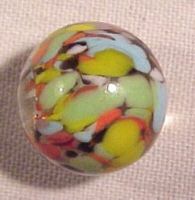 On the display table, protected under a glass case, sits an intact box of Christensen Agate Guinea marbles. The package is flawless. These were evidently put away new, doubtless seldom touched by human hands. Gathered men attempt at poker faces, but their eyes glisten, iris’s large and black.


