 Life is about relationships. Three ways we can improve our relationships are through understanding human nature, controlling perceptions and becoming transformed spiritually.
OUR JOURNEY:
Differences and similarities
by
William Cottringer
"I can summarize everything I know about life in just three words: Life goes on." --Ralph Waldo Emerson.
As I struggle to sort through the mountains of chaos I created in my earlier life “experiments” and reckless, irresponsible wandering, I think I have uncovered some important and valuable insights as to how to have better relationships with people. I believe that having good relationships is what life is all about. Relationships can test you beyond your limits and provide you with positive experiences you can’t get anywhere else.
In this autumn of my life I think I may have finally discovered three things that can allow us all to have better relationships with other people---understanding human nature better, controlling the fallout from our negative perceptions, and becoming spiritually transformed. These are each discussed below.
UNDERSTANDING HUMAN NATURE
We have to be willing to tolerate, understand and eventually accept differences with each other and communicate past these differences in order to share and enjoy our similarities better. Oddly, partners in most relationships start out enjoying both, but eventually regress to becoming unhappy and uncomfortable with the differences. What was once attractive becomes repulsive.
What are our most important differences and similarities? As far as differences go, our thinking is entirely different due to our unique experiences in life. No two people think alike and it is our thinking that drives our feelings and behavior. We use this thinking to try and communicate our differences and similarities for better understanding and connection, but get all tangled up because the words represent differences we may not understand or want to accept. When feelings enter into the picture, even the best thinking gets confused and communication often becomes painful and destructive. The discomfort from the miscommunication of differences then gets get magnified even more. Moreover, our feelings are often expressed unintentionally through our body language and the body language is sometimes misread, thus adding to the miscommunication and discomfort.
What are the important similarities between people that are worth exploring and enjoying? We are each trying to become the best person we can be in our own way and in our own time. We all have very similar basic needs deep below the surface differences of our goals and motivations; and we all have useful clues to share with one another as to how to truly understand these similar needs, once we figure out what they are. Knowing what we all need is a common bond. When we help others meet their needs we are meeting our own too. This is what helps determine the quality of our relationships, which in turn shapes the quality of our lives.
As human beings we appear to be paradoxical with many similarities and differences, which make understanding the differences quite difficult. We are all constantly moving back and forth between our thinking and our feeling, between wanting to satisfy our own needs and those of others, between our desire for independence and freedom and our need for dependence and equality, and between the real material world and the ideal spiritual world. Connecting in this constant sea of movement is a moment of magical serendipity where time stops and souls see each other clearly without the clamor of their external equipment. This is where love begins.
CONTROLLING PERCEPTIONS
In addition to thinking, another powerful difference between people is the fact that two people can look exactly at the same thing and yet see something entirely different. True, our perceptions of other people are our only reality to react to; but they are also only a temporary, tiny glimpse of the person—overly influenced by our own experiences, where we are standing doing the looking, and our tendency to fill in missing spaces with our own private interpretations. In other words, we often don’t really know a person as well as we may think we do.
The problem with distorted perceptions of other people, which many of them are, is that they keep you from getting past the differences and can also influence the other person negatively from changing for the better. The only way to avoid this trap is to first realize the similarity in which we all form inaccurate, incomplete perceptions of other people and then become more aware of when you are actually doing this—by resisting your tendency to judge and making an honest effort to learn something new about the person.
One thing I do, to help me deal with people I don't know, or with people who are causing me grief, is to pretend they are related to me in some way, i.e. the old lady driving really slow in the fast lane. I pretend it is my mom or grandma. This gives me an extra dose of love for that person and helps me not to get all upset. Or if I am meeting someone for the first time and they don't fit my mold, I put them in a category that I am in and pretend that they are more like me.
Perceptions of others can easily become negative and make you uncomfortable in a relationship, especially when you over-focus on the person instead of the situation. Perceptions can also become unnecessarily negative when you pay too much attention to the undesirable results of your expectations not being met, rather than what the intentions of the person were or what you could change to get the better results that you expect (Personally, I try to keep my expectations of most people real low, so if they do something well, I am impressed).
Many couples get stressed out with finances and start perceiving the fault with the other person’s frivolous credit card over-spending, instead of the insanity of credit cards themselves. One person may not be living the comfortable life that was expected and have resentments towards the other person blamed for this credit card mess, when he or she might explore ways to get additional income to help the situation, consolidate various debts or even suggest consumer credit counseling. Many people play the blame game, but often when the results are in, the person doing the blaming may be the real cause, but they just didn't see it. Pull the beam out of your own eye, before trying to point out the splinter in someone else's.
The key to more positive relationships is in trying to understand how your negative perceptions are making the situation worse than it needs to be. You have to learn how to become more response-able and open the door to better understanding of the person’s differences so you can get to enjoy the similarities. The more you understand, the less “different” these differences really are and the more positive the perceptions can become.
Relationships survive and prosper when positive perceptions outnumber the negative ones, but you can reach the opposite point of no return before you know it. Negative perceptions can become highly contagious and destructive in relationships. Fortunately you can stop them anytime you want, as they are completely under your control—you can do this by understanding that the only purpose they serve is to alert you that you are paying too much attention to differences and not enough on similarities, and that you may not be doing all you can to improve the situation.
BECOMING SPIRITUALLY TRANSFORMED
We are all involved in a perpetual struggle to close the gap between our present and ideal selves--who we are and who know we can be. The real battle here is the reconciliation between our personal and spiritual development, which affect each other in ways we often don't understand. The only way to real change in taking off our old selves and putting on the new, is through a powerful spiritual transformation. This is what our lives are all about and maybe what we were born for.
Spiritual transformation involves becoming centered and balanced in three levels—thinking, feeling and being. You have to arrive at the right thinking through study and enlightenment, open your heart by learning how to love unconditionally, and practice the right way of being by discovering the basic truth that you can’t really ever be happy and successful until you surrender control to your Creator and completely obey His will for your life.
Living life your way eventually leads you to the source of your nagging discomfort and emptiness—the lack of real connection with God and other people, that can give you what we all want and need—genuine peace, fulfillment, wholeness, success and contentment. When your will and God’s join together you are just beginning your real life.
With such a major change in thinking and feeling amazing things happen. You become freer to use all your talents, abilities and painful life experiences to help yourself reconnect with other people—understanding and getting past differences so that you can enjoy what we all have in common, which is to love each other and help one another reach a balance between enjoying this life together now and preparing for what is to come in the next one.
When we take the time to dissolve differences between us by understanding human nature, learning to control our negative perceptions, and practicing the love, compassion, acceptance, creativity and wisdom of our spiritual being, we can get along fabulously with others. We will end up having our cheese and eating it too--getting the things our minds want and also the things that our souls need. This is wholeness.
Have I finally arrived in that place as a writer, where I have connected with you the reader with words that are pure, alive and meaningful—in a way that gets silent agreement and evokes inspiration to help improve human relationships? Have I traveled to the depths of the centeredness in my own thinking, feeling and being, to be able to share this tiny perception of reality with sufficient clarity and impact? Are we getting any closer to being able to nudge "what is" into "what could be?" Or is this information just for me to understand and apply in my own life? Or possibly all the above? I would like to know.
"I didn't particularly like the brandied aprocots, but I sure did like the spirit in which they were sent." --Mark Twain.
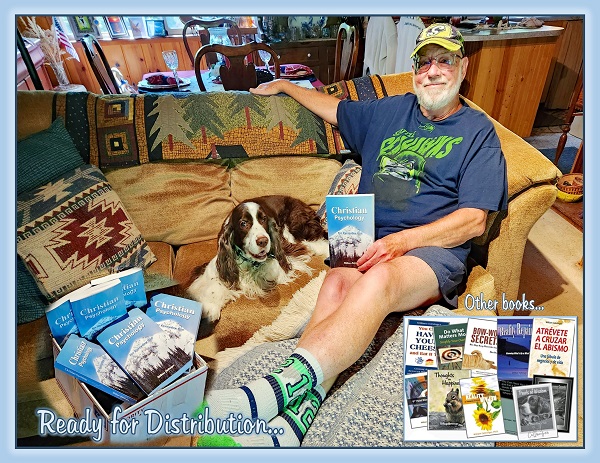
William Cottringer is a business consultant, college teacher and writer from Collinsville, IL. He is author of You Can Have Your Cheese & Eat It Too and can be reached at (618) 444-5741 or ckurtdoc.charter.net
|




















grace does require a balancing act, which will enable us to be more successful
in our relationships. Focusing on the similarities does encourage more progress
than dwelling on the differences unless the differences can compliment and
complete the whole. Appreciated your analysis which stimulated my own
thinking on the subject. Keep the articles coming.