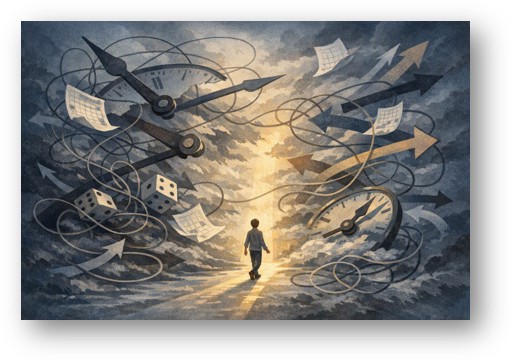
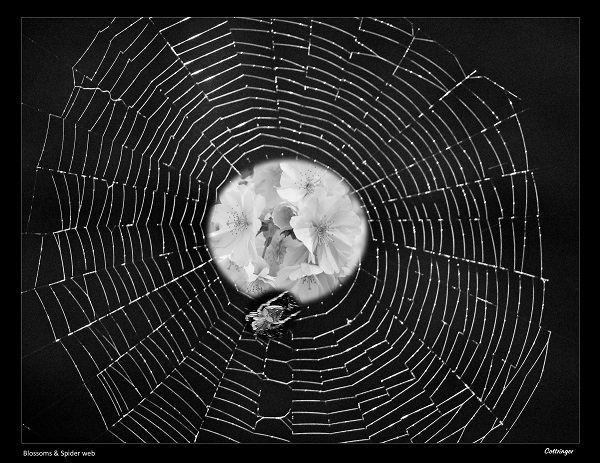
Life involves the basic game between creating chaos and restoring order. We all participate.
A COMMON DENOMINATOR
By
William Cottringer
What do the Jones’, baseball players, students, political parties, soccer moms, and countries all have in common? They are all part of the perpetual flow of life that goes back and forth between spreading chaos (taking things apart) and restoring order (putting them back together again). There are always two opposing teams playing against each other (even inside individuals) and when the score gets too lopsided the losing side becomes very uncomfortable.
We are all playing the game of spreading chaos and restoring order, consciously or unconsciously and voluntarily or involuntarily. When we start out in the chaos-creating phase, we are passionately embracing and proclaiming worthy virtues and principles—with the mission of disassembling things for closer study and increased understanding (making simple, easy to understand things very complex and difficult to understand, AKA education).
Unfortunately we often seem to be insensitive to the point of no return and continuing over-dissecting too many things and end up with mountains of unproductive chaos—parts of things lying all over the place that can’t be used, understood or appreciated in isolation. We sought understanding and have less than when we started. To make a long story short, we tolerate the discomfort of all this confusing negative chaos until we can’t stand it anymore and have to do something about it—by restoring some order.
We start restoring order by superficially analyzing isolated problems and applying artificial and simplistic solutions—until we become uncomfortable with the lack of results and nil return on expected success and satisfaction. Finally, we do the one thing that we should have done all along—apply the virtuous and principled answers passionately to understand problems and solve them creatively and then stop when we achieve reasonable success in restoring reasonable order. This is to be savored and enjoyed. And if we are lucky we have learned a valuable skill for the next inevitable period of chaos that we help create.
And so the process goes on with words that make it even more chaotic and even more of a challenge to restore order to. So what are the lessons learned from this basic life process we are all a part of? Here are a few:
- It is dangerous to assume you know whether you are creating chaos or restoring order. Things are rarely as they appear, and what you see really depends mostly on where you are doing the looking. It might be safer to assume some tentativeness and humility about what you are doing, at least until you are more certain.
- Whether you are creating chaos or restoring order it is very worthwhile to make a special effort to become more sensitive to the point of no return before you pass it. Sometimes there are only so many chances to miss an opportunity or avoid danger.
- When you seem to be on neutral ground between these two basic processes, think about the difference between who you know you are and who you are becoming. If this gap is a large, negative one, it is often a big clue that you may be slipping past the precious point of no return. Fortunately this realization can at least get you back to ground zero.
- When you start becoming a little unsure where you are at in the chaos/order process, don’t worry too much because you are living and there are plenty of livers to support and guide you. You just have to share what is going on.
- The main object of the game is to reach a healthy, productive balance between creating manageable chaos and restoring reasonable order to that chaos. This is probably the most important skill in life. It is our common denominator.
- The primary spiritual question remains: Is life the epitome of chaos and death its order teammate? There again, I guess the answer depends where you are looking from.
William Cottringer is author of You Can have Your Cheese & eat It Too, which is a book that provides valuable chaos-spreading and order-restoring techniques.
|