 Success in life depends upon being two ways in the right order: Accepting self and others first and then encouraging growth and improvement. A big part of self-development is accepting both the positive and negative aspects of yourself so that you can do that with others too.
THE ENEMY WITHIN
By
Bill Cottringer
We all have split personalities—the good ideal self we are becoming in our minds and hearts, and the real hands-on person we are around others, with the monkey on our back, or our “worst half.” Our worst half is our dark shadow that wants to do all the things that turn out to be wrong—giving into short range temptations that have bad long term consequences; saying hurtful words and doing unkind things in retaliation for our own hurt and anger; expressing anger and violence when we get over-stressed, frustrated, or controlled; violating laws and morality when we become victims; being physically or emotionally unhealthy; wasting our talents and resources; and letting pride, irresponsibility, impulsivity, impatience and laziness rule.
Like everything else in the universe you are born neutral with potential for both positive and negative behavior in all three spheres of thinking, feeling and behaving that are involved in both acting and reacting. The process of self-development is aimed at improving the positive power of your hands-on real self, while lessening the negative influence of this shadow, so you can become more like the good person you aspire to be. This process is another term for what earlier psychologists called self-actualization—completing full development of your intellectual, physical, emotional, social, vocational and spiritual aspects.
This self-development process is extremely complicated, especially the way you have to close the gap between your real and ideal self. Most importantly, there is a constant, ongoing interaction between the things that happen to you and your positive and negative explanations and reactions to them, the return effect those particular explanations and reactions have on future expectations and things that happen, the return effect all those things have on what happens, and so on. At this simple level of understanding, what you have is a Tasmanian Devil running around in a vicious circle getting very dizzy.
Now let’s go a little deeper. Add the extra mixture of complicated interactions between thoughts, feelings, attitudes, beliefs, values and behavior to that formula, along with the incomplete and often inaccurate learning process of taking something from your head to your heart to your hands via seeing, hearing and doing it, and you have a reality that is nearly impossible to see clearly or understand very well. What you have is a blob of chaos that becomes more incomprehensible the more you try to understand it and the Tasmanian devil in you finally loses consciousness and passes out. There are just too many variables and blurred, tangled interactions to keep straight.
Obviously, you can’t just choose to ignore your shadow, practice all the positive behaviors that well-written and well-intended self-help books instruct, and then be done with it. That is an artificial over-simplification of a very complex process. First, you have to learn how to step away from your shadow so you can see and study it to find out what it is all about. There are some enabling attitude changes that have to occur before you can do this. These are transformational milestones much like the old Burma Shave road signs, letting you know you are getting closer to your destination—making some progress in closing the gap between your real and ideal selves.
- The portal to genuine self-development is being built by seeing that others do in fact have a split personality that does have a dark shadow. It is easier to see other people’s shadows, with all their mistakes, problems and flaws, than your own. You are too close to your own shadow to see it. It’s more like your skin than a shadow caused by the sun. Of course this difficulty is even more intensified with societies and civilizations. Then it takes an extreme dark shadow to be noticed by the likes of Hitler, Charles Manson or Attila of the Hun.
- Back on the individual level, you eventually become frustrated enough in not being able to change other people’s negative behavior so you can feel better yourself, that you wake up and realize this approach isn’t working. You must try something else. But getting there takes what seems to be a lifetime. The frustrations and failures have to keep building until you hear the message loud enough to do something about it.
- When you do finally wake up to the necessity of shifting this focus away from trying to manage and change everybody else, to the real “enemy”—controlling your own uncontrollable self—then you stop denying and running away from this shadow part of your self and start to get to know, understand and accept your twin within. After all, you cannot change any reality that you don’t fully understand. But you resist this truth by making a lot of mistakes and failures trying to keep the point from sinking in.
- An important realization comes about when you answer the nagging question of why you have a split personality with positive and negative halves in the first place. Oddly, it is because this is the only way you can know when you are making progress. We are all born with dualistic brains which have an insatiable need to divide everything in the world into yes-no, right-wrong, good-bad, and this-that opposite categories—all for a good purpose we don’t immediately see.
- How do we get to the point of being able to see the positive and negative values to this reality of dualism in order to be able to eventually step above it into a more advanced, higher consciousness? By wading through enough uncomfortable chaos and experiencing both halves of life until we experience enough of them to get the point. Everyone has a different learning curve with this, probably just to make things more entertaining. We have to experience enough days and nights, pleasant and unpleasant emotions, wins and losses, causes and effects, and seasons of the year to know the difference. Towards the end we have the insight that without night, you wouldn’t know what day is. And Dolly Parton is right. You can’t have rainbows without the sun and the rain.
- Why do we all have to go through this convoluted and seemingly unnecessary voyage through broken bones, bruises and bleeding? Because this is the only way to simplify complex reality to understand and deal with it better. That way we are eventually able to step above the artificial split to join heads and tails into a whole coin and get more spending power so to speak. This is the point at which reason blends into the unconditional love force that accepts and understands things like what is necessary to close the gap between our real and ideal selves, and moves the mountains that are in the way.
- Before you know it you are gradually but suddenly making progress in taming the enemy within and closing the gap between who you are and who you are becoming. That is what you have been doing all along, knowingly or unknowingly. But of course you have to unknow something before you can appreciate knowing it.
William Cottringer, Ph.D. is President of Puget Sound Security and writer from Bellevue, WA. He is author of You Can Have Your Cheese & Eat It Too and The Bow-Wow Secret: Unlocking the Unlikely Door Between Surviving and Thriving, two books explaining the details of confronting and reconciling your real and ideal selves. He can be reached at (425) 454-5011 or bcottringer.pssp.net
|



















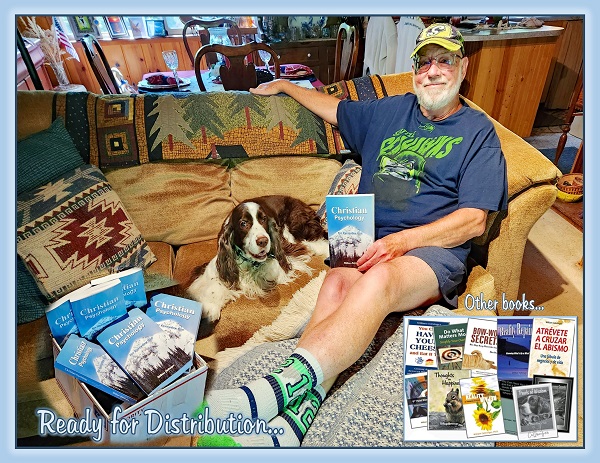


Excellent advice. Achieving balance. BTW, your bio picture says it all. You are happy!
Cynthia